The Manila issue
Chrome Horses: The Riotous Life of Manila's Jeepneys
From the welding bays where they are still hammered out by hand to the tables and bars where they have parked for good — a route through Manila told by its loudest, proudest machine.

By Mariana FonsecaIntramuros walls to the last ferry out
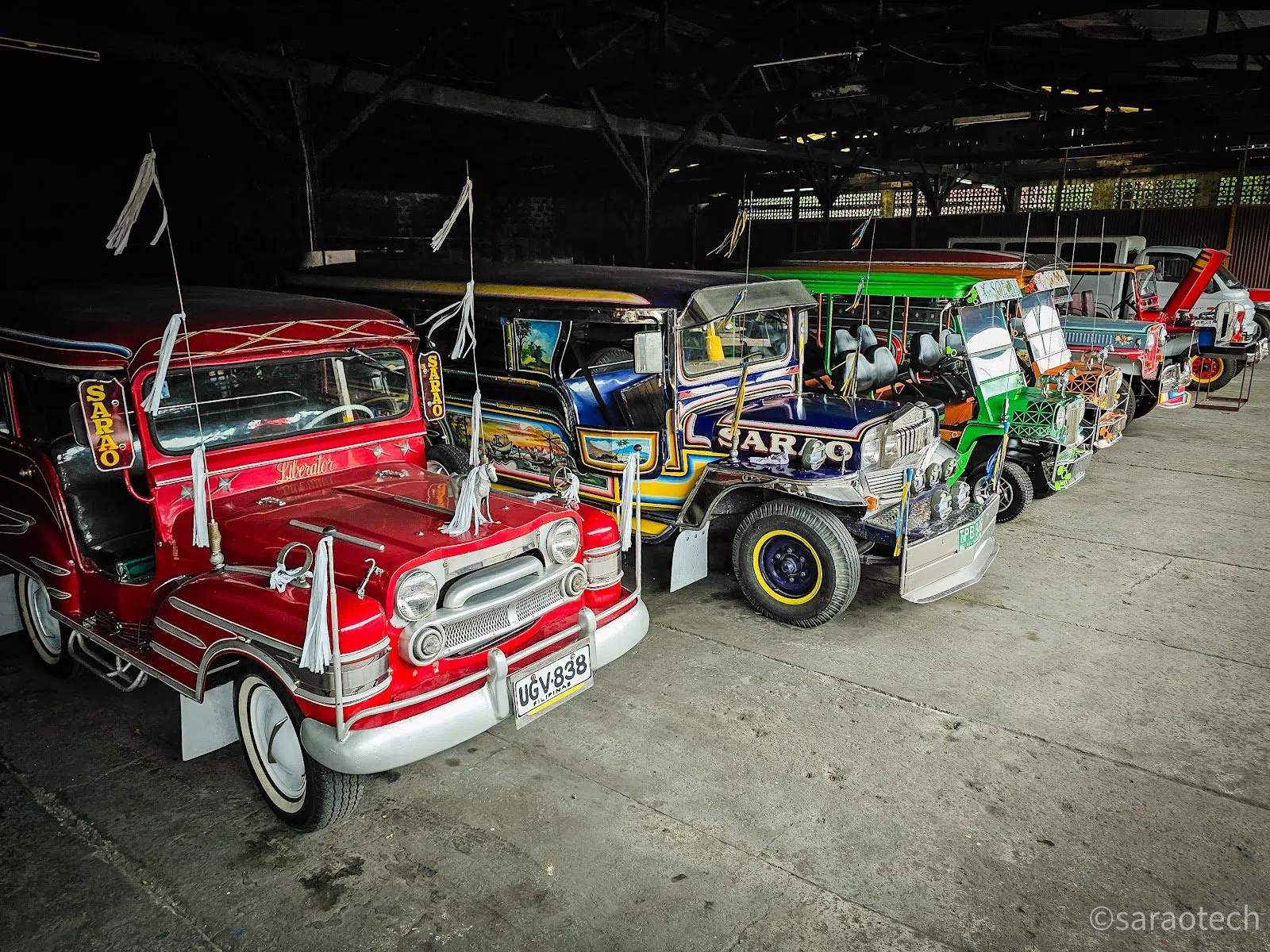
They come down the avenue like a cavalry charge in chrome: stainless-steel flanks flashing, twin horns tuned to a chord, a moving wall of hand-painted saints, basketball heroes and family surnames rolling past your shoulder. The jeepney is Manila's stubborn heart — born from the surplus US Army jeeps left behind after the 1945 Battle of Manila, then stretched, roofed and gilded into something wholly Filipino. This route follows the machine in one clean arc: from the workshops where it is still built by hand, through the guided rides that let you read the city from a wooden bench, to the restaurants and bars where the jeepney has stopped running and started serving.
Where the horses are forged

Begin at the source, because everything else on this route is downstream of it. Sarao Motors (Las Piñas, in the city's southern reach) is the legendary jeepney maker, founded in 1953 by Leonardo Sarao, and it remains the single most authentic stop on any jeepney-culture route. This is a working shop floor, not a museum: you watch panels being cut, hammered and chromed by men who have done it for decades. Walk-ins and groups are welcome on weekdays — call or message ahead to arrange a guided look — and the yard runs roughly Monday to Friday, about 8am to 5pm. There is no ticket; entry is free, though it is only decent to tip the workers or buy a small die-cast model on the way out. Come now with clear eyes: the government's public-transport modernization programme, with its phase-out of the traditional diesel jeepney, is squeezing builders like Sarao hard. What you are looking at is a craft in its late chapter, which makes the visit less a photo stop than a small act of witness.
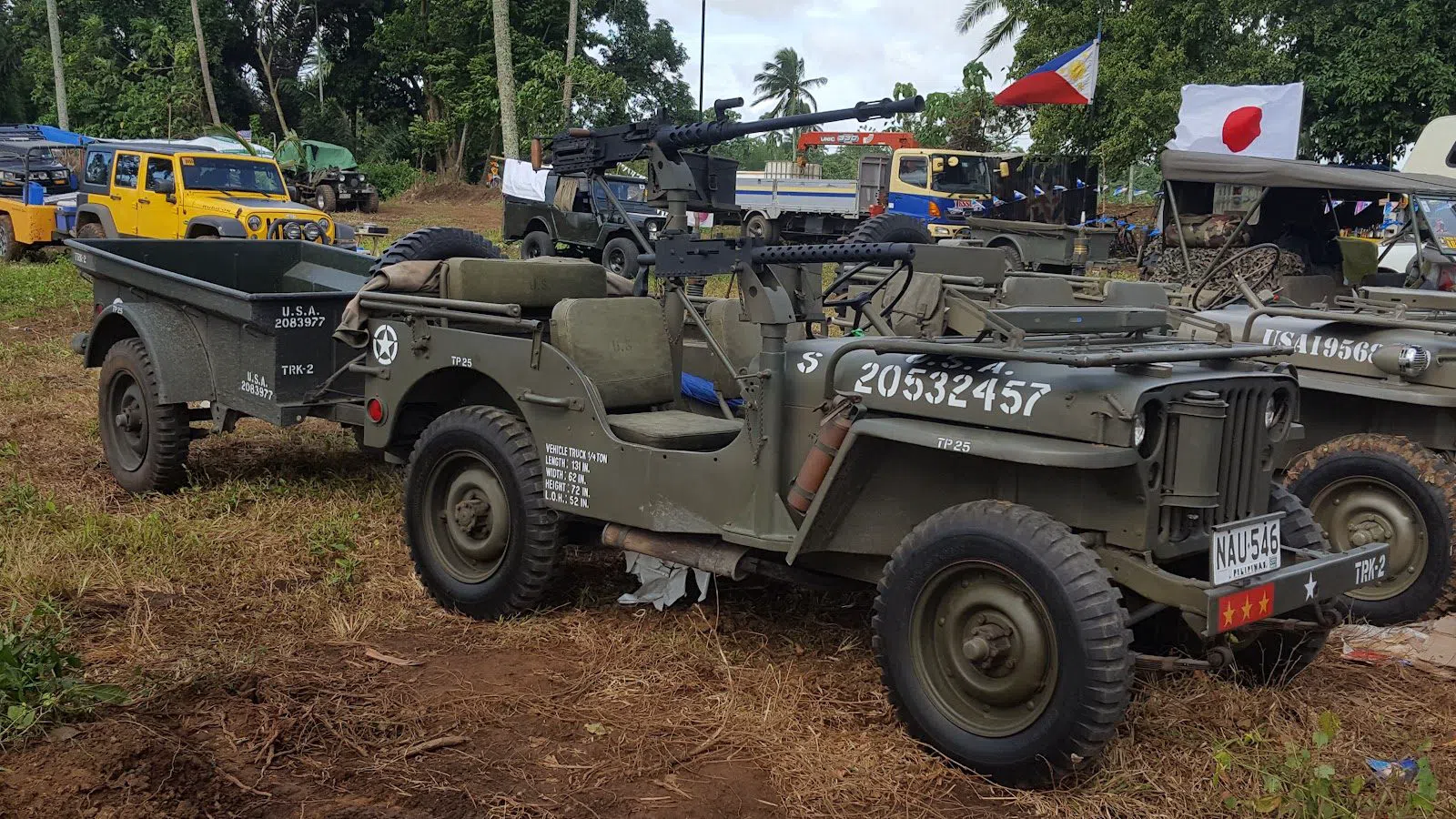
For those who want to go one layer deeper, MD Juan Enterprises (Cainta, out on the eastern edge of the metro) is the gearhead's pilgrimage. This Filipino-owned plant has been running since 1967 and still hand-builds jeepney bodies and vintage-Jeep 'Jeepstar' shells that are crated up and exported worldwide. It is emphatically a factory rather than a polished attraction, so do not turn up cold: email or call ahead to arrange a group or enthusiast visit, and confirm access before committing to the trek out to Cainta, which is a genuine haul from the centre. Entry is free or by arrangement. If Sarao is the famous name, MD Juan is the deeper cut — the place that quietly proves the form still has an industrial future, even as its domestic one narrows.
Plan your Manila trip
Live prices from our booking partners.
Free cancellation on many rooms. We may earn a commission when you book.
Reading the city from the bench: the guided rides
Riding a jeepney unaccompanied is easy enough — you board at the back, pass your coins hand to hand up to the driver, and rap a peso on the ceiling rail when you want to get off — but a good guide turns the ride from a novelty into a reading of the city. Three tours do this well, and they are not interchangeable; pick by appetite.
The grittiest is Discover the Real Manila with Tuktuk and Jeepney (meeting point: Cafe 1919). You gather at the café, then thread through markets and back lanes on a mix of jeepney and tuk-tuk hops — though be clear that it is largely a walking tour stitched together with short rides rather than a long haul on the bench. It runs small-group and private, and the 2026 reviews are consistently glowing, with guides Floyd, Mari and 'V's team named again and again. Reckon on roughly ₱2,500–3,500 per person (about $45–65). This is the one for a small group who want the streets unvarnished and do not mind covering ground on foot.
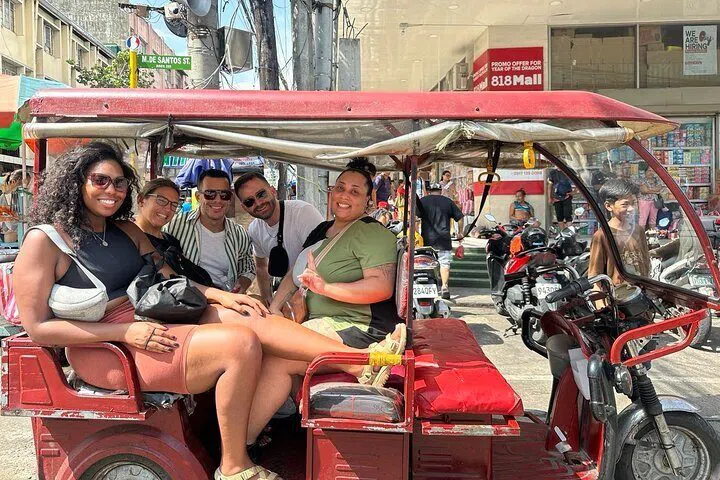
If you would rather taste your way across town, Manila: Parts Unknown (Street Food, Tuktuk & Jeepney Tour) points its jeepney straight at Binondo — the world's oldest Chinatown, established in 1594. It is a small-group food walk with jeepney and tuk-tuk rides folded in, and every tasting is covered in the price: turon and kwek-kwek from the carts, hopia and dumplings from century-old shophouses. Expect roughly ₱2,500–3,500 per person ($45–65). The food angle makes it the most sensory way to feel the street energy, and it is comfortably group-friendly.
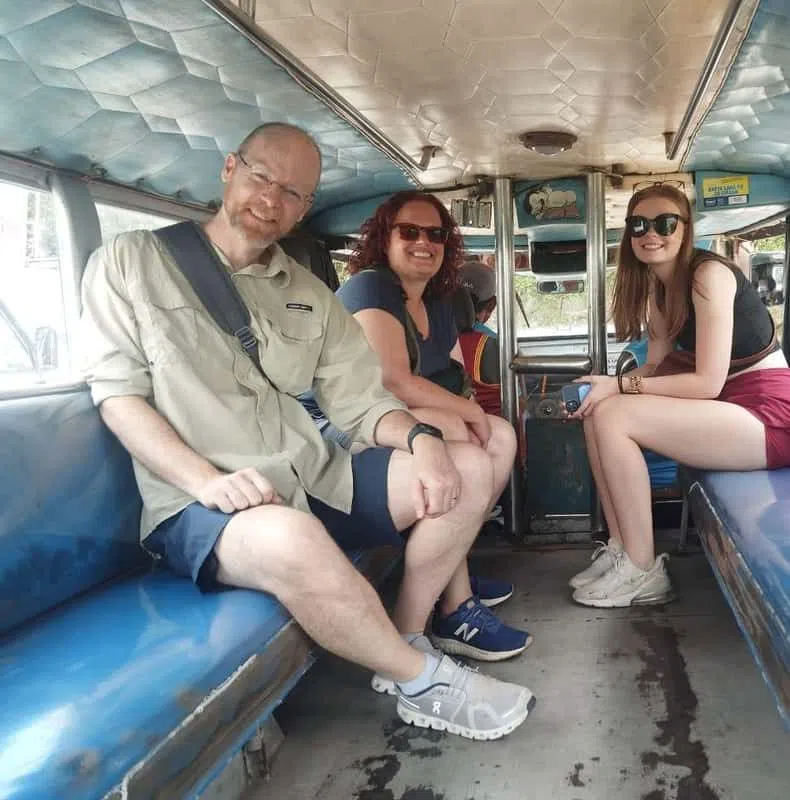
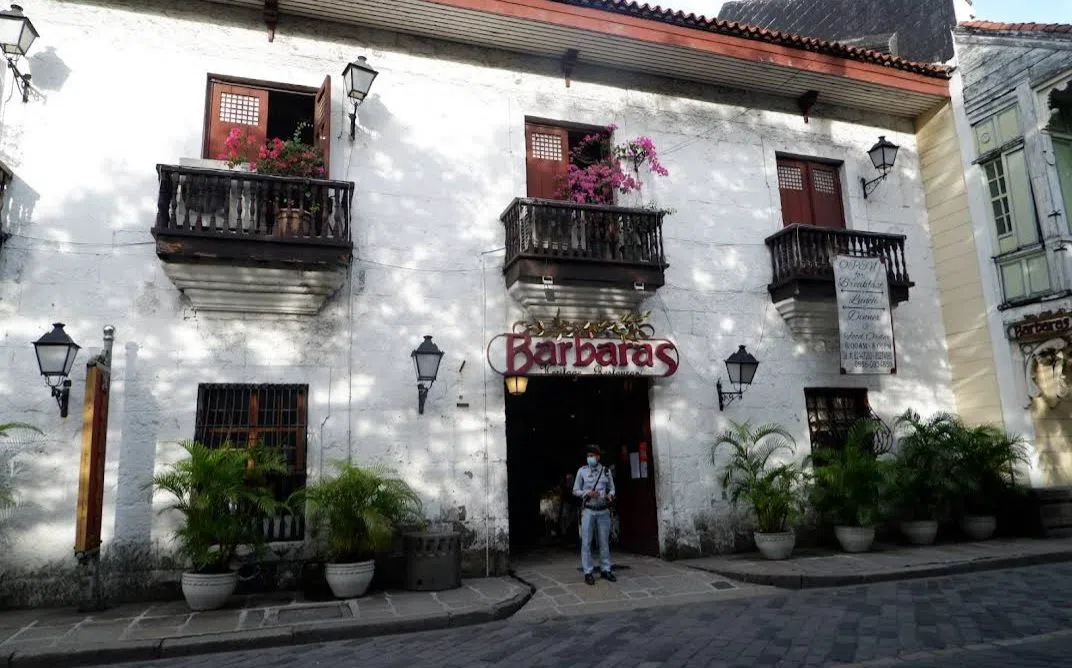
First-timers and tour parties who want one tidy package should look at the Intramuros Jeepney Tour + Cultural Dinner Show. This is the polished option: hotel pickup, an English-speaking guide, a jeepney ride through the Spanish-era walled city of Intramuros — cobbles, Fort Santiago, San Agustin — and then a sit-down cultural show with a tinikling bamboo-dance performance and dinner, all bundled together. It runs at roughly ₱3,000–4,500 per person (about $55–80). It is designed for groups and delivers the sights plus a meal without any legwork; just know that you are buying convenience and polish, not grit.
Those rides will use up the better part of a day, and Manila traffic rewards nobody who tries to cram. If you are still deciding where to base yourself between the southern factories and the northern food strips, a look at the Manila hotel search before you lock in the tours will save you a lot of stalled minutes on the road.
Where the jeepney has parked for good
The form is so beloved that several venues have simply parked a jeepney indoors and built a table, a kitchen or a dancefloor around it. These are the low-cost, high-charm stops, and most are made for groups.
The most literal is Gerry's Jeepney (Kapitolyo, in Pasig), where you eat sitting inside an actual decorated jeepney. The house style is the boodle fight — rice and dishes heaped on banana leaves, eaten communally with your hands — with sisig and inihaw grilled meats leading the order. À la carte lands around ₱250–450 per person, while group set meals run roughly ₱1,500–3,000; the Kapitolyo branch is confirmed operating in 2026. It is unabashedly a group experience, so a table of two may feel they have wandered into someone else's family reunion — which, honestly, is part of the pleasure.
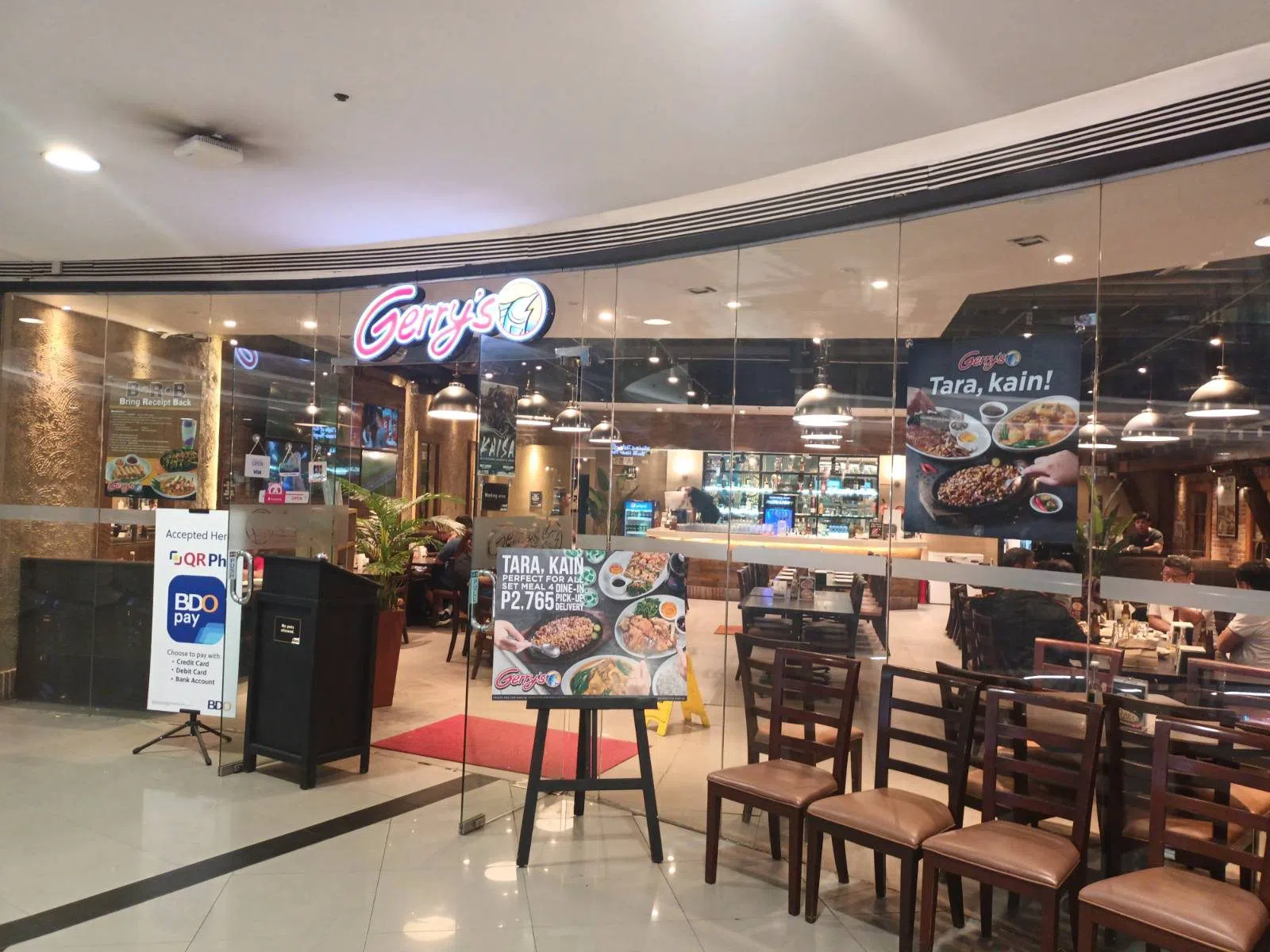

Up in the university belt, Mr. Jeepney (Maginhawa, Quezon City) is the rebranded former Gerry's Jeepney on the Maginhawa food strip — a neon jeepney-kitsch diner in one of the city's densest eating streets. Boodle feasts on banana leaves are again the format, with both air-conditioned and open-air seating, and kare-kare (oxtail in peanut sauce) and pinakbet (vegetables in shrimp paste) are the dishes to order. Budget around ₱250–450 per person. One honest caveat: the Maginhawa strip turns over quickly, so verify the current hours before you set out rather than trusting a map pin.
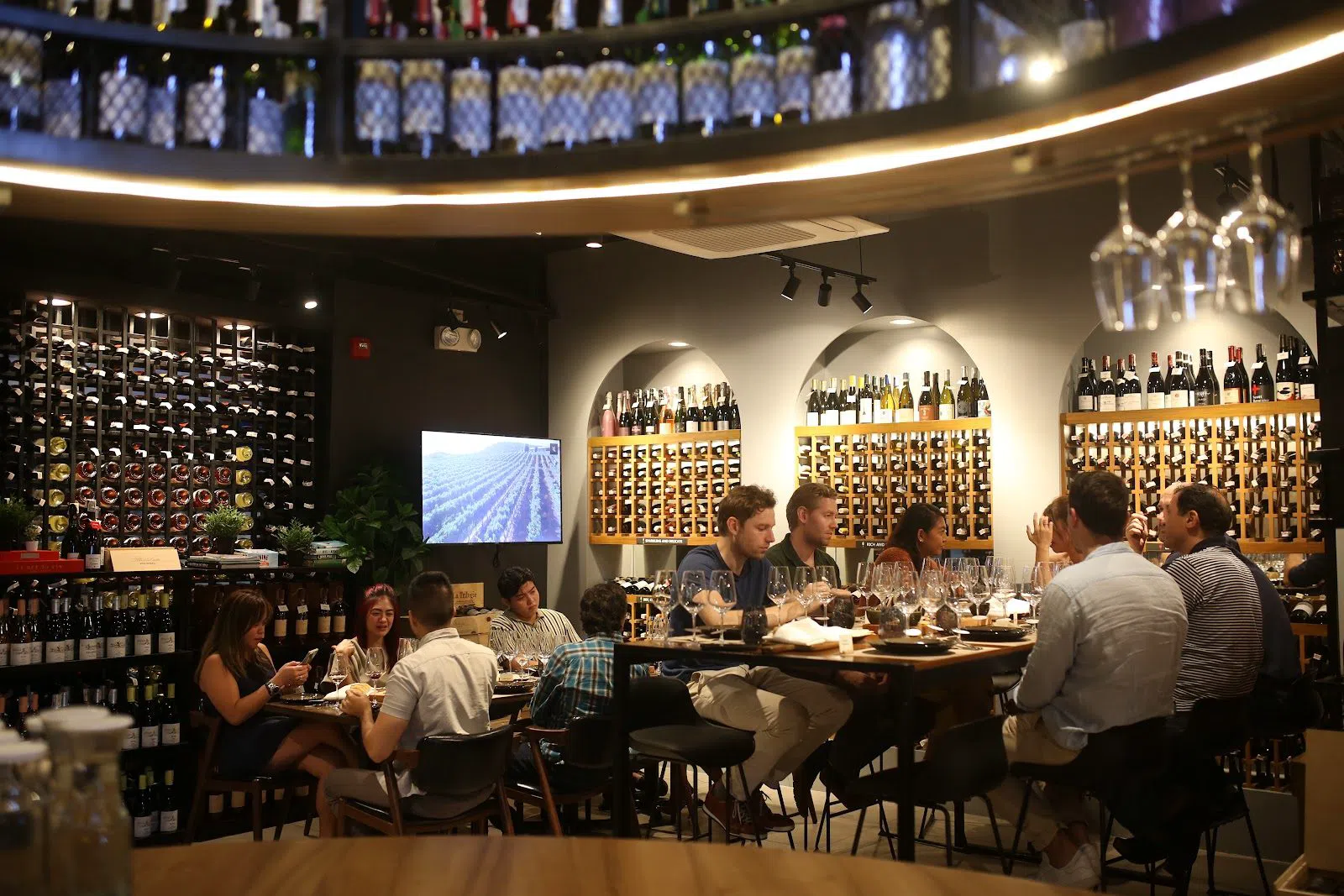
For an evening with a cork in it, Winedrop Jeepney Wine Tour (Makati) is back in 2026, hosted by AWC Philippines and Winedrop. A jeepney-load of guests crawls four Makati dining spots over one night, with international wines paired to Filipino and Asian plates and a run of 'Casino Du Vin' games between stops. It is a ticketed, group-oriented event at roughly ₱3,500–5,000 per person (about $65–90), sold against specific event dates — and it books out fast, so reserve well ahead. This is not a walk-in; treat it like buying a seat at a supper club.
And to end on the loudest note, Club Jeepney (Malate) is jeepney-themed nightlife in the heart of old Malate — a Filipino-pub night out rather than a velvet-rope club. The door is walk-in and the mood is low-key and social; drinks run about ₱150–400 each with a modest cover. Because the venue is run largely through its social media, message ahead to confirm the night's hours and whatever event is on, since a quiet Tuesday and a heaving weekend are different animals. Couples and small groups both fit here easily.

Sequencing the route
If you want the fullest version, run it geographically to fight the traffic. Give a weekday morning to Sarao Motors in the south (and, if you have arranged it, MD Juan out east), keep a separate day for one guided ride through the centre — Binondo for food, Intramuros for history — and hold the eating-and-drinking stops for the evenings near wherever you sleep. Trying to pair a southern factory and a northern food strip in a single afternoon is how visitors lose three hours to a standstill on EDSA. For neighbourhood-by-neighbourhood orientation and what else sits near each of these stops, the broader Manila guide is the companion to this one.
Practical notes
Transport. Public jeepneys are cash-only and cheap — minimum fares sit around ₱13 — but routes are learned, not signposted, so the guided rides above earn their fee if your time is short. For crossing the metro between stops, ride-hailing apps are the sane default; the distances between Las Piñas, Makati, Pasig, Quezon City and Cainta are long and the traffic is serious.
Cash. Carry small notes and coins. Public jeepneys, market food and tips at the factories all run on cash; the tours and Winedrop take advance bookings and cards, but the street does not.
Timing. The factories are strictly weekday, daytime — Sarao roughly 8am–5pm, Monday to Friday, and MD Juan by prior arrangement — so anchor your week around them, not around the weekend. Ride and eat in the cooler ends of the day; midday heat and midday gridlock arrive together. Winedrop runs to fixed event dates, so check those before you fix your calendar, and confirm hours directly for Mr. Jeepney and Club Jeepney, both of which sit on fast-changing strips.
Budget. The two factory visits are effectively free, needing only a tip or a small purchase. The dine-in jeepney restaurants are gentle at roughly ₱250–450 a head. The guided day tours cluster at ₱2,500–4,500 per person, and the Winedrop event sits highest at ₱3,500–5,000. A rich two-to-three-day version of this route — factories, one guided ride, a boodle-fight dinner and a night out — is very achievable for a mid-range budget, with the tours the main line item.
Who it suits. Groups are spoilt here: the boodle-fight restaurants, the bundled Intramuros show and the Winedrop crawl are all built for a table of friends. Couples and solo travellers are best served by the small-group street and food tours and by a quieter night at Club Jeepney. And anyone who cares about how the city actually moves should get to Sarao while it is still hammering — that part of the story is running out of road.
Before you go
Can I visit a real jeepney factory in Manila?
Yes. Sarao Motors in Las Piñas welcomes walk-ins and groups on weekdays (roughly Monday to Friday, 8am–5pm) — call or message ahead for a guided look on the shop floor; entry is free, so tip the workers or buy a small model. MD Juan Enterprises in Cainta is a deeper, enthusiast-focused visit, but you must email or call to arrange access before travelling out.
Which Manila jeepney tour is best if I want street food?
Manila: Parts Unknown (Street Food, Tuktuk & Jeepney Tour) pairs jeepney and tuk-tuk rides with Binondo, the world's oldest Chinatown, and covers all tastings — turon, kwek-kwek, hopia and dumplings — for roughly ₱2,500–3,500 per person. It is small-group and comfortably group-friendly.
Can you actually eat inside a jeepney in Manila?
Yes. Gerry's Jeepney in Kapitolyo, Pasig, seats you inside an actual decorated jeepney for boodle-fight meals of sisig and grilled inihaw, from about ₱250–450 à la carte. Mr. Jeepney on Maginhawa in Quezon City is a related neon jeepney-themed diner known for kare-kare and pinakbet.
How much does a jeepney tour or experience cost in Manila?
Public jeepney fares start around ₱13 and are cash-only. Guided small-group day tours run roughly ₱2,500–4,500 per person; the bundled Intramuros tour with dinner show is about ₱3,000–4,500; and the ticketed Winedrop Jeepney Wine Tour in Makati is the priciest at ₱3,500–5,000 per person.
Are Manila's jeepney experiences suitable for couples or better for groups?
Both, depending on the venue. Group-oriented stops include the boodle-fight restaurants (Gerry's Jeepney, Mr. Jeepney), the bundled Intramuros dinner show and the Winedrop crawl. Couples and solo travellers do best on the small-group street and food tours and on a low-key night at Club Jeepney in Malate, a walk-in Filipino pub rather than a velvet-rope club.