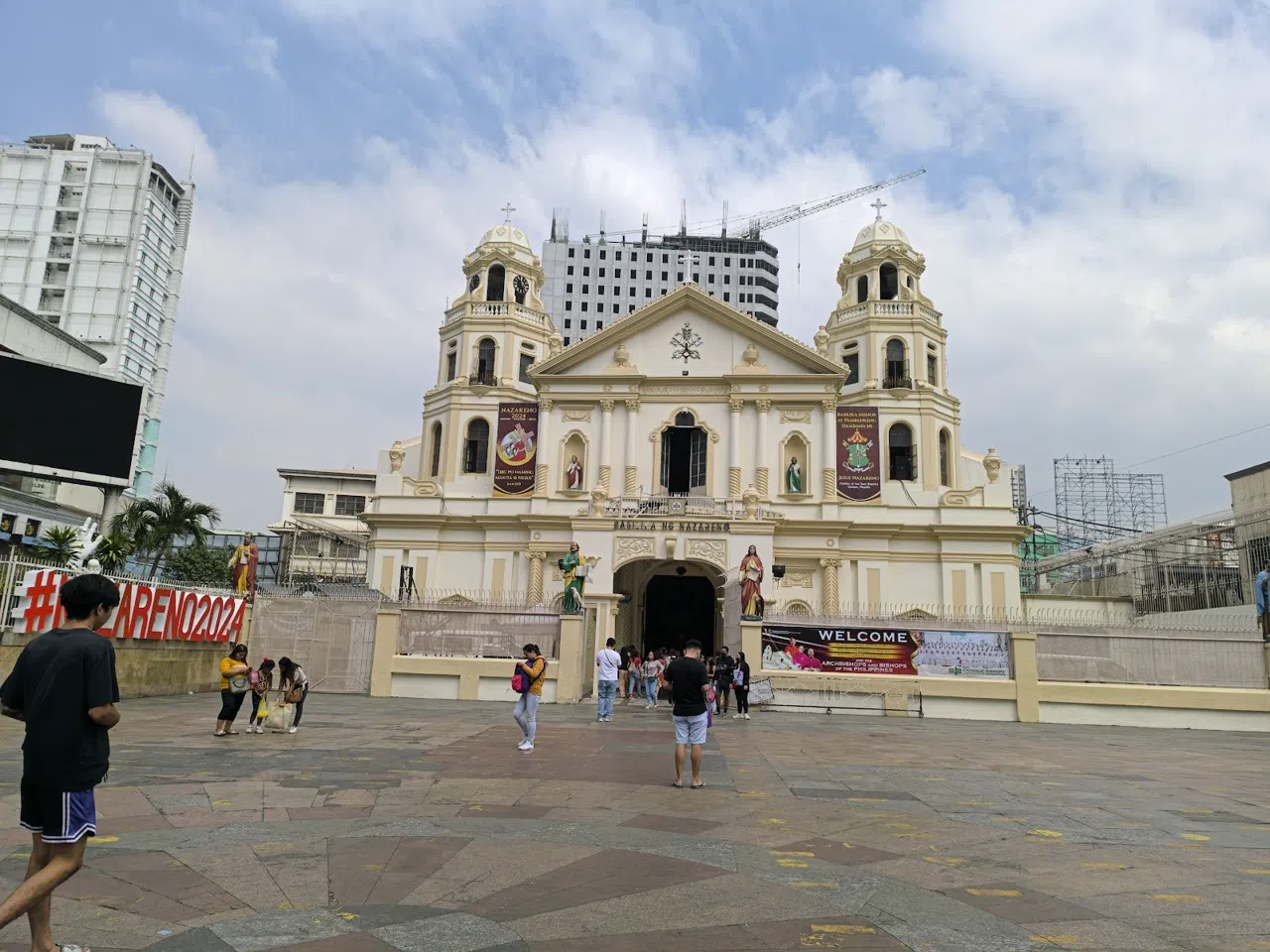

By four in the morning, when most of Manila is still dark, a door in the Quiapo district is already open and the first Mass of the day is already filling. By the time the sun clears the Pasig River, that congregation will have turned over several times — fresh faces every hour, the same murmured prayers, the same wax dripping onto calloused knuckles. This is an ordinary Friday around the Black Nazarene, and it is worth understanding on its own terms before anyone tries to picture Traslación, the January procession that turns this same ground into the most crowded few hours in the Philippines.
Fifteen Masses, One Door: Quiapo Church and Plaza Miranda
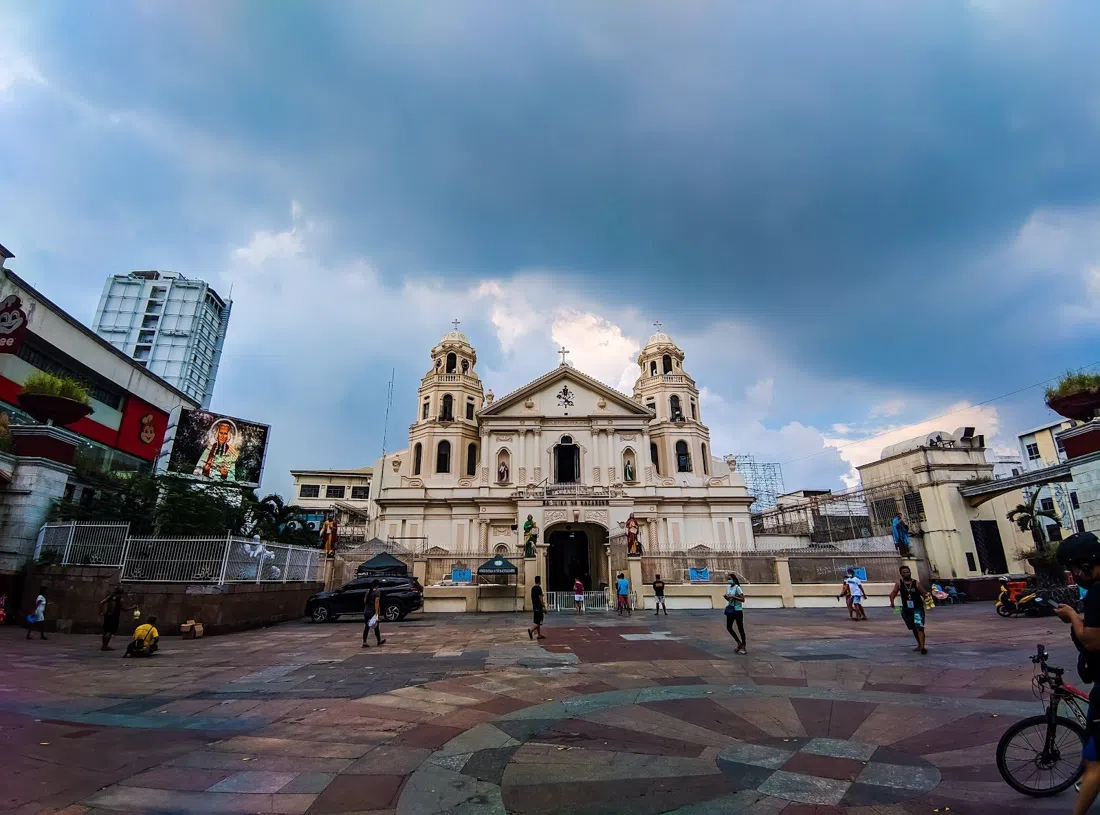
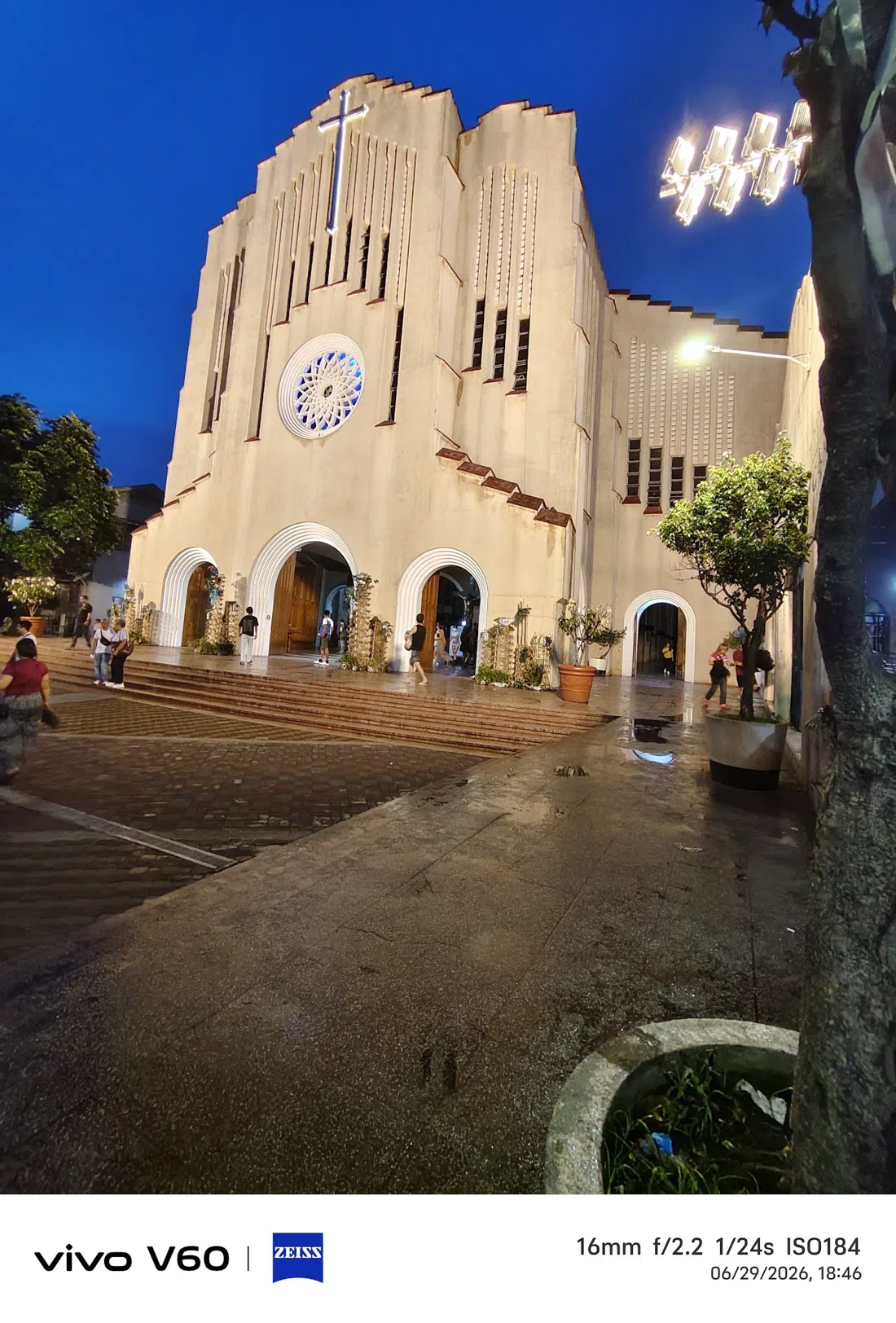
Quiapo Church, formally the Minor Basilica and National Shrine of Jesus Nazareno, is the reason the whole district keeps this rhythm. On an ordinary Friday, fifteen Masses run back-to-back from 4am to 8pm — not a special schedule, just the parish absorbing a devotion that never really lets up. Entry is free and there is no booking system; this is a working basilica, not a monument, and it stays open to anyone who walks in. The one rule worth knowing is timing: this is a functioning church with a packed liturgical calendar, so a tour group wandering in mid-Mass is a problem for everyone, including the group. Time a visit for the gaps between services, or arrive early enough to watch one begin from the back. Outside the doors, vendors sell candles and small towels from around ₱20 — the towels are pressed against the black wood of the Nazarene image inside and kept as sacramentals, a practice worth watching rather than skipping.
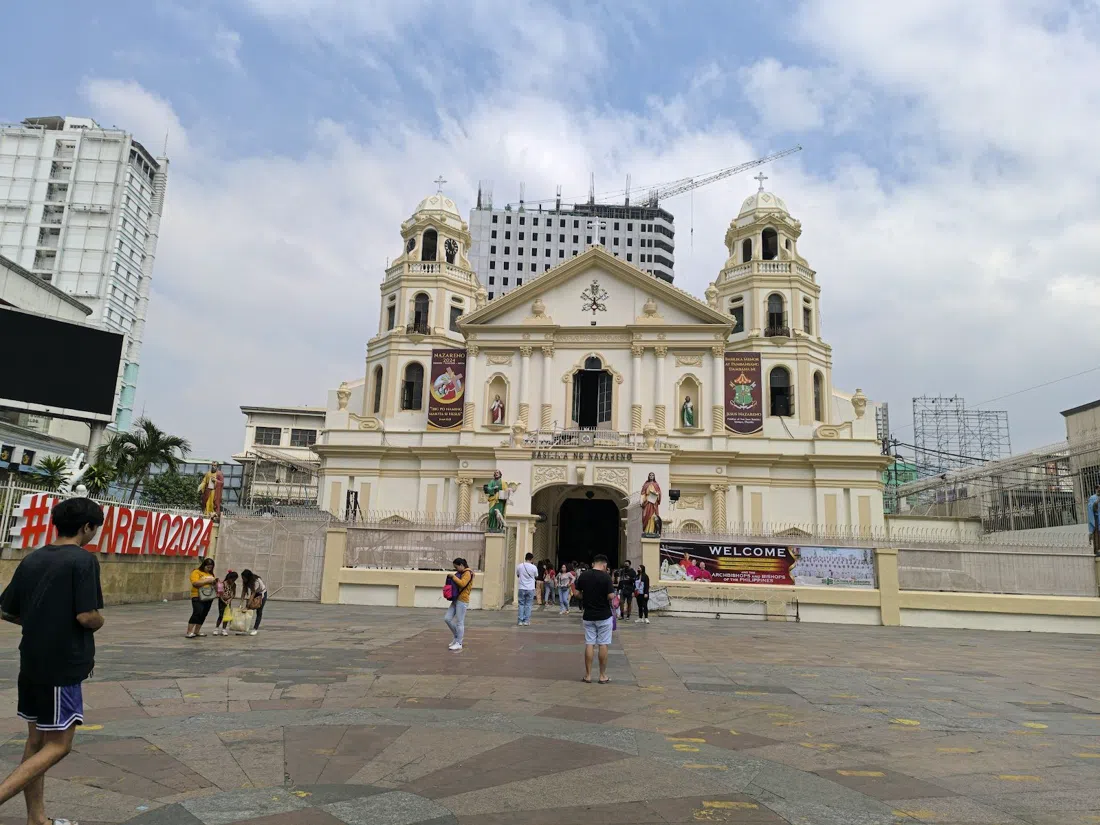
Step out of the church and you're standing in Plaza Miranda (Quiapo), the square where the Traslación procession assembles each January 9th and where the district's two devotional strands — Catholic and folk — sit in plain view of each other. It's a fully open public space that can absorb any size of group, but it rewards a local guide, especially after dark, both for context and for basic street sense in a crowded downtown plaza. The plaza's fortune-tellers, or manghuhula, charge roughly ₱200 a session and are as much a part of Quiapo's identity as the basilica itself; several told a 2026 profile that they trace their own gift back to devotion to the Nazareno. That overlap — a reading a few metres from a confessional — is the clearest single image of what this district actually believes.
The most photographable moment in Quiapo, though, is smaller and cheaper than either: the Carriedo-side candle-lighting kiosks (Quiapo), walk-up stalls with no booking and no ceremony beyond the ritual itself. Candles run from about ₱10 to ₱20, and the kiosks handle groups passing through without friction — this is a stop for a few minutes, not a sit-down visit, and it works well as a first taste of the district before or after Mass.
Where the Church Spills Into the Street
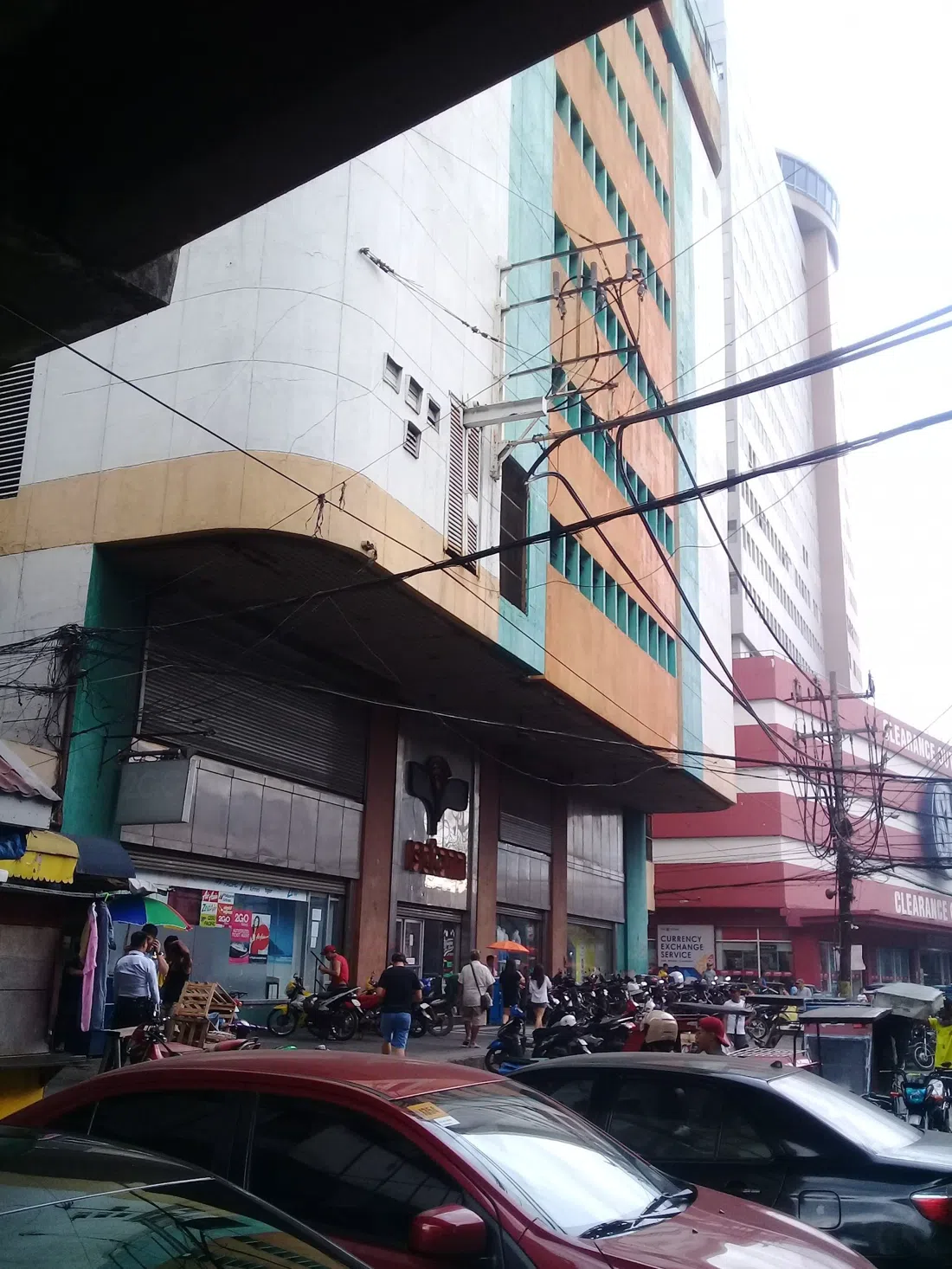
Quiapo's piety doesn't stop at the church steps; it shades directly into commerce, and the two are treated as one continuum rather than a contradiction. Ilalim ng Tulay (Quiapo), literally "under the bridge," is the open-air market beneath the Quezon Bridge where devotional goods — rosaries, images, oils — blur within a few stalls into general handicrafts. It's an easy stop for groups, though the aisles are narrow enough that it's worth keeping clusters small and moving in twos and threes rather than as a single mass. Most items run ₱50 to ₱500, and haggling is normal.
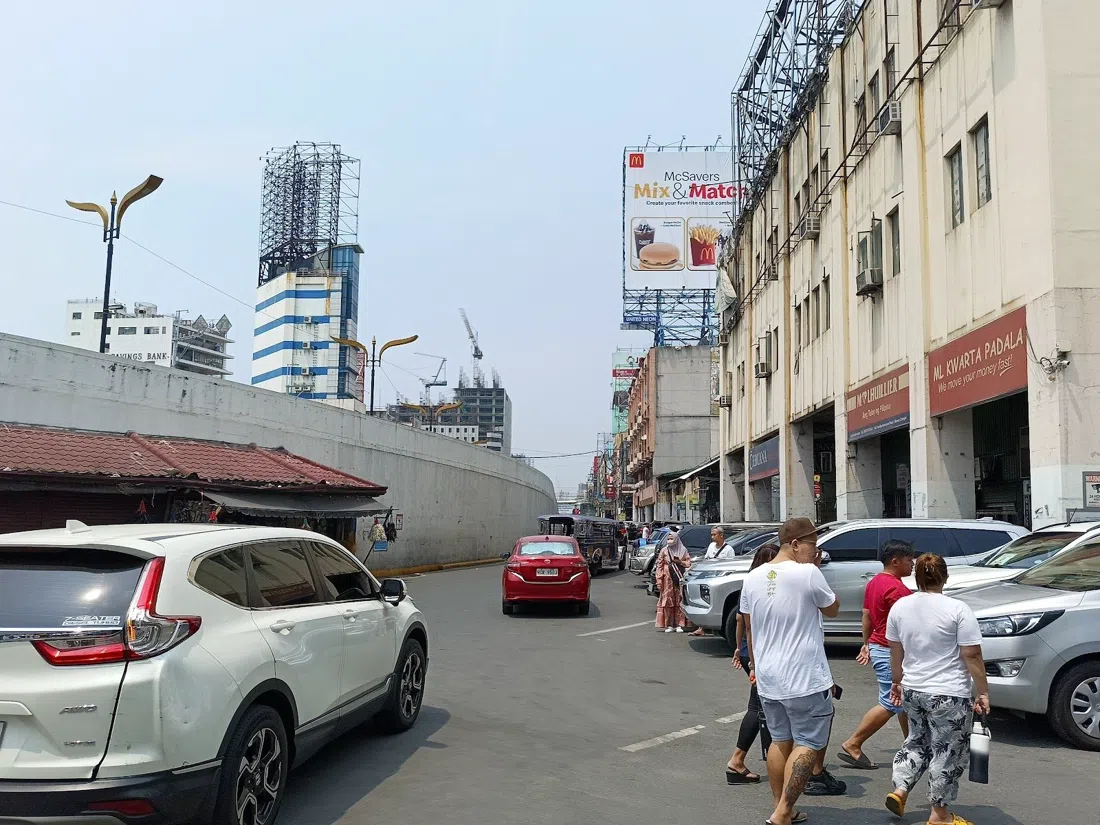
A short walk away, the Evangelista Street herbolario stalls (Quiapo) sell folk medicine literally in the shadow of the basilica — dried herbs, oils, and bottled remedies from around ₱50, sold by vendors who see no tension between a Mass and a love potion. This is the sharpest version of Quiapo's street-level piety: devotees move between the church and the herbolario stalls in the same afternoon, treating both as legitimate sources of help. The street can get crowded on Fridays, when Mass traffic and market traffic overlap, so a weekday morning gives a calmer look at the same stalls.
Ten Minutes Further: Two More Basilicas
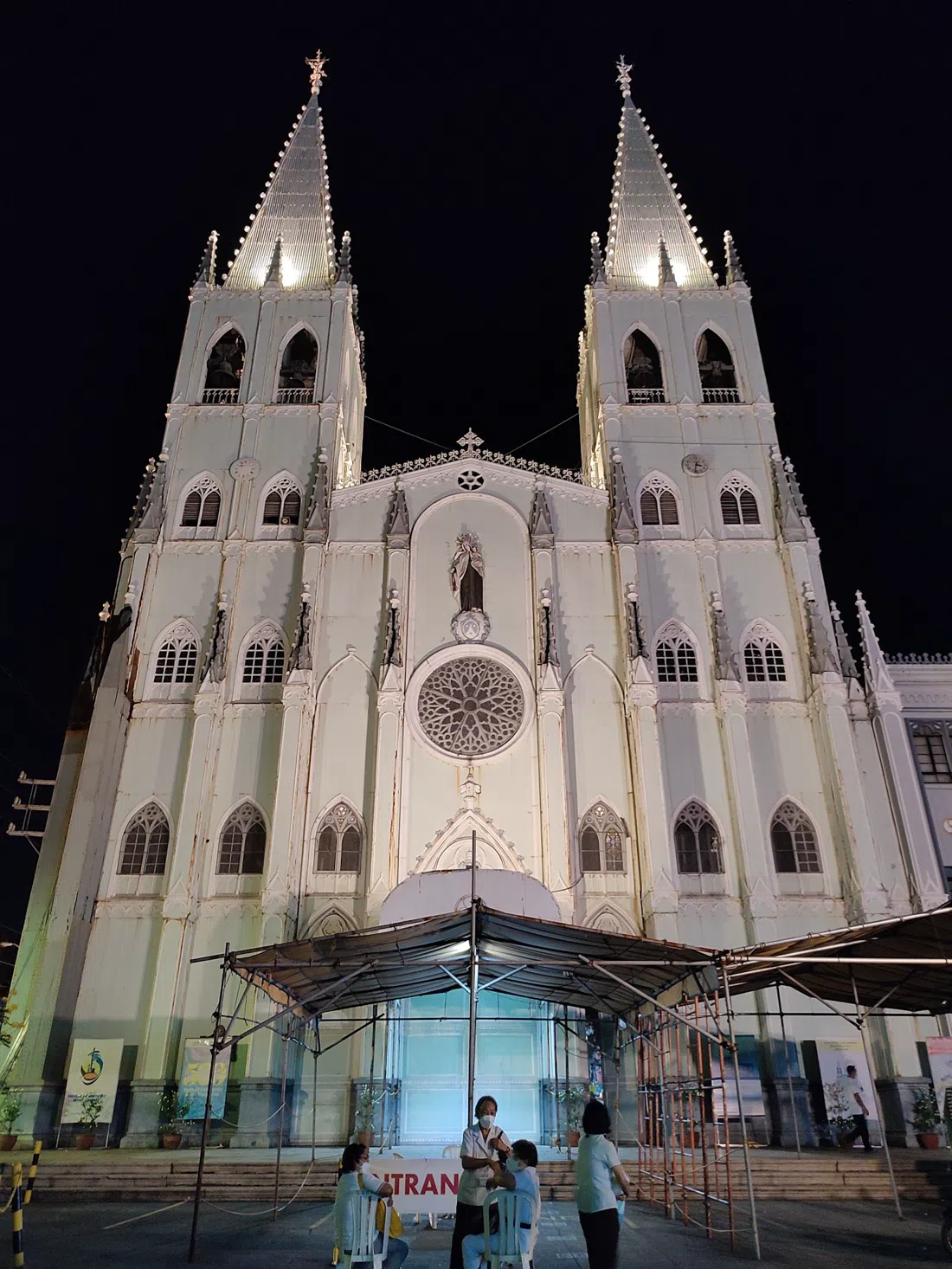
Quiapo isn't the district's only pilgrimage stop. San Sebastian Basilica (Quiapo, roughly ten minutes on foot from the Nazarene) is one of the world's few all-steel churches, a Gothic Revival landmark currently mid-restoration — Phase 3 in 2026 is focused on the bell towers and facade — but it remains fully open for Mass and visits throughout the work. It's an open parish that welcomes groups, and the conservation foundation running the restoration also runs guided heritage tours, roughly ₱300 to ₱500 per person, which is the better way to see it if the history of the ironwork matters as much as the liturgy.
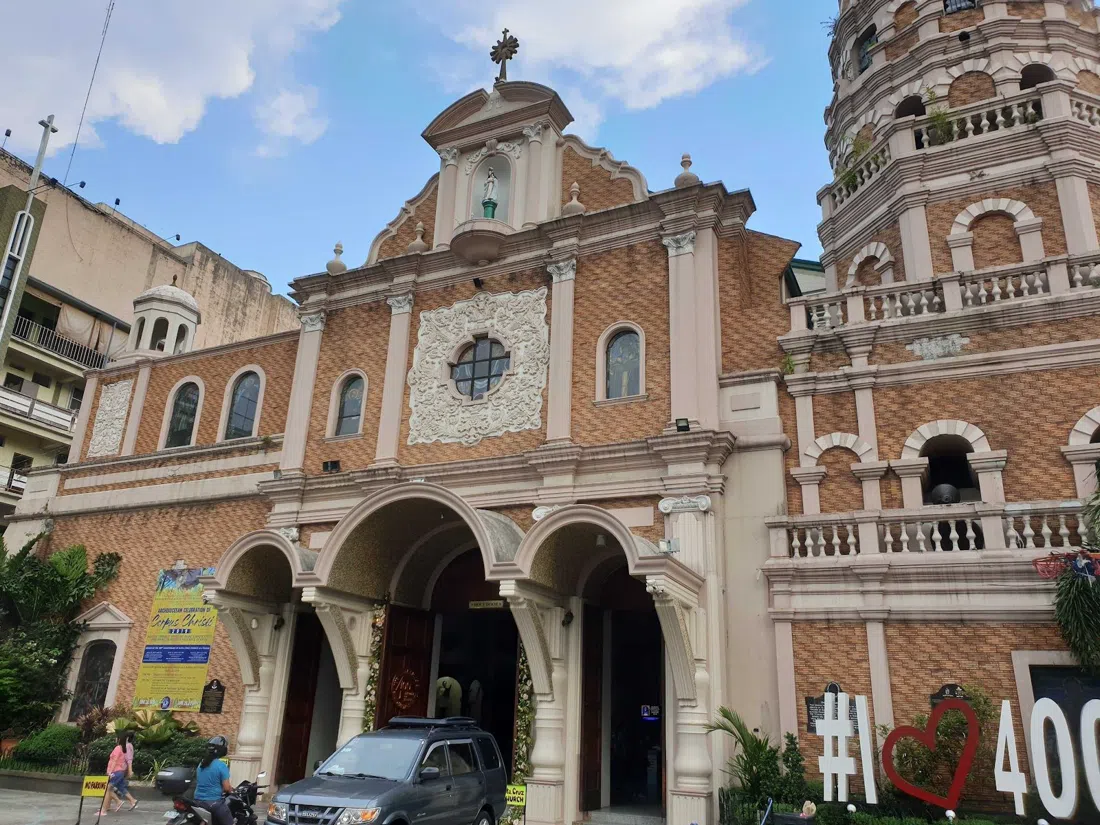
Across the Quezon Bridge, a five-minute walk from Quiapo, Binondo Church (Binondo), the Minor Basilica and National Shrine of San Lorenzo Ruiz, shows the same street-level devotion translated into Chinatown's own patron-saint tradition. It's an open parish, welcomes groups, and gets genuinely packed at Sunday and noon Masses — worth building slack into a schedule if a specific service matters, since seating disappears fast.
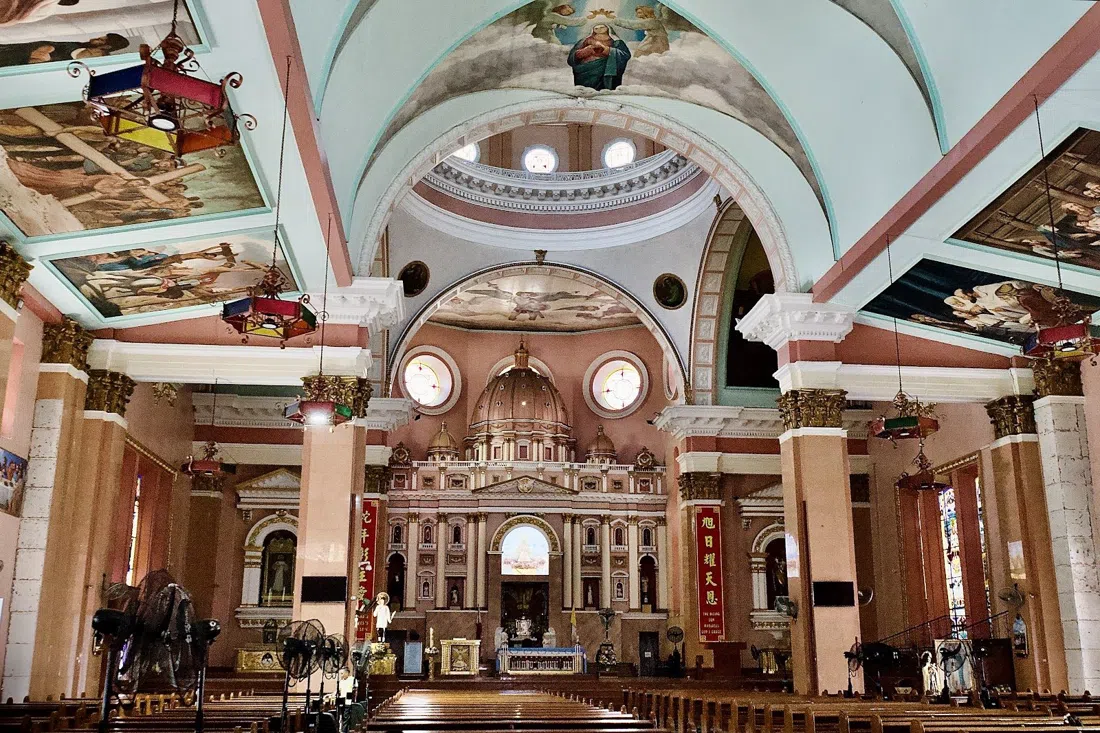
East of the Nazarene, Sta. Cruz Church (Sta. Cruz), the Archdiocesan Shrine of the Blessed Sacrament, runs eleven Masses on an ordinary Sunday and anchors the far edge of a Quiapo devotional walk. It's an open parish that welcomes groups and makes a natural second or third stop after the basilica itself — quieter than Quiapo Church, but built on the same volume of daily worship.
Faith Beyond the Nazarene
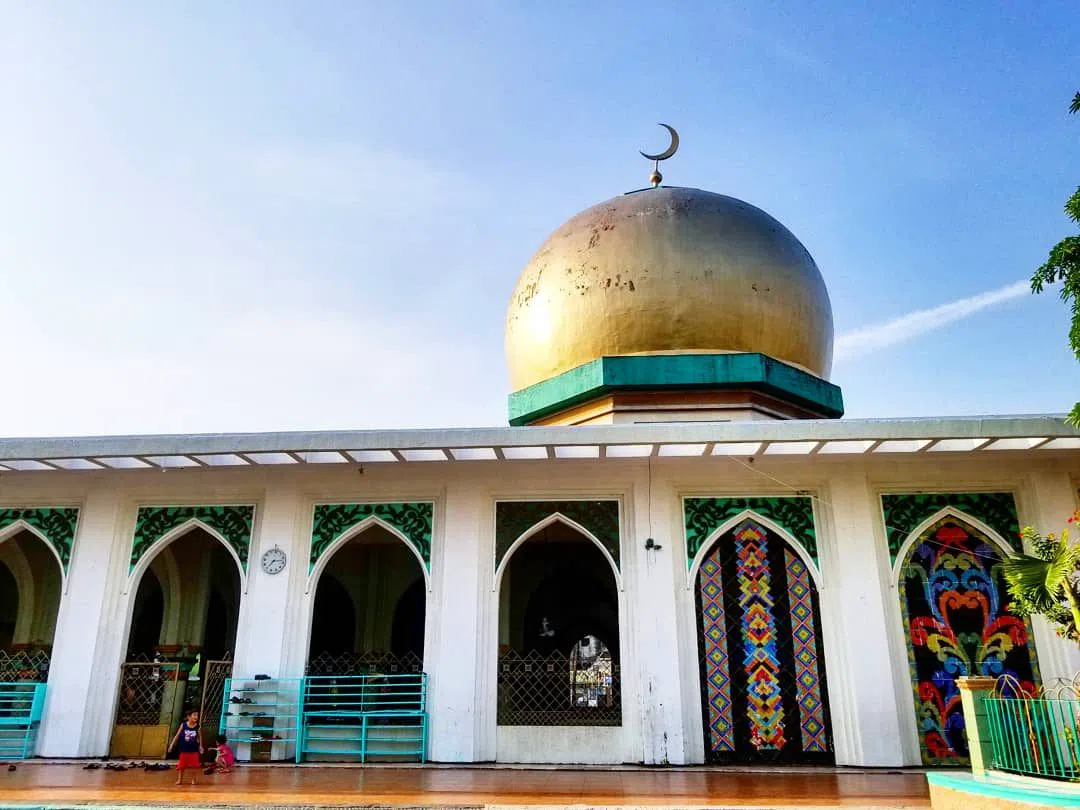
Quiapo's reputation is built almost entirely on Catholic devotion, but the district's street-level piety was never only Catholic. The Manila Golden Mosque (Quiapo), or Masjid Al-Dahab, sits within walking distance of the Nazarene's own forecourt and welcomes visitors and groups outside prayer times. Modest dress and shoe removal are expected, and a local guide is the easiest way to arrange a respectful visit and understand what's being seen. Entry is free, though donations are welcome. Standing in the mosque's courtyard, close enough to hear the basilica's bells, is the clearest correction to any assumption that Quiapo's fervor belongs to one faith alone.
The Other Flood Tide: Baclaran on Wednesdays
Quiapo's Friday crowds have a direct counterpart across the city. Baclaran Church (Baclaran), the National Shrine of Our Mother of Perpetual Help, draws routine crowds large enough to require early arrival for seating — its own weekly flood tide, built around Wednesday novenas rather than Friday devotion to the Nazarene. It's not walkable from Quiapo — figure 30 to 45 minutes by taxi or Grab depending on traffic — so it's not a same-morning add-on, but it's the single best point of comparison for understanding that Quiapo's crowds aren't an anomaly. Manila supports more than one church capable of filling to capacity on a weekly basis, and Baclaran is the clearest proof.
Planning the Visit
Transport: Quiapo is dense, walkable, and largely traffic-choked at street level, so plan to move on foot once you're in the district — Quiapo Church, Plaza Miranda, the candle kiosks, Ilalim ng Tulay, and Evangelista Street are all within a few minutes of each other. San Sebastian Basilica is a ten-minute walk; Binondo Church is five minutes over the Quezon Bridge. Baclaran is the exception and needs a taxi or Grab. The LRT-1 Carriedo station drops you within a few minutes' walk of Quiapo Church itself, which is the simplest way in from elsewhere in the city.
Cash: Bring small bills. Candles, towels, herbolario bottles, and handicraft-stall purchases are all cash transactions in the ₱10–₱500 range, and vendors in this district rarely handle cards or change for large notes.
Timing: Weekday mornings, outside the 4am–8pm Friday Mass run, give the calmest look at Quiapo Church and the surrounding stalls. Fridays themselves are the district at full intensity — worth experiencing once, but plan around Mass times rather than through them. Traslación in January is a different scale of event entirely and isn't a normal-visit day for anyone without a specific reason to be in the crush.
Budget: This is one of the cheapest serious sightseeing routes in Manila. Every basilica is free to enter; the only real costs are candles (₱10–₱20), a fortune-telling session in Plaza Miranda (roughly ₱200) if you're curious, herbolario bottles (from ₱50), market handicrafts (₱50–₱500), and an optional guided San Sebastian heritage tour (₱300–₱500pp). A full day covering Quiapo, San Sebastian, and Binondo comfortably runs under ₱1,000 per person outside of shopping.
For where to stay while covering this route, start with Manila hotel search, and for the rest of the city beyond Quiapo, the Manila guide covers the wider picture.