
By 5am the flower trucks from Baguio are already double-parked on Dangwa, and by midnight the last grill on Fusion Alley is being hosed down for the night. In between, Sampaloc runs on a food economy most visitors to Manila never see: wet markets selling to restaurant buyers before sunrise, talipapas the size of a living room, and turo-turo counters that have fed the same University Belt students for twenty years running. This isn't a curated food tour — it's a full district's day of eating, block by block, from first light to last skewer.
Sampaloc sits just north of Recto and wraps around the University of Santo Tomas and University of the East, which is why so much of its food economy runs on student budgets and pre-dawn wholesale hours rather than tourist timing. Do this crawl in the order the district actually wakes up: flowers and wet-market meat at dawn, talipapa browsing through the morning, University Belt grazing through the day, and Fusion Alley as your dusk finish line.
Dawn: Flowers First, Then the Working Market
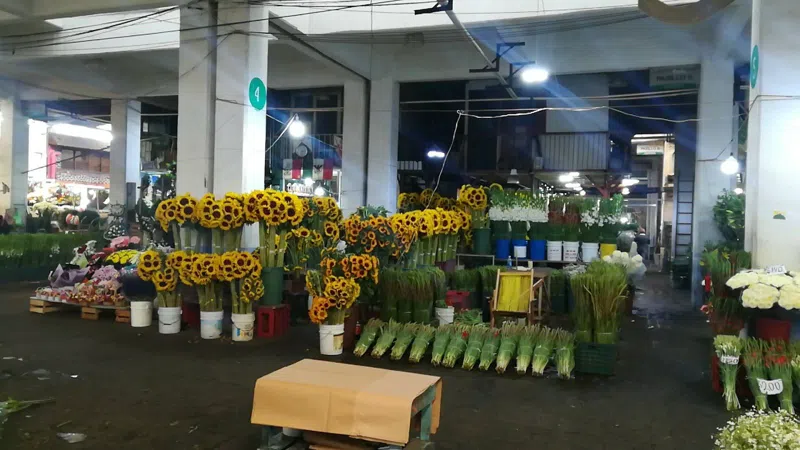
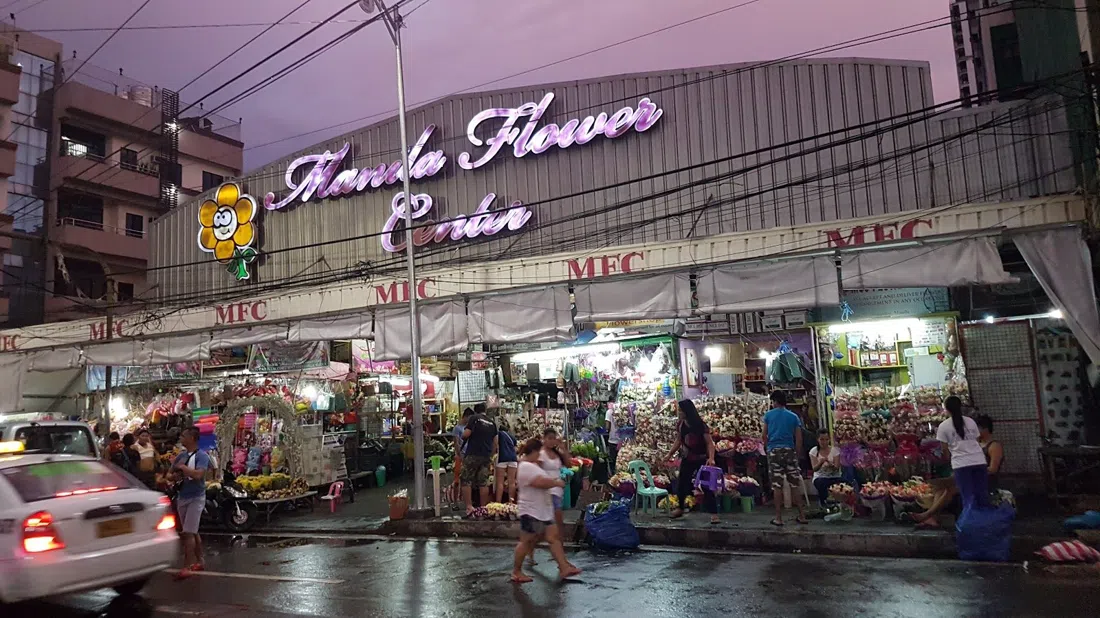
Start before the city does. Dangwa Flower Market (Dangwa, Sampaloc) has traded here since the 1950s and is still the country's biggest flower market — a sprawling open street market that's busiest and most photogenic in the hour before dawn, when the overnight trucks from Baguio unload. This isn't styled for photographers; it's a working wholesale trade, and that's exactly why it's worth seeing at that hour. Flowers sell per bundle, roughly 50 to 90 percent cheaper than a Metro Manila florist, cash only. Groups are welcome — nobody here is going to stop you wandering the stalls — but come with the understanding that vendors are moving product, not posing for you. Arrive by 5am if you want the trucks-unloading scene; by 8am it's just a (still excellent) flower market with the theatre gone.
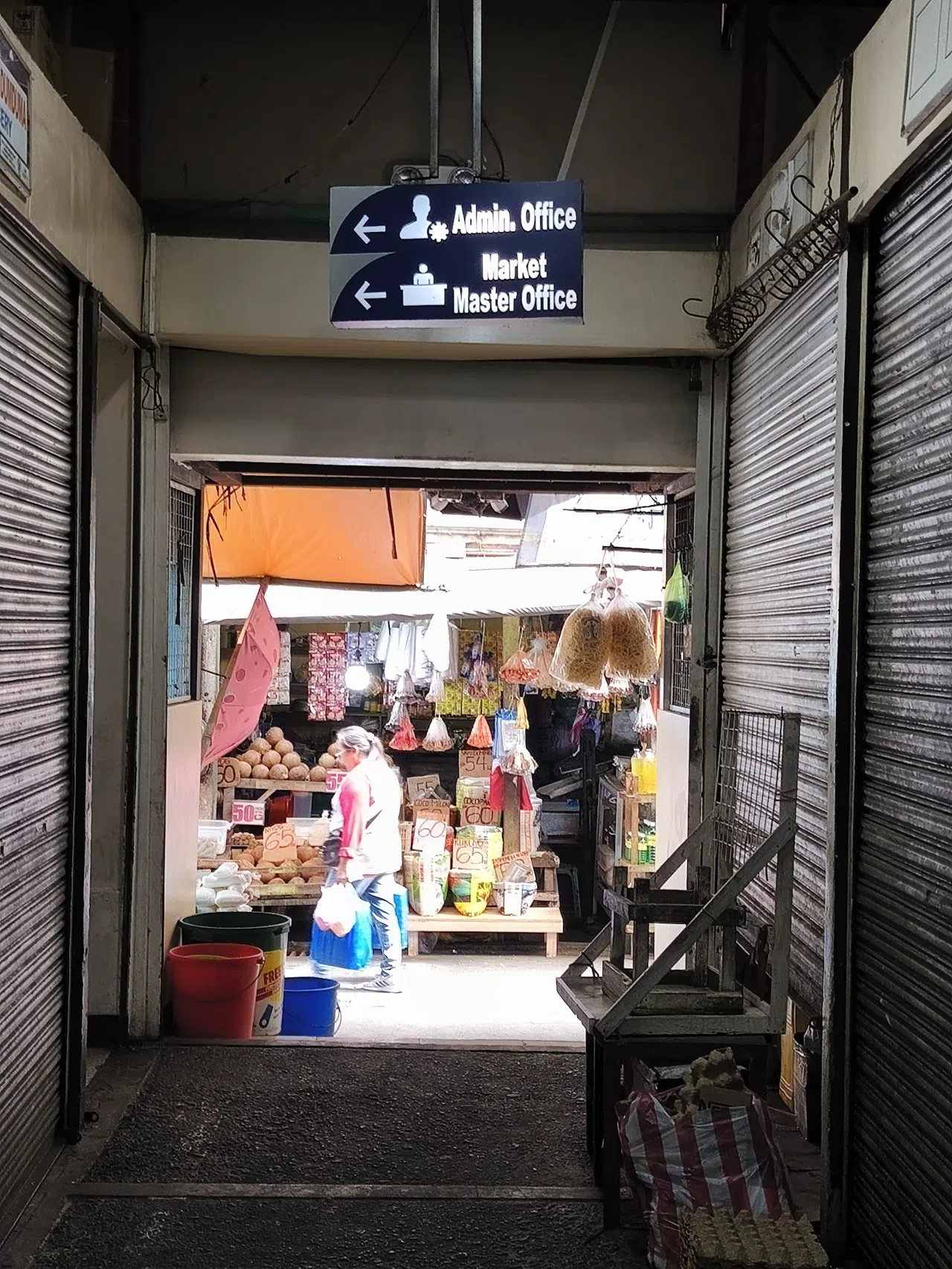
From Dangwa, walk or grab a short tricycle ride to Trabajo Public Market (Sampaloc), the district's other major formal market and a working-class counterpoint to Sampaloc Market itself a few blocks north. This is an open public wet-and-dry market that takes any group size, and it's the crawl's best stop for watching Manila's meat and produce sourcing at street level — butchers breaking down carcasses, produce runners restocking, the whole supply chain visible before the day's restaurant orders get filled. Go before 10am while stalls are still fully stocked; by early afternoon a lot of the best cuts and produce have already sold through. Prices are standard wet-market rates, cash only, and nobody's going to card you for how big your group is — this is a market built for locals doing their weekly shop, and tourists are simply ignored, not fussed over.
The Talipapa Circuit: Sampaloc's Micro-Markets
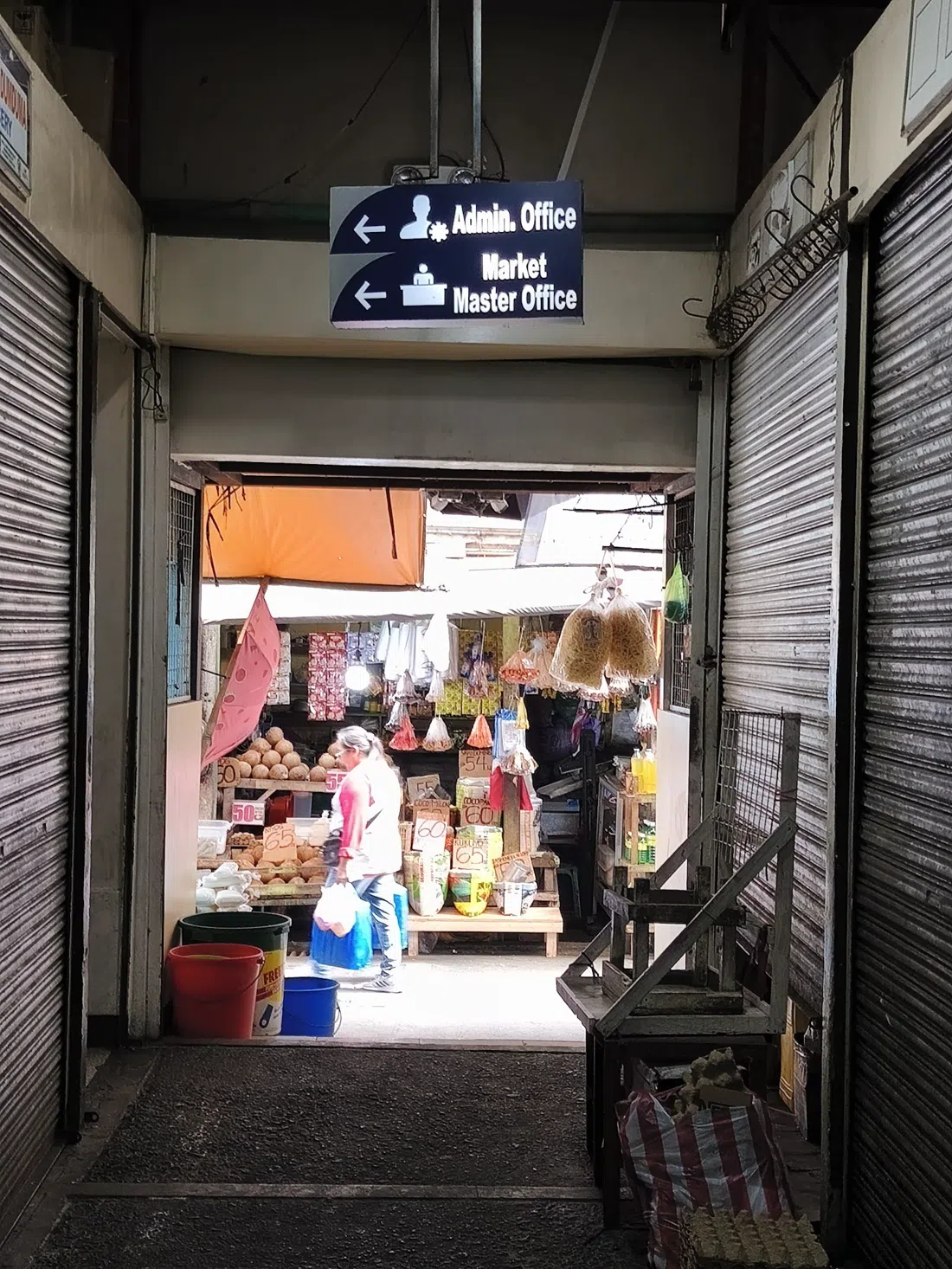
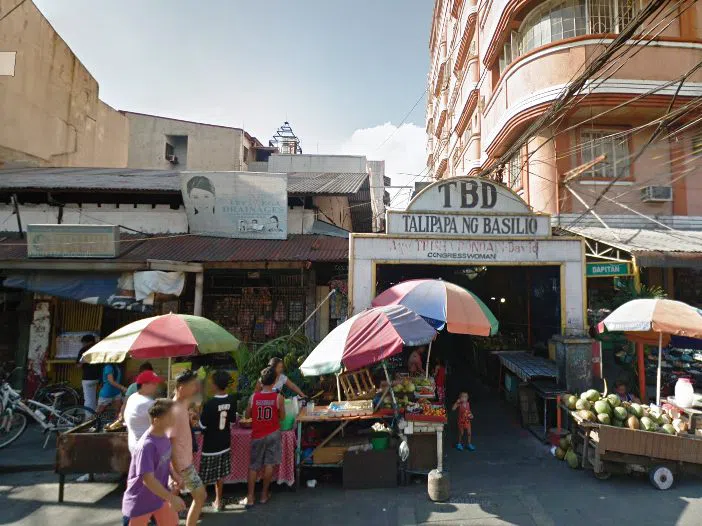
What Trabajo and Dangwa are at scale, Sampaloc repeats in miniature on nearly every other block. Talipapa ng Basilio (near Barangay 407, Sampaloc) is one of several informal neighborhood talipapas scattered through the district — a small street market squeezed onto a narrow footpath, selling the same category of goods as the big markets but at a fraction of the scale and with none of the wholesale-buyer energy. This is best done in pairs or small groups; the footpath genuinely doesn't have room for a crowd to move through comfortably, and you'll be stepping around baskets and stools rather than browsing wide aisles. Prices are very cheap, cash only, and the real value of stopping here isn't any single find — it's seeing how many of these micro-markets exist, block by block, feeding the immediate streets around them rather than the wider city. If you only have time for one formal market, make it Trabajo; if you want to understand how Sampaloc actually shops day to day, a talipapa like this one is the more honest picture.
Midday: Grazing the University Belt
By late morning the crawl shifts from sourcing to eating, and Sampaloc's proximity to UST and UE means the entire midday street-food economy is priced for students, not tourists.
P. Noval Street food strip (near UST) is the daytime, campus-driven counterpart to Fusion Alley's night scene — a casual row of turo-turo counters built entirely around university foot traffic. Meals run from roughly ₱99 up, and the economics here are home-cooked, not food-park novelty: rice, a viand, maybe a drink, out the door in minutes. Groups are fine, but expect to split across two or three small eateries rather than sit together at one — most of these counters seat a handful of people at most.

A few streets over, Dapitan Street food cluster (near UST) runs longer-running and less Instagrammed than the newer food parks, anchored by UST-adjacent institutions like Mang Larry's Isawan. It's a walkable strip good for groups who want to graze between several stalls rather than commit to one sit-down meal — skewers and snacks run ₱15 to ₱150 a piece, so a few pesos buys you a taste-test of three or four different vendors before you've spent what one restaurant plate would cost.
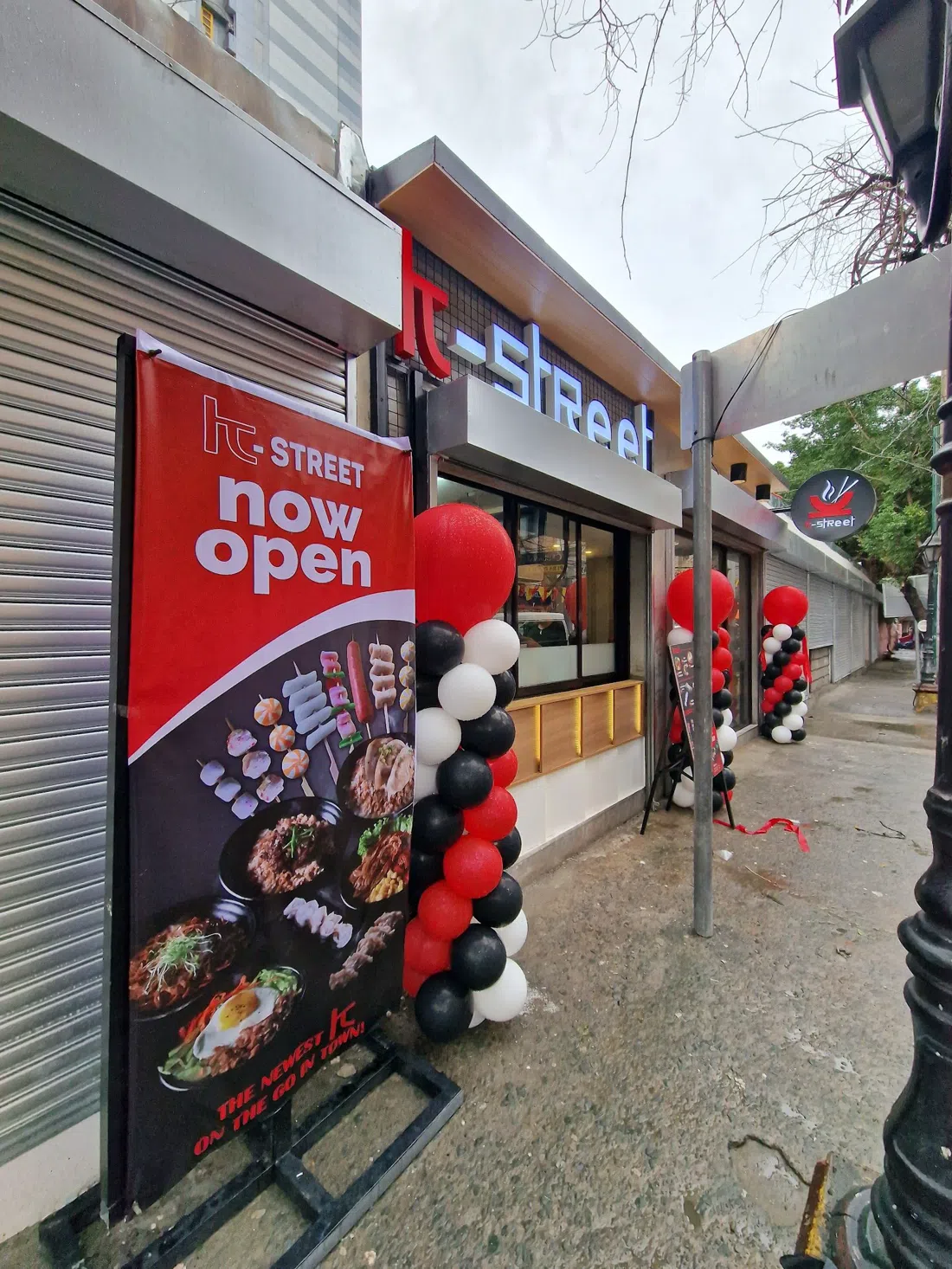
Connecting all of it is España Boulevard street-food carts (University Belt), the open-air roadside cart economy that is the connective tissue of the whole crawl. This is the classic University Belt snack circuit — a few pesos per piece, no seating, no ceremony — and it's built for locals eating between classes, not for tourists working through a list. Treat it the way the students do: graze in a moving line as you walk between the other stops rather than treating it as a destination in its own right.
The Institution: A Twenty-Year Carinderia
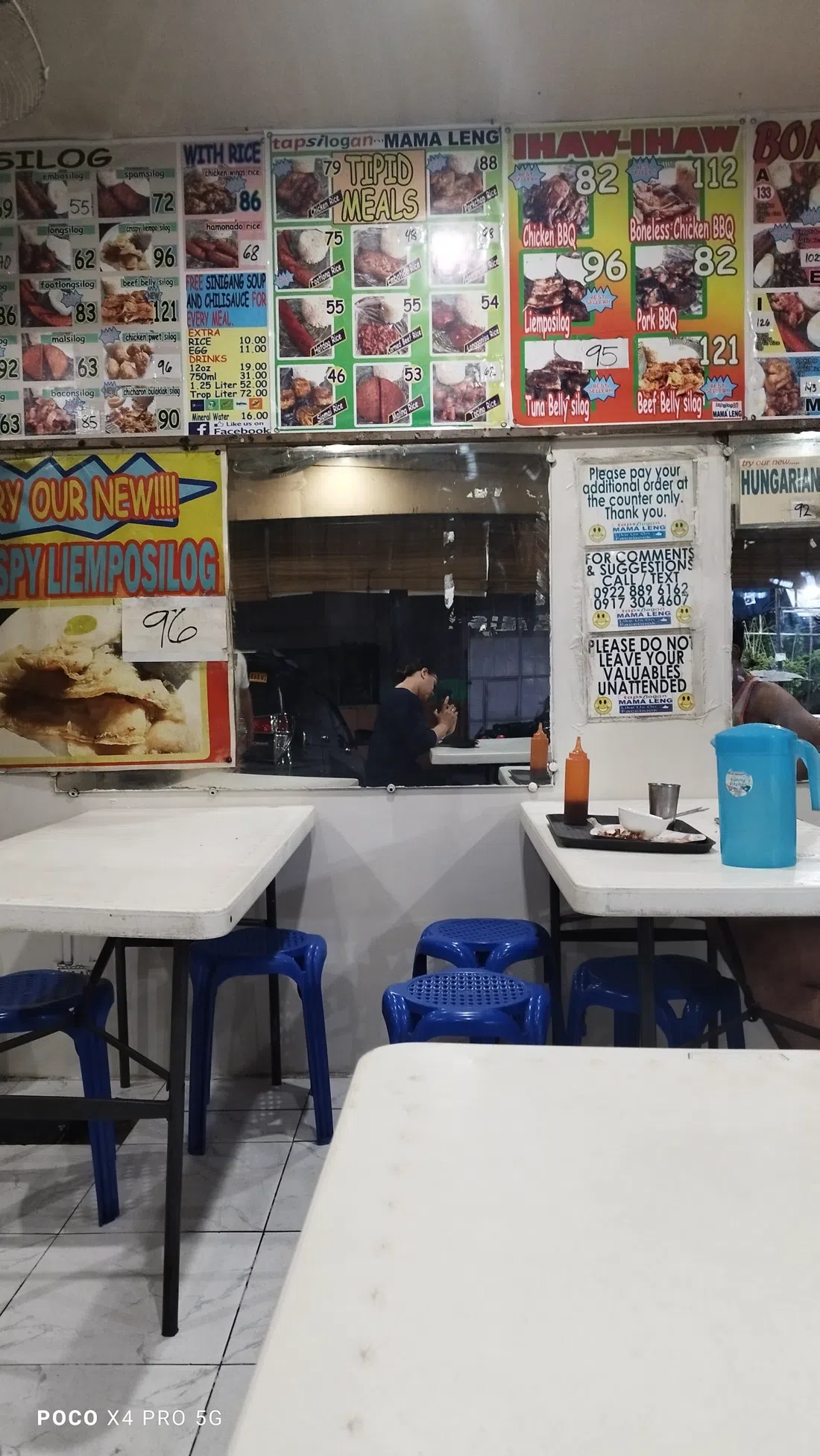
For a proper sit-down plate, detour to the district's south end near Recto for Tapsilogan ni Mama Leng, a carinderia and turo-turo institution that's anchored this corner for more than twenty years — regulars reportedly include PBA players, which tells you something about how seriously the neighborhood takes it. This is a small dine-in counter, and it's genuinely not built for a big group; go in pairs or small clusters rather than trying to fit a crowd around it. A classic tapsilog plate runs roughly ₱80 to ₱150, and the point of stopping here isn't novelty — it's proof that Sampaloc's carinderia culture isn't a trend piece, it's generational. If you only eat one full sit-down meal on this crawl, this is the one worth the wait for a stool.
Dusk: Fusion Alley Closes the Day
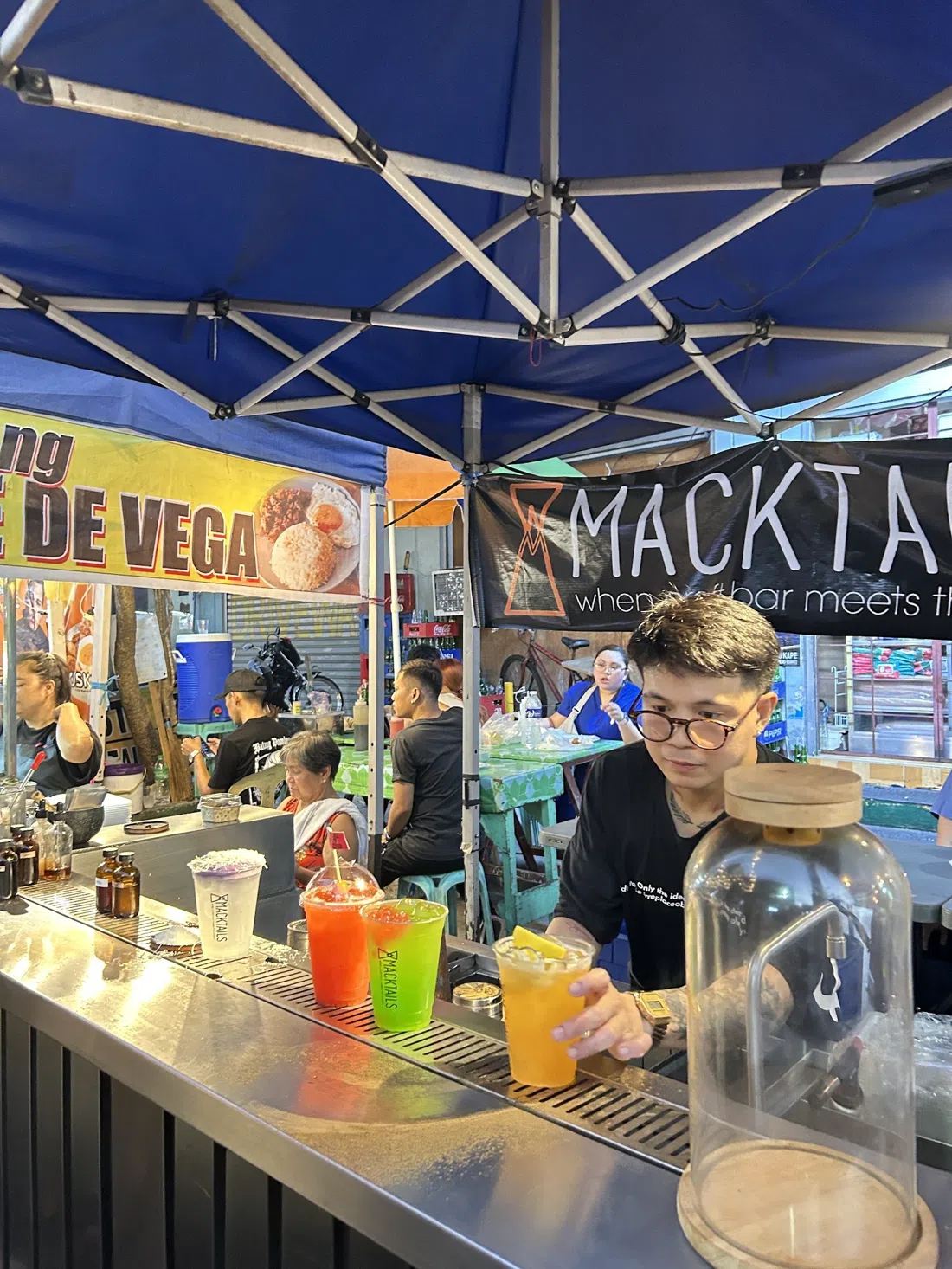
End where the district's night economy is loudest. Fusion Alley Food Park (Sampaloc) is Manila's current most-hyped food park — local food bloggers have nicknamed it "Ugbo 2.0" — and it's the crawl's natural dusk climax: a night street-food park with no door policy and no group limit, trading nightly and still confirmed active as recently as late 2026 via Instagram and Facebook check-ins. The catch is seating, or the near-total lack of it — come expecting to eat standing, or to take food to go, especially once the evening crowd builds. Get there before 8pm if you want any shot at a place to lean while you eat; after that it's a standing-room crush. Budget roughly ₱100 to ₱300 a person for a proper grazing session across multiple stalls, which for a full night's dinner is still cheaper than one sit-down restaurant meal in most of the city.
Planning the Crawl: Transport, Cash, Timing, Budget
Timing. Do this crawl in the order Sampaloc itself runs on: Dangwa before 5-6am for the flower-truck unload, Trabajo before 10am while stalls are fully stocked, the talipapa and University Belt strips through late morning and midday, Tapsilogan ni Mama Leng for a sit-down lunch or early dinner, and Fusion Alley from early evening through to whenever you're done, ideally arriving before 8pm to beat the seating crush. Realistically this is a full day, not a two-hour detour — pace it in two blocks (dawn markets, then midday-to-dusk eating) if a single continuous crawl is too much.
Cash. Every stop on this list runs on cash. Bring small bills — none of these markets, talipapas, or carts are set up to break a large note, and card payment simply isn't a thing here.
Transport. Sampaloc is walkable in sections but spans a genuine distance end to end; short tricycle or Grab hops between the dawn markets, the University Belt strips, and the Recto-end carinderia will save you real time. It's also a short ride from most central Manila hotels — see Manila hotel search if you're basing yourself nearby for the full day.
Groups. The formal markets (Trabajo, Dangwa) and Fusion Alley take any group size without issue. The talipapa and most of the University Belt strips work better in pairs or small clusters of three or four, both for physical space and because you'll likely be splitting across multiple small counters rather than sitting together. Tapsilogan ni Mama Leng is the tightest squeeze of the day — go small there.
Budget. A full dawn-to-dusk crawl, eating at every stop, comfortably runs under ₱1,000 a person — a P. Noval turo-turo plate from ₱99, Dapitan skewers at ₱15-150 each, a Tapsilogan plate at ₱80-150, and a full Fusion Alley grazing session at ₱100-300. The flowers at Dangwa are the one line item worth adding if you want a bundle to carry home for the day — they're 50-90% cheaper than anywhere else in the city.
For more on where to base yourself and what else the city has beyond Sampaloc, see the full Manila guide.