
By half past five on a Sunday morning the light is still low over the water and the seawall along Roxas Boulevard already has its regulars: runners in faded race shirts, a badminton net strung between two lamp posts, a man selling boiled peanuts out of a bicycle basket. For a couple of hours the widest road in Manila belongs to people moving at the speed of their own legs. It is the closest thing this city has to a weekly civic ritual, and like most things here it is improvised, unevenly enforced, and more revealing than anything with a plaque on it.
The hour the boulevard belongs to feet
Roxas Boulevard runs about six kilometres along the water, from the edge of the walled city in the north, past Quirino Grandstand and the ceremonial park behind it, down through Ermita and Malate and out of the city limits at its southern end. It sits on reclaimed ground laid down in the American colonial period, when it was called Dewey Boulevard and lined with the coconut palms that are still the only vertical thing between the traffic and the sea. The hotels, the embassies and the concrete cultural monuments arrived later, and the road widened each time, until it reached its present eight to ten lanes.
On Sunday mornings a stretch of those lanes beside the Baywalk promenade gets coned off and the asphalt becomes a plaza. The closure is a city operation, not a timetable you can check from abroad: the length of the closed section changes, the hour the cones come out and go away changes, and some weeks the barriers are thinner than the crowd. The crowd does not change. People were walking this seawall at dawn long before anyone thought to close a lane for them, and they will be there whether or not the cones are. Treat the car-free part as a bonus and the promenade as the plan.
Go early. Between 5.30am and 7.30am there is a sea breeze, the light comes in low and grey-gold off the water, and the whole social cross-section of the city is out in it: aerobics classes with a speaker on a plastic chair, teenagers on secondhand road bikes, grandmothers walking in threes, fishermen with hand lines over the riprap, and vendors with shaved ice, peanuts and bottled water for twenty or thirty pesos. By nine the shade has gone entirely, the temperature is heading for the mid-thirties, and the boulevard turns back into a road. There is no middle setting.
The water is not for swimming. This is a working harbour with the city's drainage behind it, and the pale engineered strand poured over the old rocks is a promenade surface, not a beach. It is also a dense city centre, so keep your phone in your hand rather than your back pocket, as you would anywhere with a crowd this size.
Mass at Malate and the older Sunday
Two blocks inland from the middle of the strip, Malate Church (Our Lady of Remedies Parish) in Malate runs the other Sunday ritual on this stretch, and it is centuries older than the jogging one. There has been a parish on this ground since the late sixteenth century; the stone church you see has been knocked about by earthquakes, fire and the fighting of 1945 and rebuilt each time, which is why its façade reads as a slightly uneasy committee of styles. Entry is free and open to anyone.
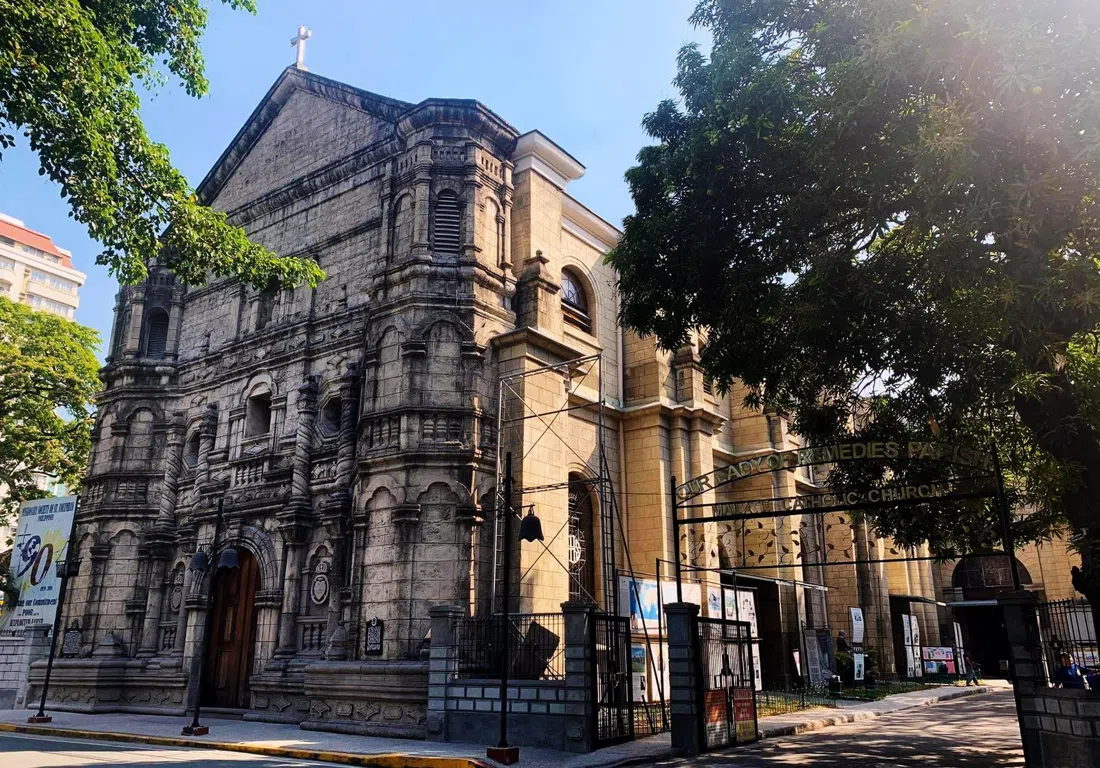
Masses start at 6am and run through the day, with English-language services at 9.30am, 12.30pm, 3.30pm and 8pm. That makes the 9.30am the natural hinge for a visitor's Sunday: you walk the boulevard in the cool, cross inland, and sit down just as the heat arrives. If you come as a group, the etiquette matters more than the architecture. Attend rather than tour. Stand at the back, split a large party across the side aisles, leave the flash off and the cameras down during the liturgy, and do your looking in the quarter-hour gap between services. The congregation here is not a backdrop.
The free museum two minutes inland
A two-minute walk inland from the boulevard's northern end, the National Museum of Fine Arts in Ermita occupies the old legislative building, a hulk of neoclassical stone that was gutted in the war and rebuilt. Admission charges were dropped years ago and never came back. It is open 9am to 6pm, walk-in only, with no timed entry and no booking, just a bag check at the door, which makes it the one stop in this district a group of fifteen can attempt at eleven on a Sunday morning without a single phone call in advance.
Start in the main hall with Juan Luna's Spoliarium, the enormous 1884 canvas of dead gladiators being dragged from a Roman arena, painted by a Filipino in Spain and read ever since as a colonial allegory. Then let the galleries do what they are good at: nineteenth-century portraits of a merchant class dressing itself for Europe, religious carving pulled out of provincial churches, and modernists arguing with all of it. Signage is uneven from hall to hall and there is no cafe worth building a schedule around, so bring water and leave large packs at the counter. The marble is cool and the ceilings are high, and you can spend two hours or forty minutes here without feeling short-changed either way.
Breakfast at six and the Sunday buffets
The boulevard's hotels are the reason you can eat properly at the hour the seawall fills up. Corniche, Diamond Hotel Manila on Roxas Boulevard at J. Quintos, Malate, opens at 6am, which in practice makes it the only upmarket breakfast room in the city serving at runner's hours. Buffets start from around PHP 1,200 net on an ordinary morning; the Sunday barbecue lunch is the headline act at PHP 3,580 net, children's rates available, and worth reserving a day or two ahead, because Sunday is when Manila families book out hotel buffets. The weekday rate is roughly a third of the Sunday one for a very similar spread, so this is a restaurant to visit on a Tuesday and a dining room to visit on a Sunday.
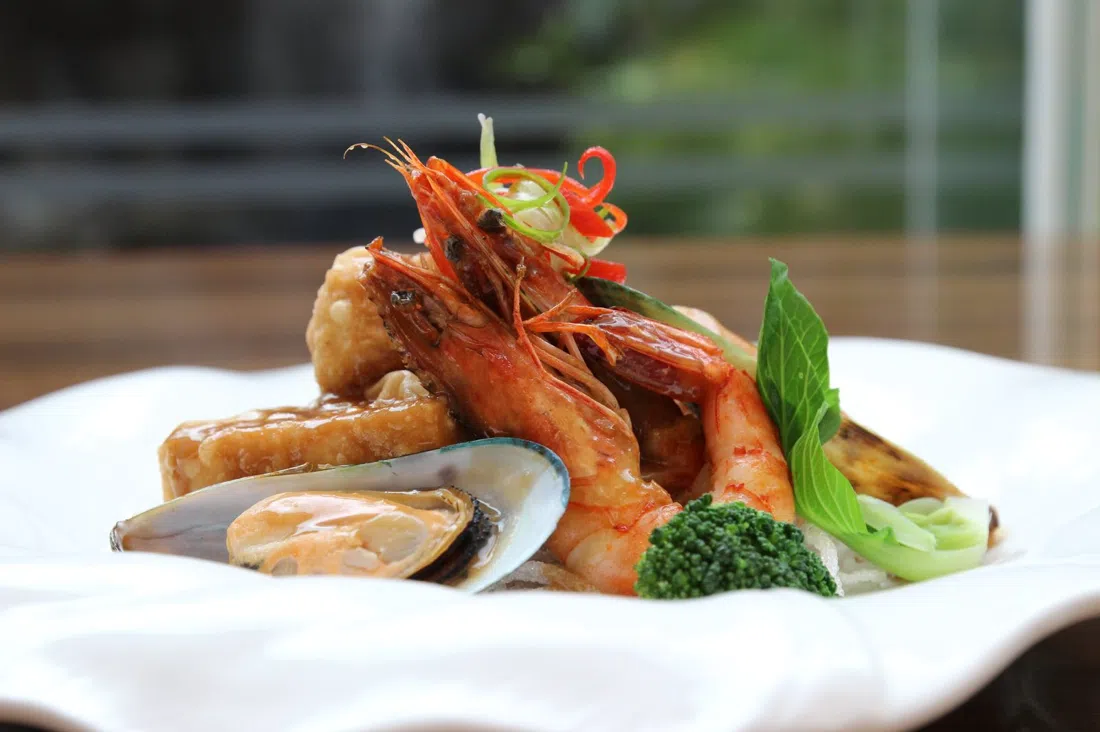
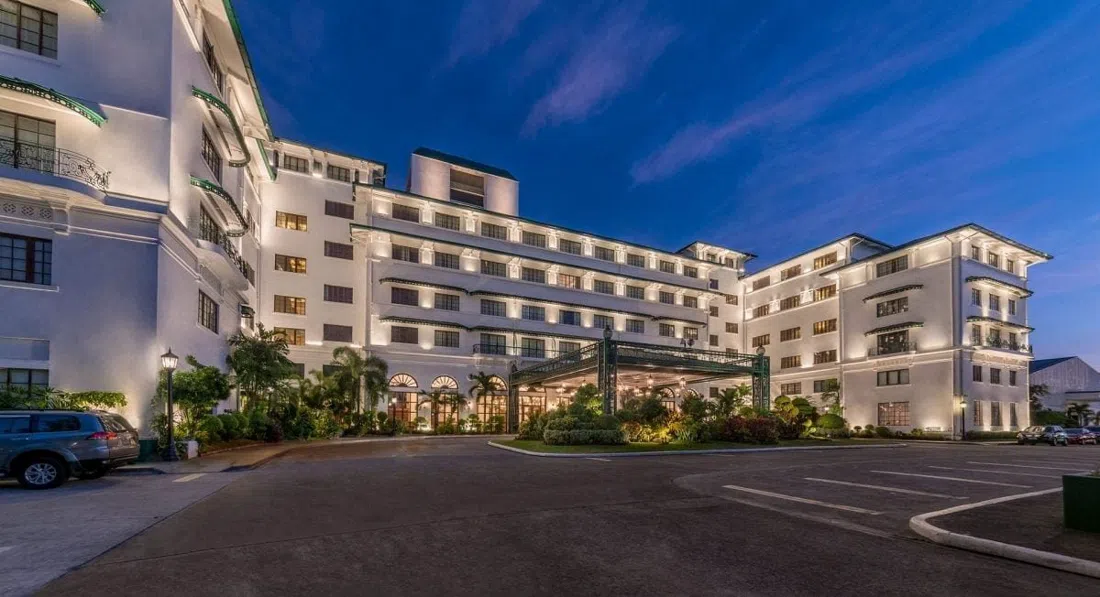
At the northern tip of the boulevard, Café Ilang-Ilang, The Manila Hotel in Ermita is in the hotel where General MacArthur kept a suite before the war. Sunday swaps the regular lunch buffet for a dearer brunch at around PHP 3,445 net for adults and PHP 1,722.50 for children aged five to twelve, with lunch service from 11.30am. It is a celebration venue first, built for large tables and anniversaries and three generations at once, and it handles groups better than it handles a quiet couple. If the brunch is beyond your budget, the lobby is free: walk its chandeliered length, which is half of what people come for.
Riding the boulevard instead of walking it
The honest limitation of the Sunday stretch is that it is linear and flat, and an hour of it is enough on foot. Bambike Ecotours Intramuros in Intramuros solves that for about the price of a coffee: bamboo-framed bikes from roughly PHP 175 an hour, out of the walled city, 9am to 6pm daily. From the shop you can roll through the stone gates, cross at the north end of the boulevard and ride the length of Baywalk and back inside two hours, which is the best way to understand the shape of this coastline.
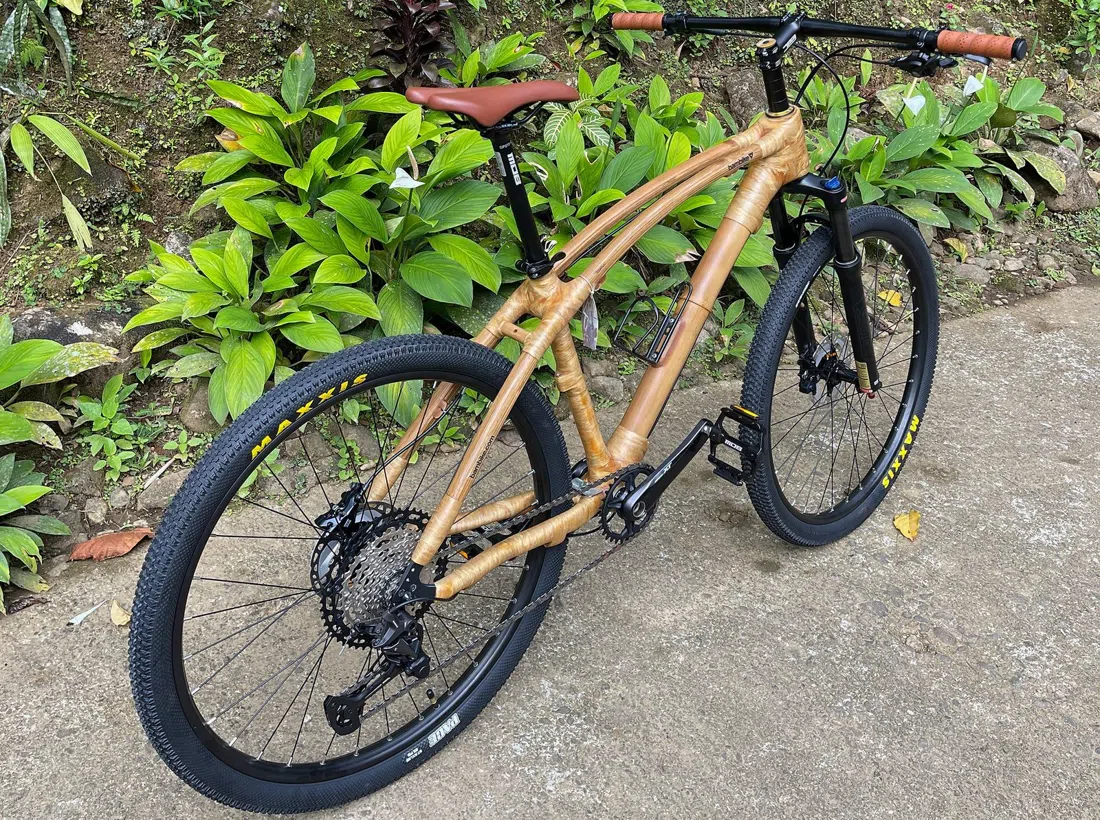
Their guided tours run PHP 1,500 to PHP 2,200 per person, with guides trained to work with visitors who have no Philippine context at all, and there is a 5pm night tour of the walled city if you would rather ride in the dark. Small groups are the default; a private buyout for your whole party costs about PHP 3,000 extra on top, which is the right call for a family with children who need to stop often. Outside the Sunday closure hours the roads between the walled city and the boulevard are hostile: fast, multi-lane, with buses that do not expect you. Ride this in the morning or ride it guided.
Behind the grandstand
Manila Ocean Park in Ermita sits directly behind Quirino Grandstand, on reclaimed land, a few hundred metres from the actual sea. One side of the wall is a ticketed aquarium with a walk-through tunnel; the other is Manila Bay, which nobody is allowed to swim in. It opens at 9am on Sundays, an hour earlier than on weekdays, and packages start from about PHP 950 booked online, while walk-in gate bundles climb past PHP 2,000 for the same afternoon. Book online, because the gap is wide enough to matter. Group rates exist on enquiry. It suits families with children under ten and organised tour parties; if you came to Manila for the city rather than for the fish, skip it and spend the hour on the seawall.

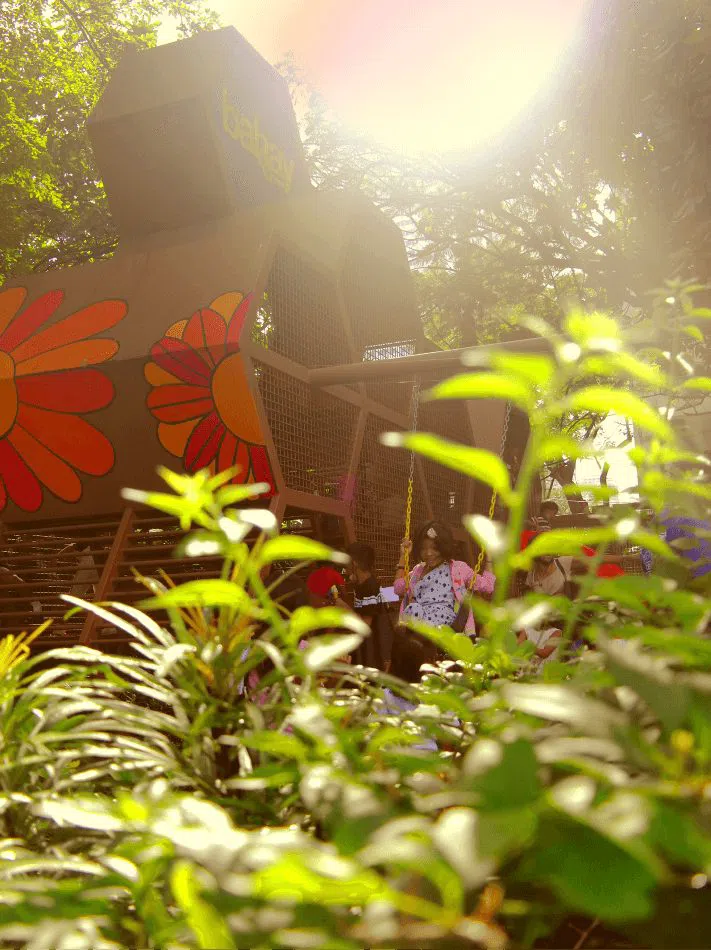
For the same age group there is a better-value and more interesting option further along the boulevard. Museo Pambata in Ermita is a hands-on children's museum in a handsome old building, reopened in December 2024 after a long renovation and still bringing its halls back in phases, so expect some rooms to be shut. Admission is PHP 450, or PHP 650 for a guided visit with storytelling and crafts. Watch the schedule twice over: Sunday hours are short, 1pm to 5pm only, and from Tuesday to Thursday the whole museum is reserved for private groups and rentals, so a family turning up midweek without a booking can be turned away at the door. The short Sunday window suits this route anyway, since it slots in neatly after the boulevard morning rather than competing with it.
What the stretch gives away
Stand on the seawall at seven and the geography makes the argument for you. On one side, water the city cannot use, with container ships parked on the horizon. On the other, in a single sightline: a free national art museum, a ticketed aquarium built on fill, a hotel serving a PHP 3,445 brunch, and a man making a living from a sack of peanuts and a bicycle. Behind all of it, a parish that has been holding Sunday together since the 1580s. Manila does not separate its registers into different districts the way wealthier cities do. It stacks them on one boulevard and lets them share a pavement.
Nobody designed the ritual. The city did not build a plaza and wait for people to use it; people took the asphalt first, in numbers, every week, and the cones followed the crowd. That is also why it is fragile and why it varies, because it survives on habit rather than infrastructure. It is the most democratic thing on this coast, and it costs nothing to join.
The roof that shows you the whole shape
Finish where you can see all of it at once. Sky Deck View Bar, The Bayleaf Intramuros in Intramuros is a rooftop on the walls of the old city, looking out over the bay, the boulevard's full curve and the packed roofs in between. Reckon on PHP 500 to PHP 1,200 a head. It is open 4pm to 11pm daily in two seatings, 4pm to 7pm and 7pm to 11pm; take the earlier one, because that is the one with the sunset, and the sunsets over this bay are worth the whole day.
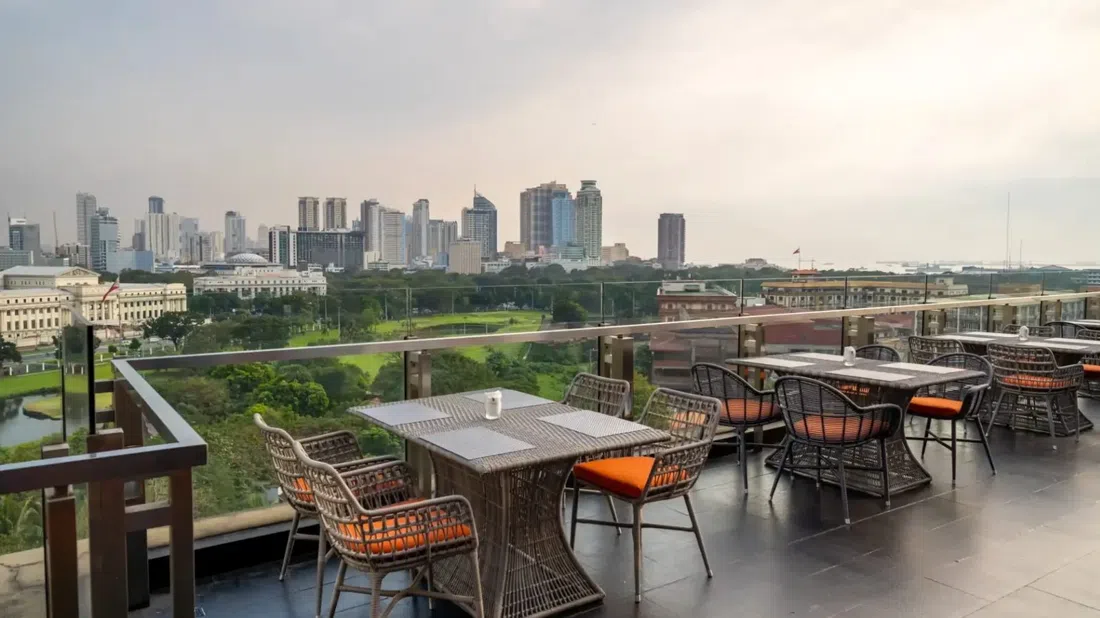
The roof is compact and it fills, so reserve, particularly for the first seating and particularly at weekends. Groups are accommodated on both seatings, but a party larger than about six should book well ahead or expect to be split across tables. It is good for couples at 5.30pm and good for a group at eight. Walk the ramparts down afterwards while the light is still in the sky, and read the Manila guide for what to do with the rest of the walled city once you are inside the gates.
Practical notes for a Manila Sunday
The elevated light rail runs a few blocks inland and parallel to the boulevard: the United Nations, Pedro Gil, Quirino Avenue and Vito Cruz stops all put you a five-to-ten-minute walk from the water, and from any of them you simply head for the sea breeze. Jeepneys run the inland avenues constantly for small change. Ride-hailing works, but it surges hard right after the main Mass times and again at sunset, so build in fifteen minutes of waiting. Crossing the boulevard on foot is a real hazard once the cones are gone: use the footbridges rather than threading eight lanes.
Carry small peso notes. Vendors, jeepneys, church collections and bike hire are cash-first, while hotels, the aquarium and the museums take cards. ATMs are inland on the avenues, not on the seawall.
The day in order: 5.30am seawall, 6am breakfast at Corniche if you want a proper one, 9.30am English Mass at Malate, 10.30am into the air-conditioning of the National Museum of Fine Arts, 1pm Museo Pambata if you have children, 4pm first seating on the roof. That is a full and genuinely walkable Sunday with one short ride in it.
A lean day runs under PHP 1,000 a head: free museum, free church, PHP 175 of bike hire, street snacks and one drink. A splurge day with the Sunday barbecue lunch at PHP 3,580 or the PHP 3,445 brunch, plus the aquarium and a rooftop round, clears PHP 6,000 comfortably. Sun hat, water and 5.30am are the three things that decide whether you enjoy it.
Sleeping on the boulevard itself is the difference between joining the ritual at half past five and reading about it. Compare rates along the bayfront with a Manila hotel search and ask for a bay-side room high up, away from the traffic.