
Intramuros sounds different from the rest of Manila. Step through one of the gates and the horn-blare of the six-lane roads drops to a background hum, replaced by tricycle tyres on cobbles, a broom working flagstones, and church bells that keep real time. The Spanish began walling this rectangle in the 1590s and kept thickening it for three centuries; almost everything inside was destroyed in the battle for Manila in 1945. What stands today is part survivor, part painstaking reconstruction, and walking it as one continuous loop is what makes the city's history legible.
What is actually inside the walls
Intramuros means "within the walls", and that is the whole design: a garrison town of about a dozen blocks behind a stone curtain wall metres thick, punctuated by bastions and gates. You can cross it on foot in twenty minutes, which is why a half day is the natural unit here. The moat that once ringed the landward sides was drained generations ago, and the band of green you see from any rooftop is what replaced it.
The grid survived even where the buildings did not. Plaza Roma and Plaza San Luis anchor the middle, General Luna Street runs the length of the quarter like a spine, and the side streets (Cabildo, Anda, Beaterio) hold the museums, the workshops and the restaurants. Expect a working district rather than a preserved set: school uniforms at the kerb, government offices, a university campus, laundry drying on a balcony above four-hundred-year-old masonry. The history here is not sealed behind glass. People work in it.
Start with orientation, then walk to the fort
Give yourself fifteen minutes at Centro de Turismo Intramuros (General Luna Street, mid-quarter) before anything else. The visitor desk is free and open daily 09:00 to 18:00; the paid galleries cost around PHP 150 regular and PHP 120 for students, seniors and PWD, and they close on Mondays. It is built for visitor flow, so school parties and tour groups pass through without clogging it, though it does occasionally shut for private or official functions. Check the Intramuros Administration page if your date coincides with a civic event.
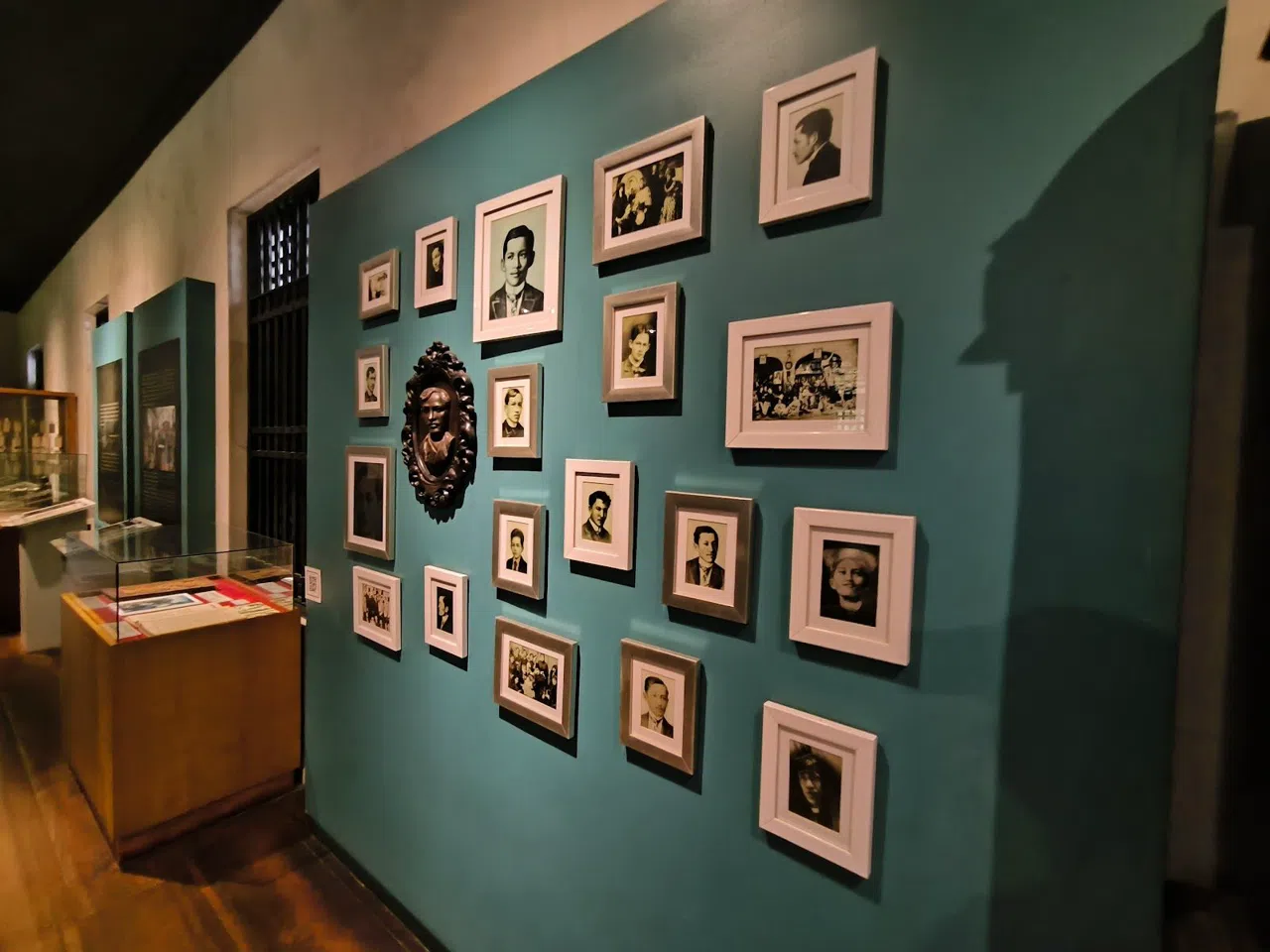
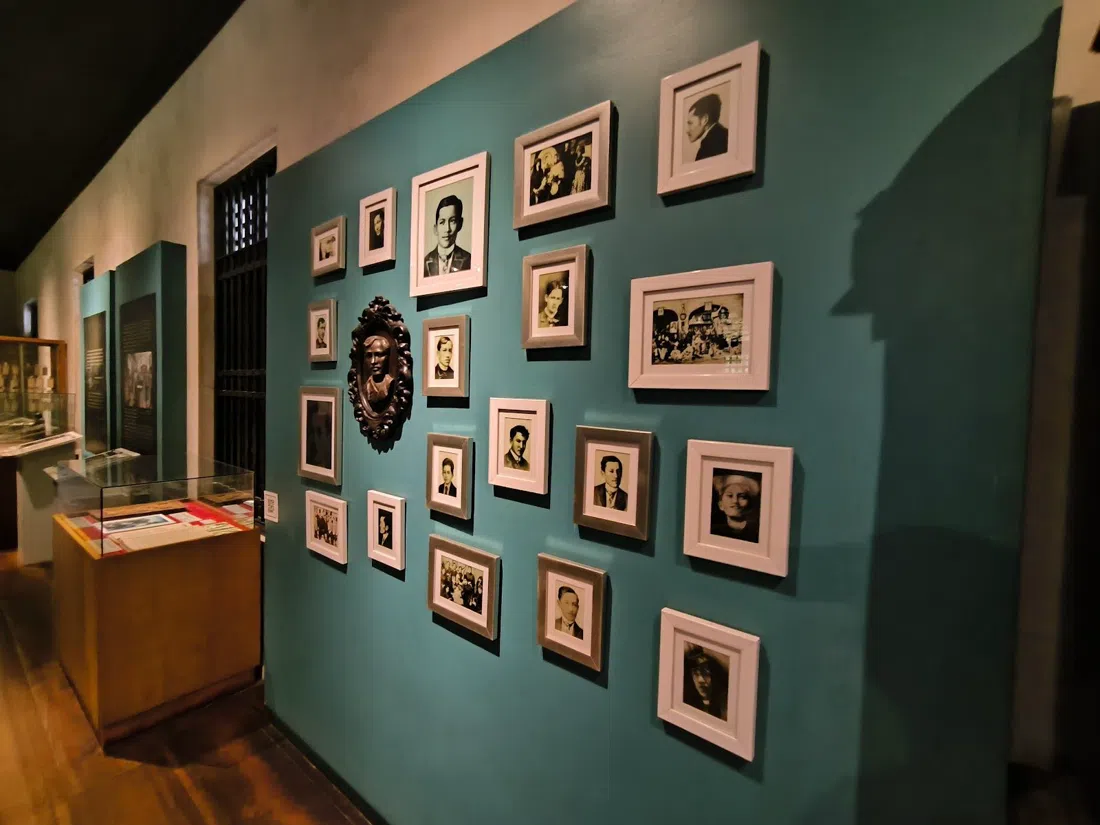
From there walk north to Fort Santiago (the Pasig River corner of the walled city), which incorporates the Rizal Shrine, or Museo ni Rizal, in the barracks building. This is the anchor of almost every Intramuros itinerary and the one paid site nobody should skip: the gate relief, the ruined magazine, the brass footsteps set into the ground tracing the national hero's last walk to his execution. Entry is PHP 75 regular and PHP 50 for students, seniors and PWD, about USD 1.30. It is genuinely walk-in friendly, with no group cap; operators simply buy the whole party's tickets at the booth. Gates run 08:00 to 22:00 Monday to Friday and 06:00 to 22:00 on Saturday and Sunday, with last entry between 20:00 and 20:30. That weekend 06:00 opening is the most useful piece of timing in this guide: arrive then and the fort is close to empty, and the light is worth the alarm.
Walking the General Luna spine
Head back down General Luna and the density of things worth stopping for increases block by block.
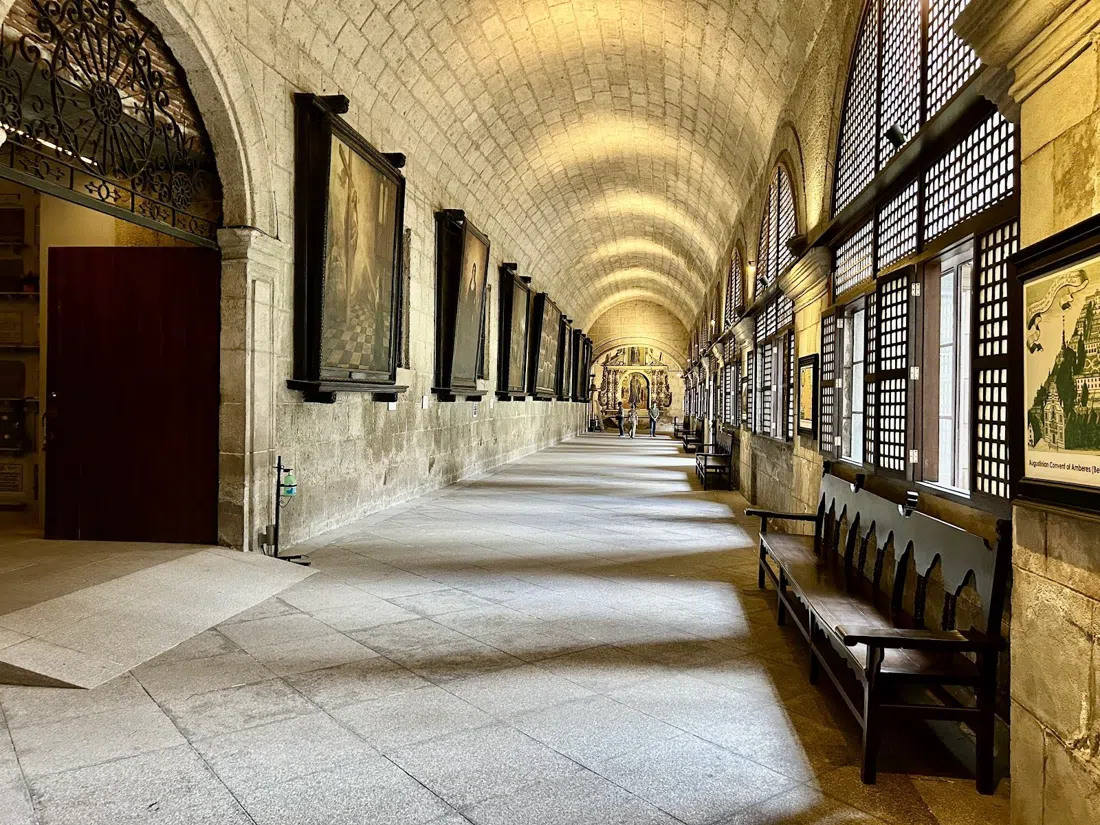
San Agustin Church and Museum (General Luna at Real) is the only Philippine UNESCO World Heritage site inside the walls and the only original structure to come through 1945 standing. Sit in the nave for five minutes and look up: the trompe-l'œil ceiling is painted flat and reads as coffered vaulting. The church is free; the adjoining monastery museum is around PHP 200 regular and roughly PHP 160 for seniors and PWD, and it is the better bet when a group arrives, because it absorbs numbers across its cloisters and choir loft. Opening is daily 08:00 to 12:00 and 13:00 to 17:00, so plan around the midday break. Turning up at 12:20 is the most common wasted half hour in Intramuros. Saturdays bring frequent weddings; the church stays open but goes quiet and photography becomes intrusive.
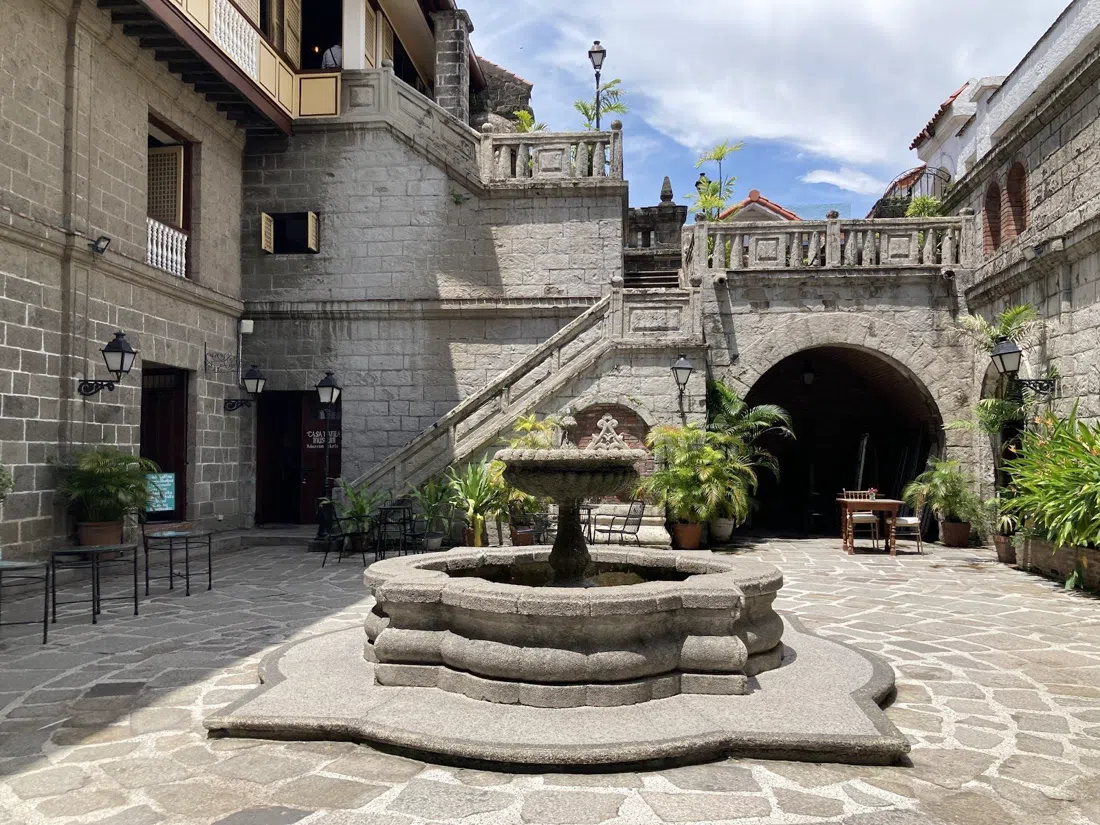
Across the street, Casa Manila (Plaza San Luis complex, General Luna) is the best single look at how a wealthy 1800s Manila family actually lived: the sala with its capiz-shell sliding windows, the kitchen, and the famous twin latrine over the stairwell. It is open Tuesday to Sunday 09:00 to 18:00 with last entry at 17:00, closed Mondays, and costs around PHP 75 with discounts for students, seniors and PWD. Small rooms and wooden floors mean groups get split and staggered, and coach parties queue on the patio; two people wandering at their own pace have a much better time of it.
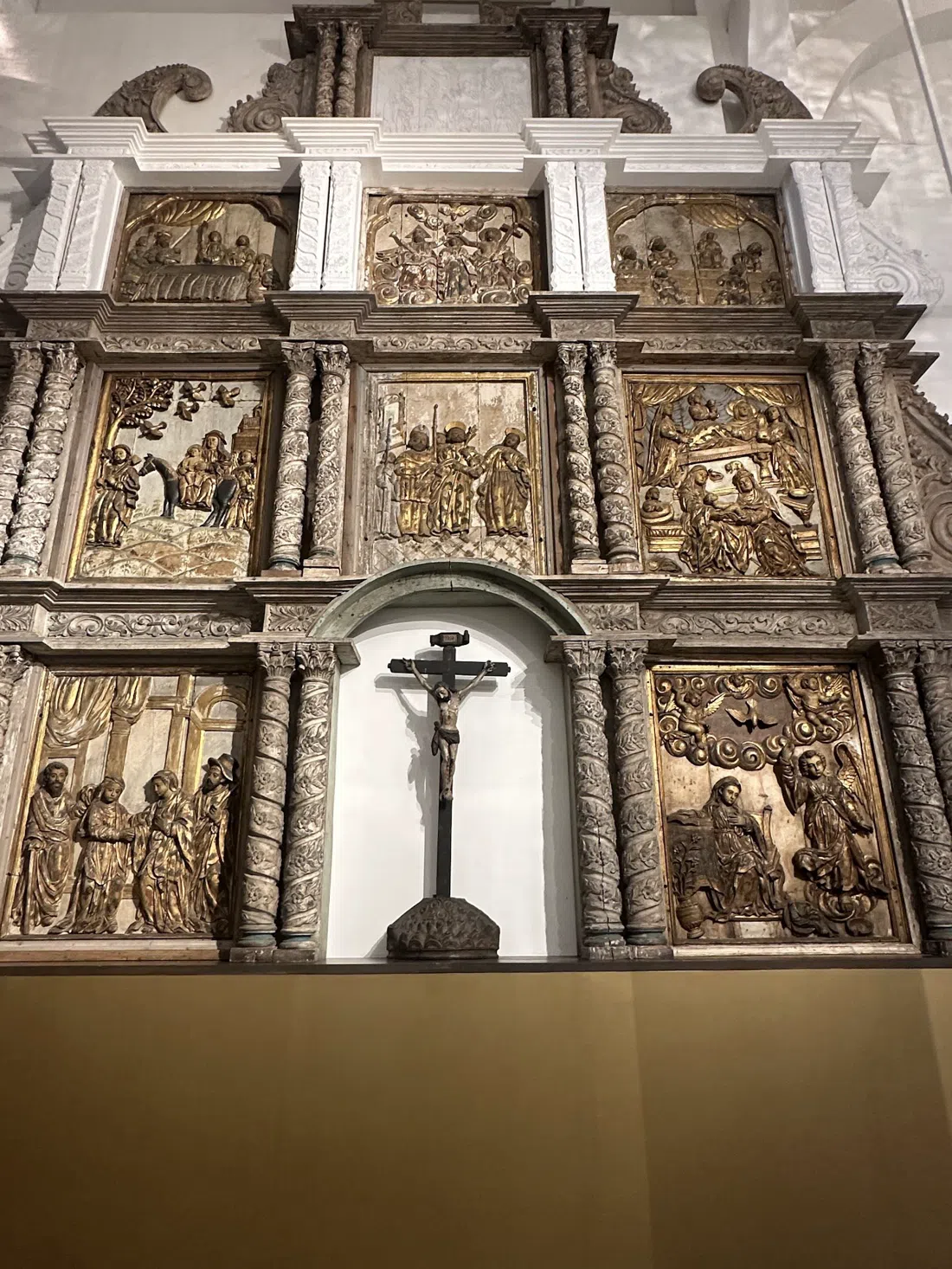
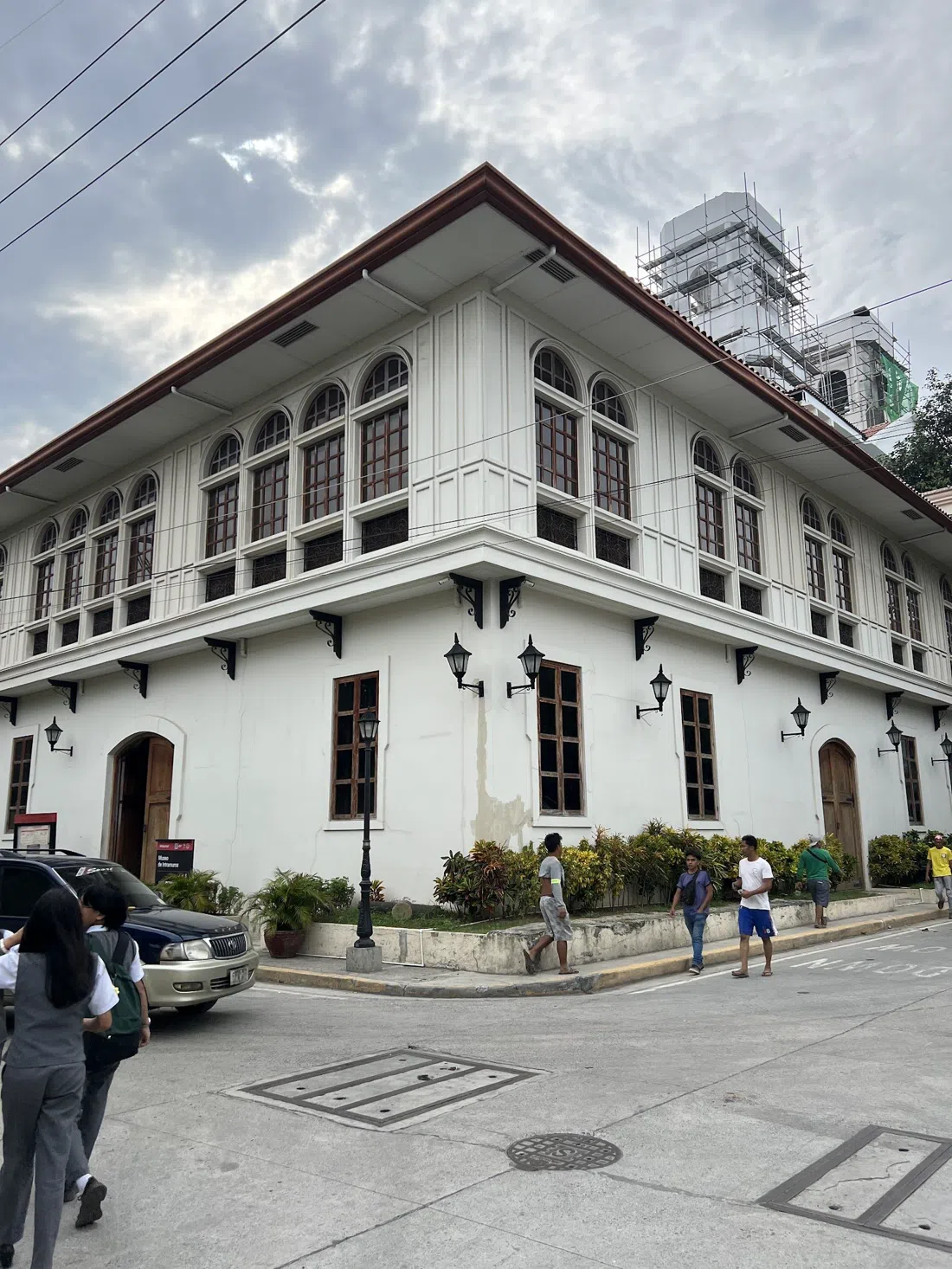
A short walk east, Museo de Intramuros (Anda Street side of the quarter) holds the ecclesiastical art collection (retablos, ivories, santos) in a reconstructed seminary. It runs Tuesday to Sunday 09:00 to 18:00, last entry 16:30, closed Mondays, around PHP 120 regular with discounts for students, teachers and PWD, and special exhibitions sometimes cost more. Walk-in entry is capped by museum capacity and guided parties are asked to book ahead. This is the stop to pivot to when the sky opens, and the air conditioning is a real asset in Manila heat.
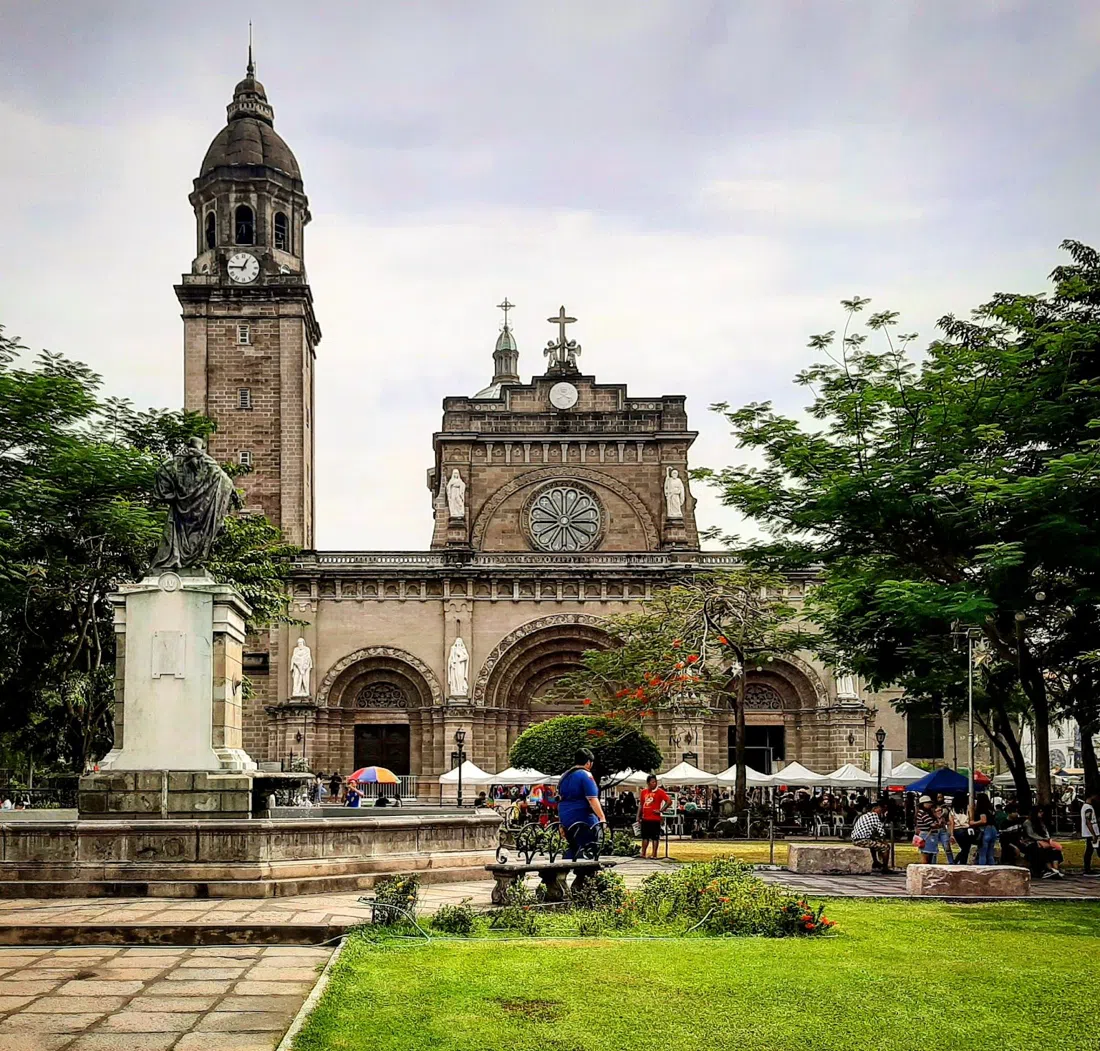
Manila Cathedral (Plaza Roma), formally the Minor Basilica of the Immaculate Conception, is free, with a donation box, and generally open around 07:00 to 17:00 subject to Mass times. It closes to visitors for weddings, funerals and rehearsals, which happen often enough that experienced guides always carry a fallback stop. Modest dress is expected: covered shoulders and knees. No flash, and no photography at all during services.
Standing on the fortifications
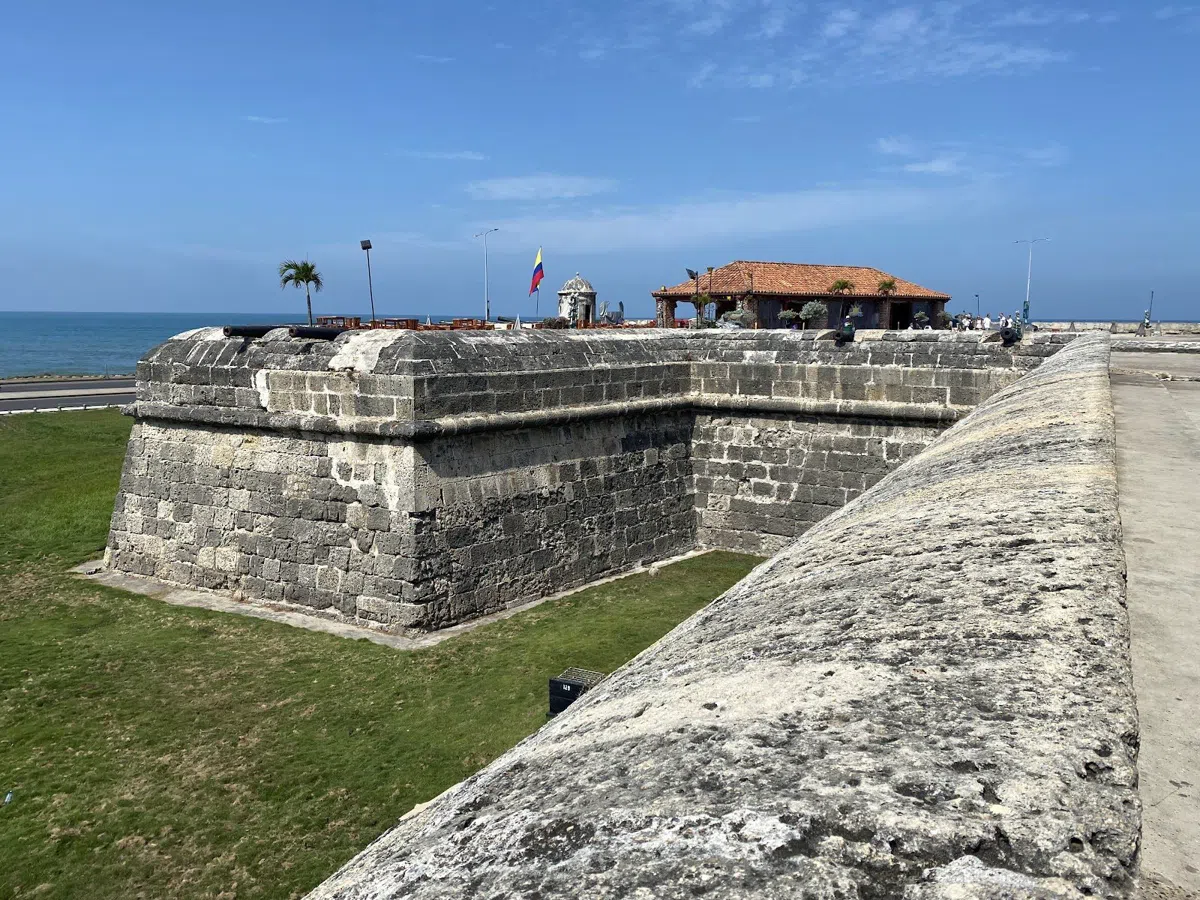
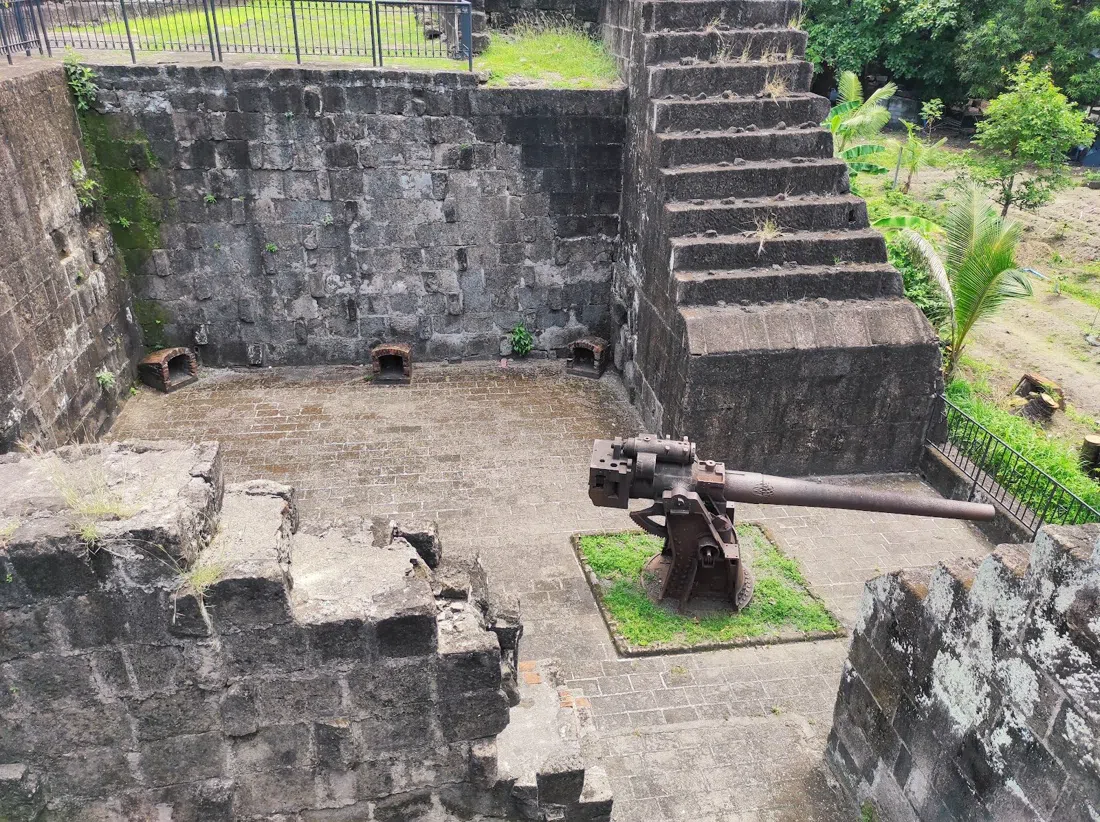
The wall itself is the subject of this walk, and the place to meet it properly is Baluarte de San Diego (south-western corner of the walls). The bastion ruins sit inside a walled garden, and from the top you finally register the thickness of the masonry and the geometry of the whole system: why a bastion juts out, what it was covering, where the moat sat. It is open daily 08:00 to 17:00 with last entry at 16:00, costs around PHP 75 with the usual concessions, and handles large groups easily, which is why bike and coach itineraries all pause here. There is almost no shade, so go early.
The quarter most half-day tours skip
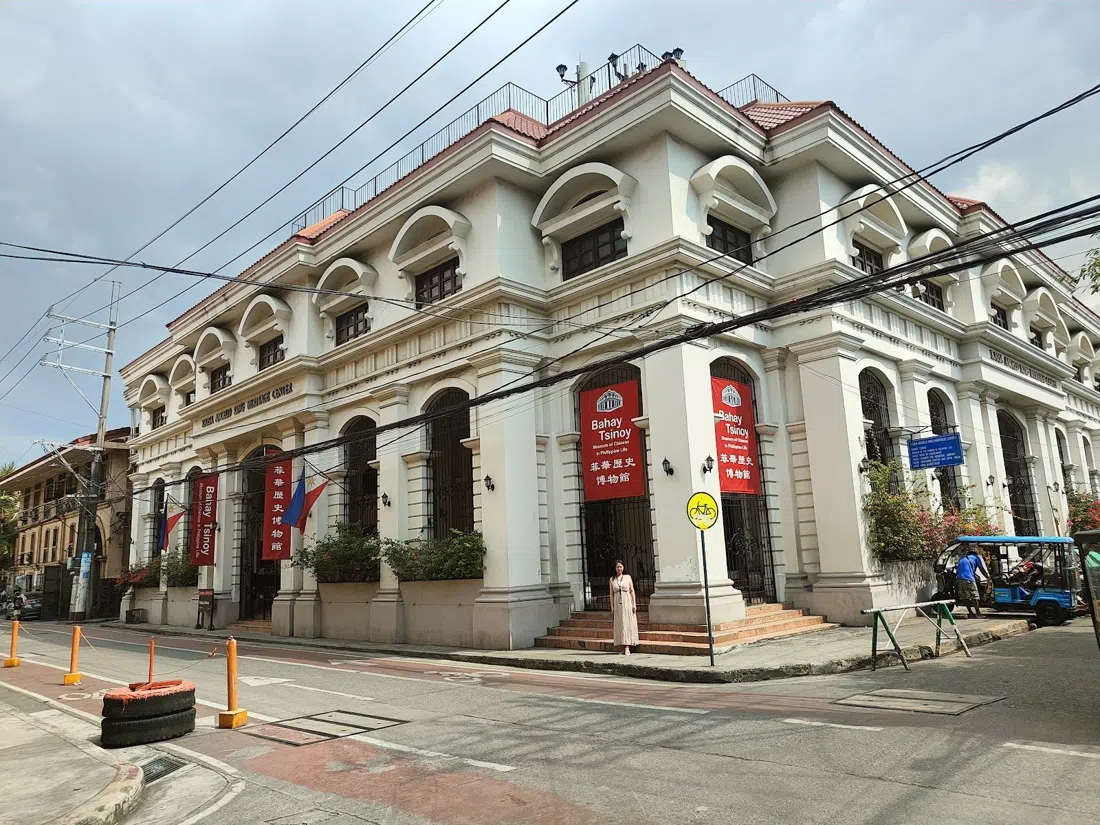
Bahay Tsinoy (Anda corner Cabildo) is the Museum of Chinese in Philippine Life, the stop most visitors miss and the one that explains the most: the Parian quarter that stood outside these walls, the trade that built the city, and Binondo across the river. Entry is around PHP 100 for adults and PHP 60 for students, open Tuesday to Sunday 09:00 to 17:00, closed Mondays. It takes groups on advance notice but it is a modest-sized museum, so big parties are walked through in waves.
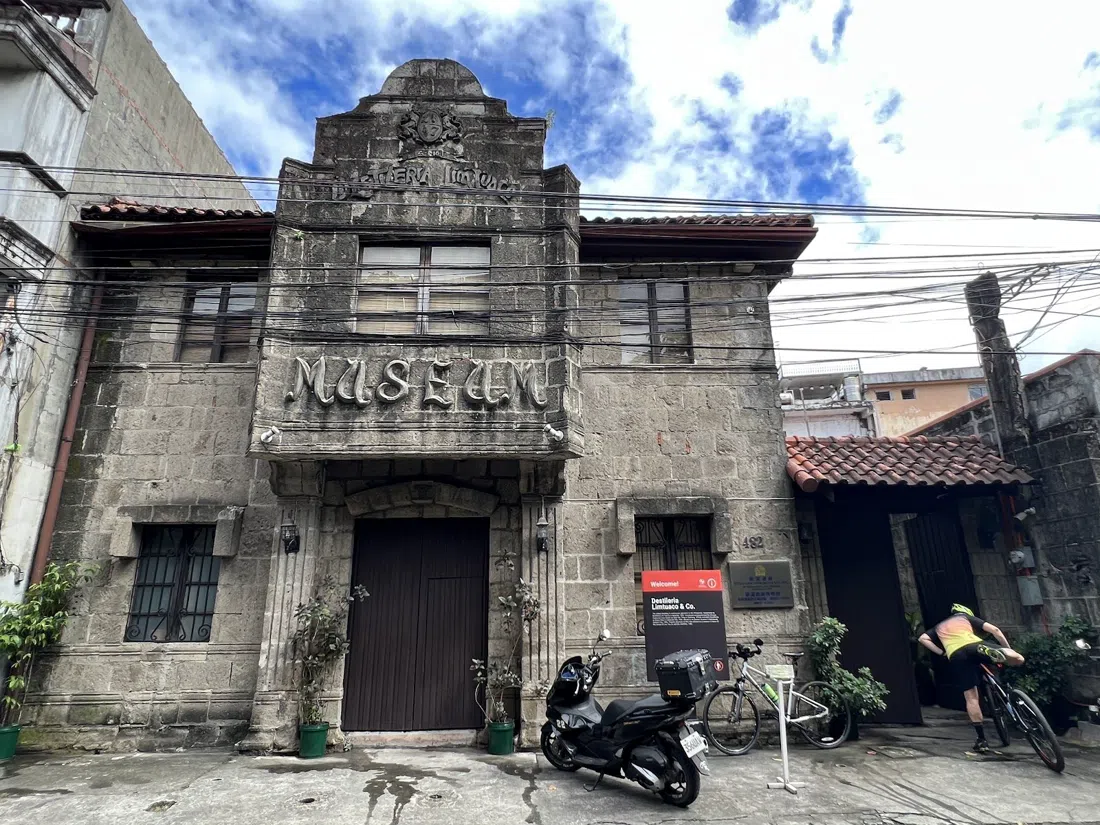
For a late stop with a different register, the Destileria Limtuaco Museum (a side street a couple of blocks off Plaza San Luis) charges about PHP 100 entry, PHP 50 for students and seniors, and PHP 200 for a premium pass that includes a six-spirit tasting: lambanog, coconut vodka, sugarcane wine. Six pours for the price of a coffee. It is Tuesday to Sunday 09:00 to 17:00, a small room that works best for a dozen people or fewer, and tastings are poured in rounds, so larger groups should call ahead. Not one for under-18s or non-drinkers.
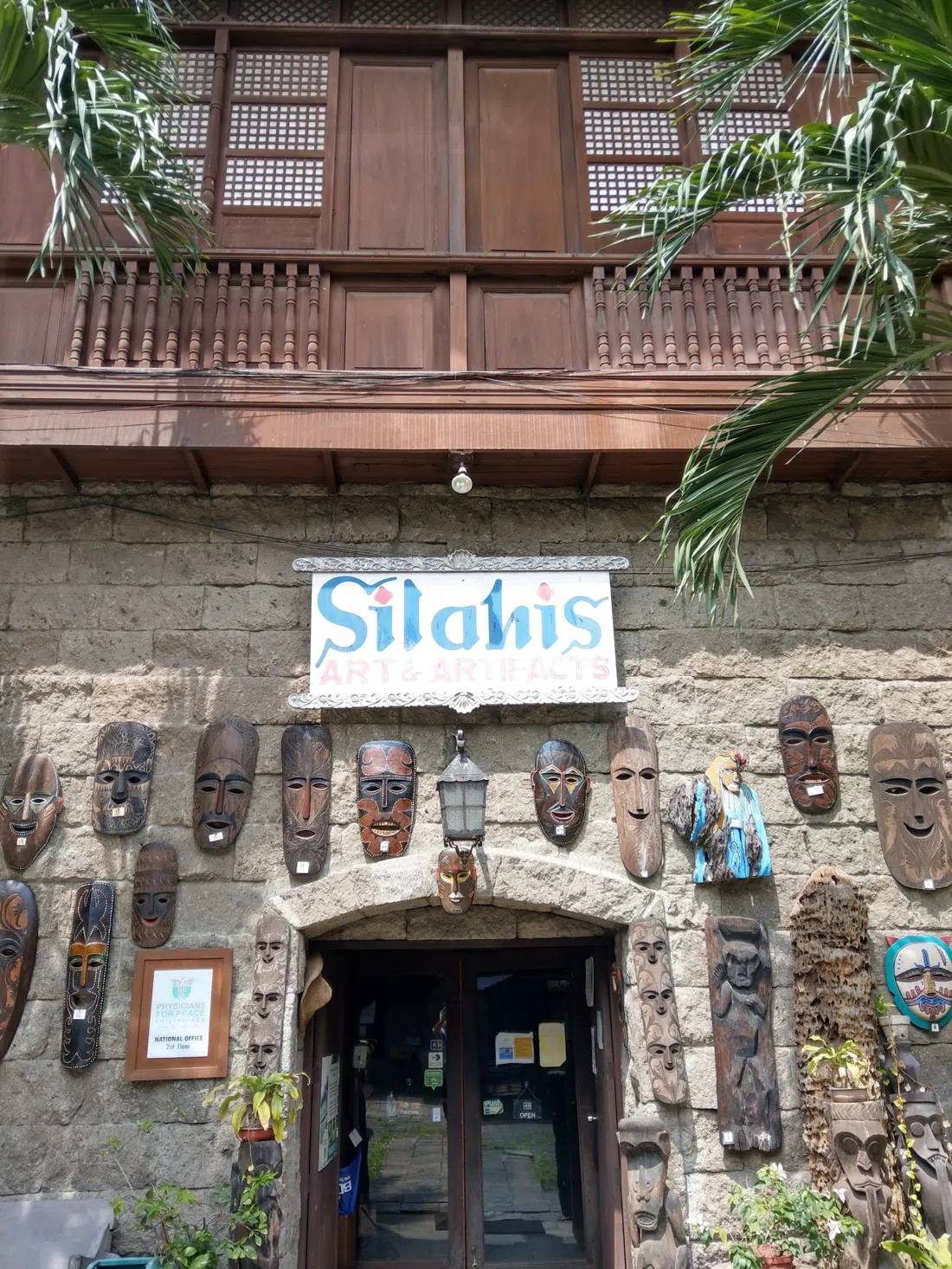
Silahis Center (General Luna Street, sharing a building address with Ilustrado) has been trading since 1966 and is more museum than shop: tribal textiles, antiques, church carvings, and prices running from a few hundred pesos to serious money. Entry is free. The stairs are narrow, so groups filter through rather than move as one. It is the only place inside the walls to buy something that is not a fridge magnet.
Riding it, or walking it with a guide
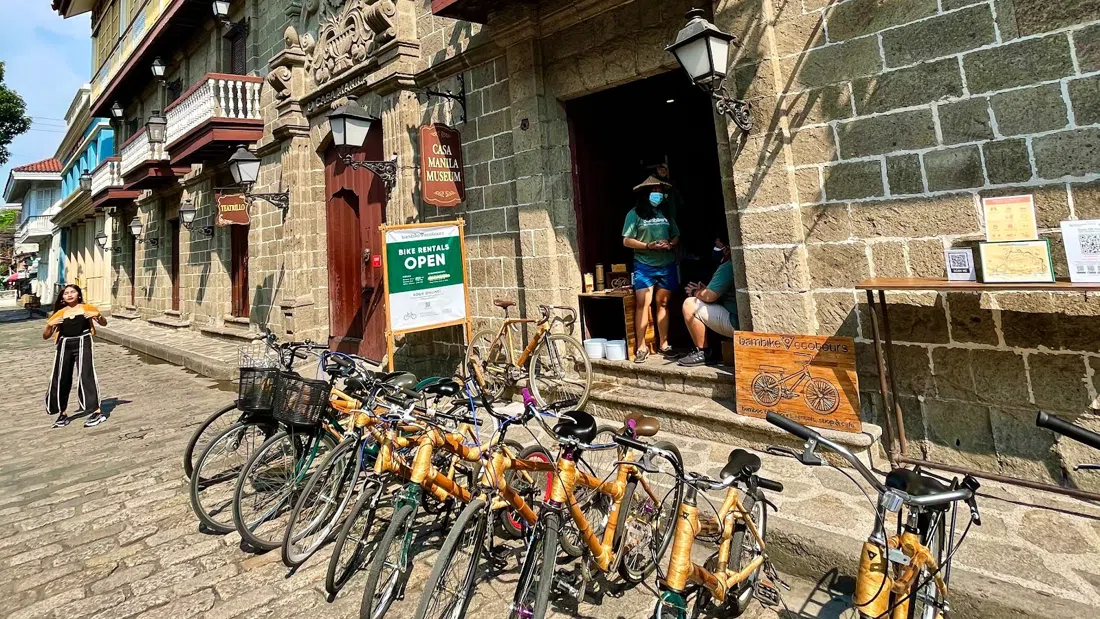
Two honest ways to cover more ground. Bambike Ecotours (Plaza San Luis, beside Casa Manila) runs guided rides on bamboo-framed bicycles built by a Philippine social enterprise: an express loop from about USD 12.50, a three-hour Intramuros Experience around USD 19.50, and pricier sunset and night departures. Maximum 15 riders, typically 5 to 10, with bigger parties split across departures and a bamboo pedicab for anyone who cannot or does not want to pedal. In this heat, covering the full perimeter on wheels rather than on foot is sound judgement.
Old Manila Walks (meeting points inside the walls) is the storytelling option: founder-led since 2005, PHP 1,750 per person and PHP 1,950 for weekend and holiday night walks (roughly USD 30 to 34) over two to two and a half hours, about 70% outdoors. It is leisurely enough for seniors, but the cobbles are uneven and there is some climbing. Reservations are required; public departures are published a month or two ahead and private groups are booked directly.

Demand is steady: there are 1,144 traveller reviews across the bookable tours here, with the top-rated tour at 4.8/5 from 565 reviews, and guided options run seven days a week from 39 USD per person. Supply is mature and year-round rather than scarce. Booking a day or two ahead is sensible for a specific departure time, but it is not a scramble.
Where to eat and where to end
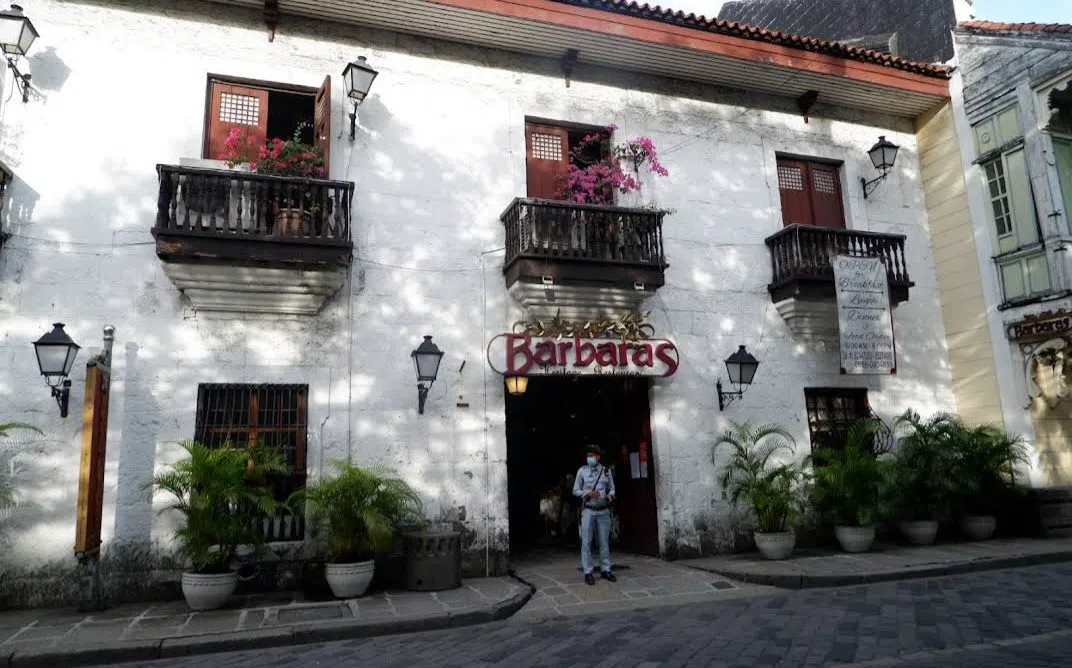
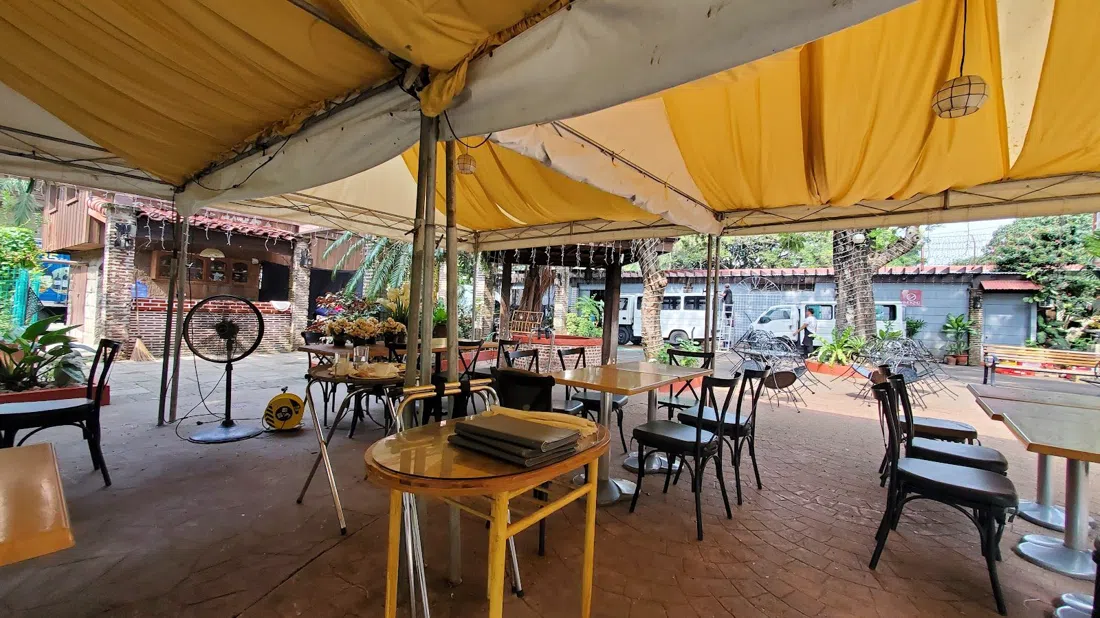
Barbara's Heritage Restaurant (Plaza San Luis) is the standard lunch pin at the end of a morning tour: buffet from 11:30 with the cultural show at 12:15, and dinner at 18:30 with the show at 19:15, roughly PHP 1,000 to 1,500 a head depending on service and show. It is built for groups, coach parties, corporate functions and tour lunches, so go for the courtyard setting and the folk dancing rather than the cooking, and reserve.
Ilustrado Restaurant (General Luna Street) has been running since 1989 and is the grown-up alternative, Filipino-Spanish cooking at roughly PHP 700 to 1,500 a head for a proper lunch. Open Monday to Saturday 08:00 to 22:00 and Sunday 09:00 to 18:00, which makes it the rare place inside the walls that will feed you breakfast before an early start.
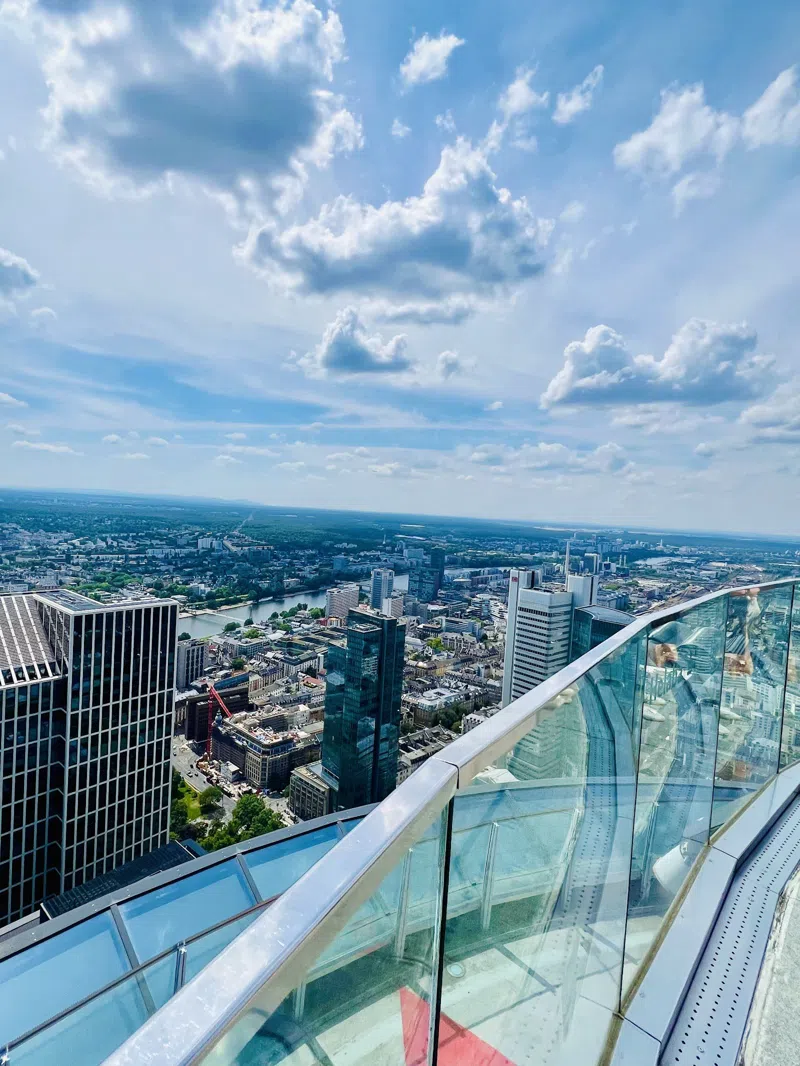
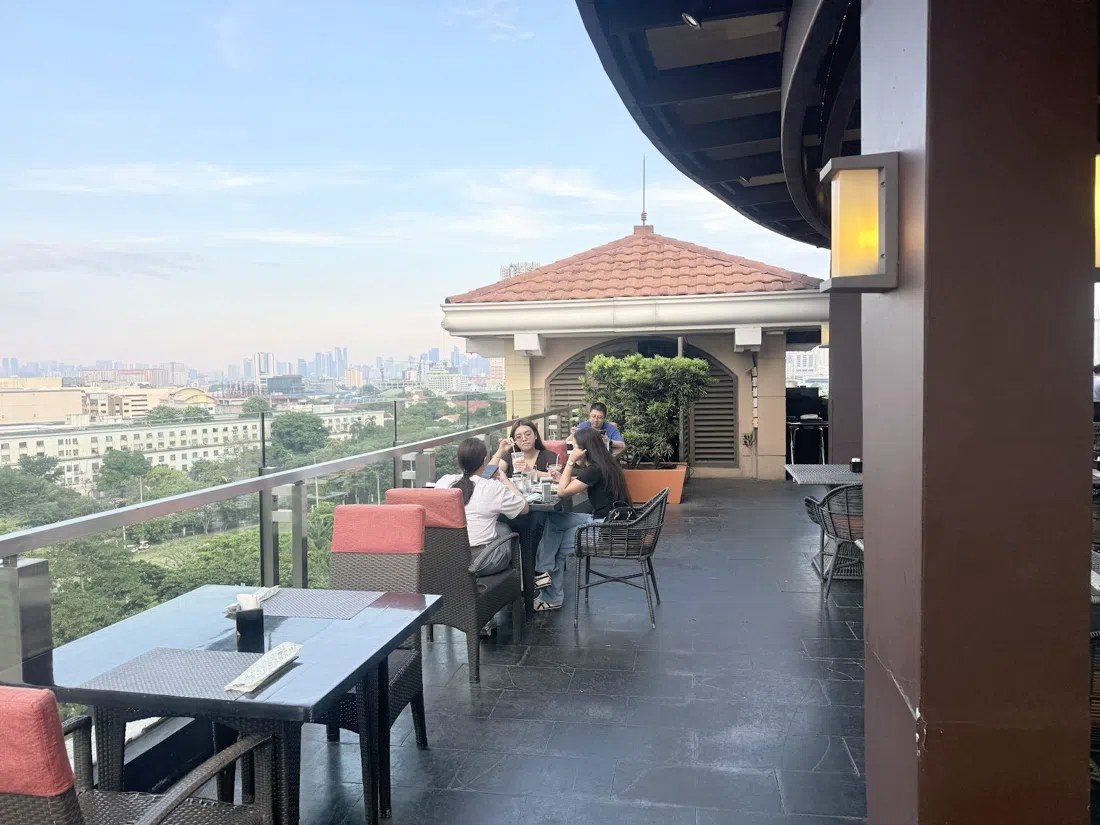
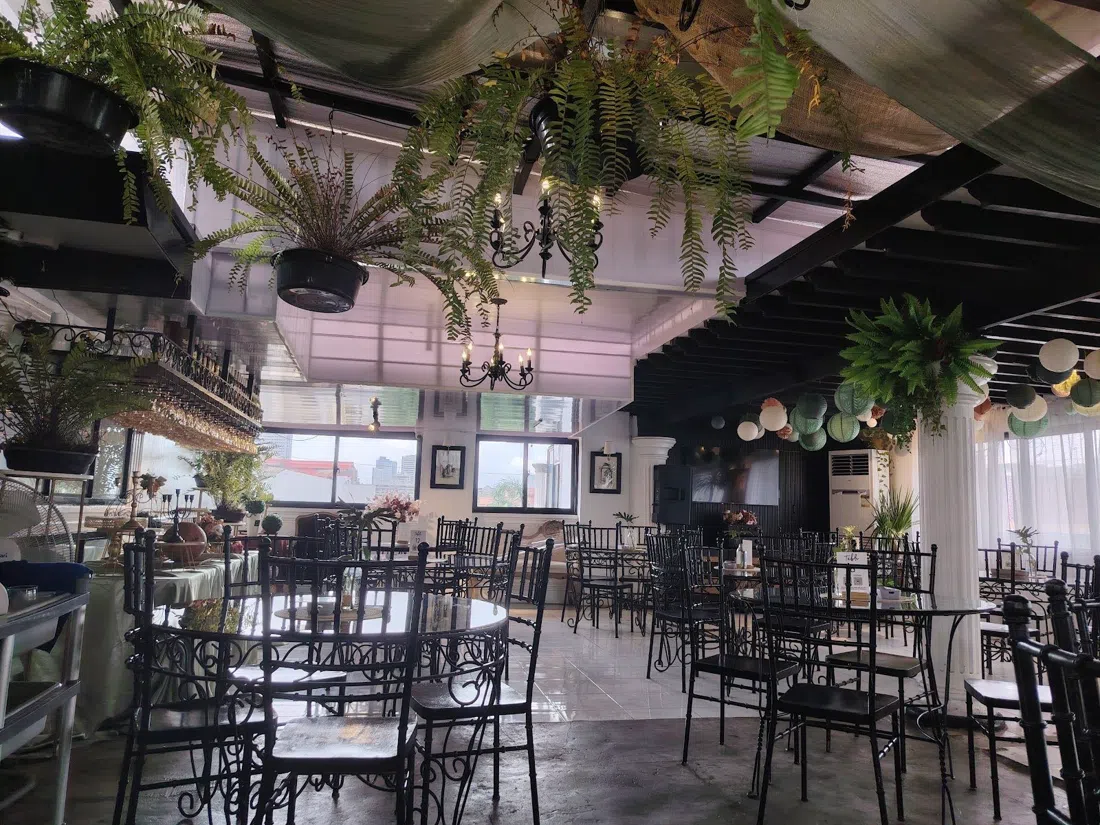
For the view, La Cathedral Café (facing Manila Cathedral) is the cheapest good one: coffee and cake around PHP 200 to 400, mains more, with a terrace seating about sixty across two levels. The ground floor keeps long hours daily; the roof deck opens from late afternoon. Walk-ins are accepted until mid-afternoon, after which it becomes reservation-led, and Friday and Saturday evenings are reservation-only. The sunset window books out early. Higher and smarter, the Sky Deck View Bar at The Bayleaf (Muralla Street) is the best place to see the shape of Intramuros from above and understand how walls, bastions and old moat fit together, at roughly PHP 300 to 800 per item. Two seatings a night, 16:00 to 19:00 and 19:00 to 23:00, smart-casual dress, live acoustic sets at weekends, and often full, so reserve, especially for a group.
Doors, dress and the things that catch people out
Mondays gut the itinerary: Casa Manila, Museo de Intramuros, Bahay Tsinoy, the Destileria and the Centro's paid galleries all close, leaving Fort Santiago, San Agustin, the cathedral and Baluarte de San Diego. A Monday visit still works, but build it around those four.
Churches are working buildings, not attractions. If a wedding or funeral is underway at the cathedral, you wait outside or move on. Cover shoulders and knees, and put the camera away during services. Door fees are small and most sites take pesos in hand, so carry PHP 100 and PHP 50 notes rather than relying on a card reader or an ATM inside the walls. On accessibility, the plazas and the fort are manageable, but the cobbles are uneven, Casa Manila is stairs-only above the ground floor, and Baluarte de San Diego involves climbing; the pedicab option on a bike tour is the realistic route for anyone who cannot walk a couple of kilometres on rough ground.
How long it takes and when the crowds land
Four to five hours covers the essentials properly: orientation, Fort Santiago, San Agustin, Casa Manila, Baluarte de San Diego, and a rooftop or a tasting to finish. Add Museo de Intramuros and Bahay Tsinoy and you are at a full, satisfying day. Ninety minutes is enough only for Fort Santiago and San Agustin, and you will feel it.
Crowding is predictable because it is institutional. Tour coaches and school groups arrive mid-morning and cluster at Fort Santiago, Casa Manila and San Agustin between roughly 09:30 and 11:30, then thin out as lunch reservations pull them indoors. The hour after 13:00 is quiet at the museums and brutal in the open. Nothing here involves a genuinely long ticket queue; the friction is capacity at the small sites and the fixed midday closure at San Agustin, not the booth.
Best time to go
Start at 06:00 on a Saturday or Sunday and walk the fort while it is near-empty; that weekend opening exists and almost nobody uses it. On weekdays the gates open at 08:00, which still puts you an hour and a half ahead of the group traffic. Either way, front-load the outdoor work: the wall, the bastion and the plazas before 10:30, and the air-conditioned museums for the flat, hot middle of the day.
Seasonally, the dry months from roughly December to May are the comfortable ones, with the cooler end of that stretch before the March-to-May heat builds. The wet season brings afternoon downpours and the occasional typhoon day, which is when Museo de Intramuros, the San Agustin museum and Bahay Tsinoy earn their entry fees. Late afternoon into evening is the other good window: walk from 16:00 onwards, then take the roof deck for sunset, with Fort Santiago holding its last entry until 20:00 or 20:30 if you want the walls after dark.
Is it worth it
Yes, without qualification, and it is the one sight in Manila that would still be worth a detour if the rest of the city were closed. For under PHP 500 in door fees you get a UNESCO church that survived a battle almost nothing else survived, a fort tied directly to the country's founding story, a period house that explains the whole colonial social order, and a bastion you can stand on. It suits history-minded travellers, first-timers who want context before tackling the rest of the city, photographers, and families with older kids. It suits couples best early or late, when the group traffic is gone.
It is not a manicured European old town. There are ruined lots, heavy traffic on the perimeter roads, and stretches that look scruffy in strong light. If you want polish, you will be disappointed. If you want a city with visible seams, this is the place.
Practical notes
LRT-1 Central Terminal station sits a ten-minute walk from the north-eastern gates, and UN Avenue station serves the southern side. Ride-hailing and taxis drop at Plaza San Luis or the cathedral without difficulty, though the one-way system inside means your driver may circle. Tricycles and pedicabs shuttle within the walls for small change, useful between Fort Santiago and the Baluarte. Binondo is a walk across the Pasig from the fort end if you want to continue.
Bring pesos in cash, in small notes. The combined door cost for Fort Santiago, the San Agustin museum, Casa Manila and Baluarte de San Diego is about PHP 425. Add Museo de Intramuros and Bahay Tsinoy and you are near PHP 650. A guided bike loop runs from about USD 12.50 direct with the operator; a full storytelling walk is PHP 1,750. Budget PHP 1,000 to 1,500 for a group-style buffet lunch, PHP 700 to 1,500 at a sit-down restaurant, or PHP 200 to 400 for coffee and cake with a view.
Take water, a hat and sunscreen, shoes that cope with cobbles, and shoulders you can cover. Check the Intramuros Administration page if a civic event might close a venue. Staying inside or just beside the walls saves an hour of traffic on a 06:00 start. Compare rates on our Manila hotel search, and see the wider Manila guide for what to pair this with next.