Manila-nummeret
Inside Fort Santiago in Manila's walled Intramuros
The gate costs ₱75. Inside is the Rizal Shrine, and within 10 minutes of the walls are museums, dining rooms and roof decks.

Av Mariana FonsecaIntramuros walls to the last ferry out

A carved relief of Saint James sits above the stone gateway of Fort Santiago (Intramuros), and a timber drawbridge crosses the dry moat beneath it. Entry is ₱75, or ₱50 for students, seniors and PWD visitors with ID. Allow two to three hours.

Through the gate and onto Plaza Moriones
The Riverwalk Gate was flagged temporarily closed in early 2026, so the working entrance is on Santa Clara Street. Check which gate you are walking to before you set out, because the two sit on different sides of the stonework.
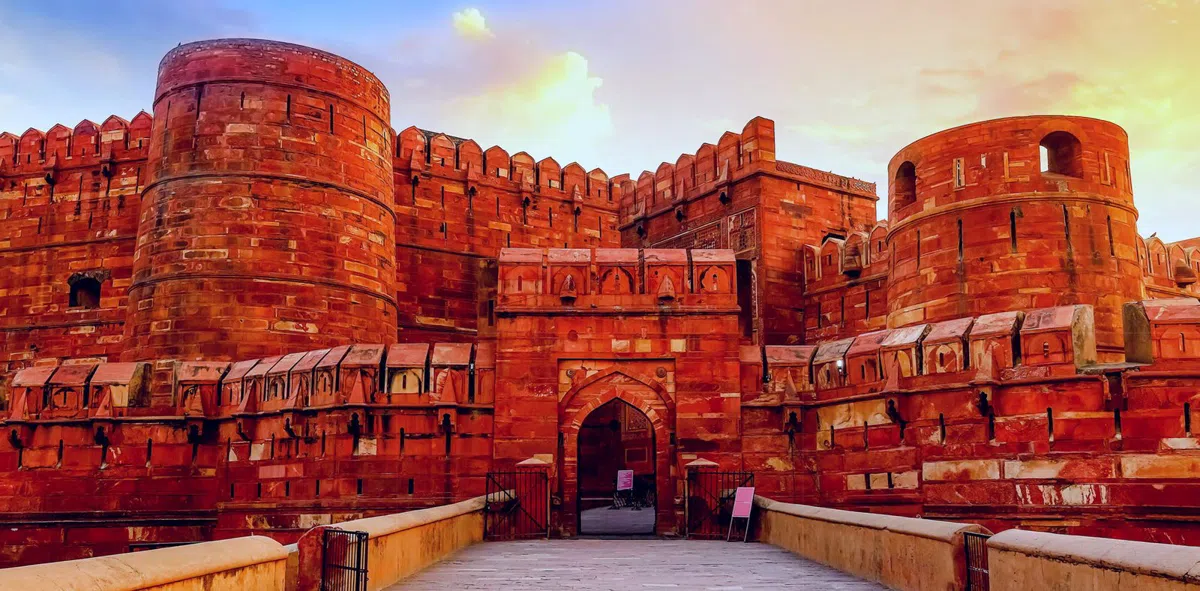
Past the ticket desk the ground opens out into Plaza Moriones, where manicured lawns sit inside weathered red-brick ramparts. Walk the brickwork first and the plan of the fort reads clearly from above the dry moat: the drawbridge, the arch, then the open lawn behind it. The ramparts are where the two to three hours go, and the walking is flat and in the open the whole way.
Planlegg reisen til Manila
Oppdaterte priser fra våre bookingpartnere.
Gratis avbestilling på mange rom. Vi kan motta provisjon når du bestiller.
The Rizal Shrine inside the fort
Museo ni Rizal (Fort Santiago), the Rizal Shrine, occupies a whitewashed two-storey barracks block with arched windows under a red-tile roof. Brass footprints are set into the path outside it. Inside, glass cases hold José Rizal's dark overcoat and his handwritten pages, and the rooms are narrow enough that people move through them in single file.
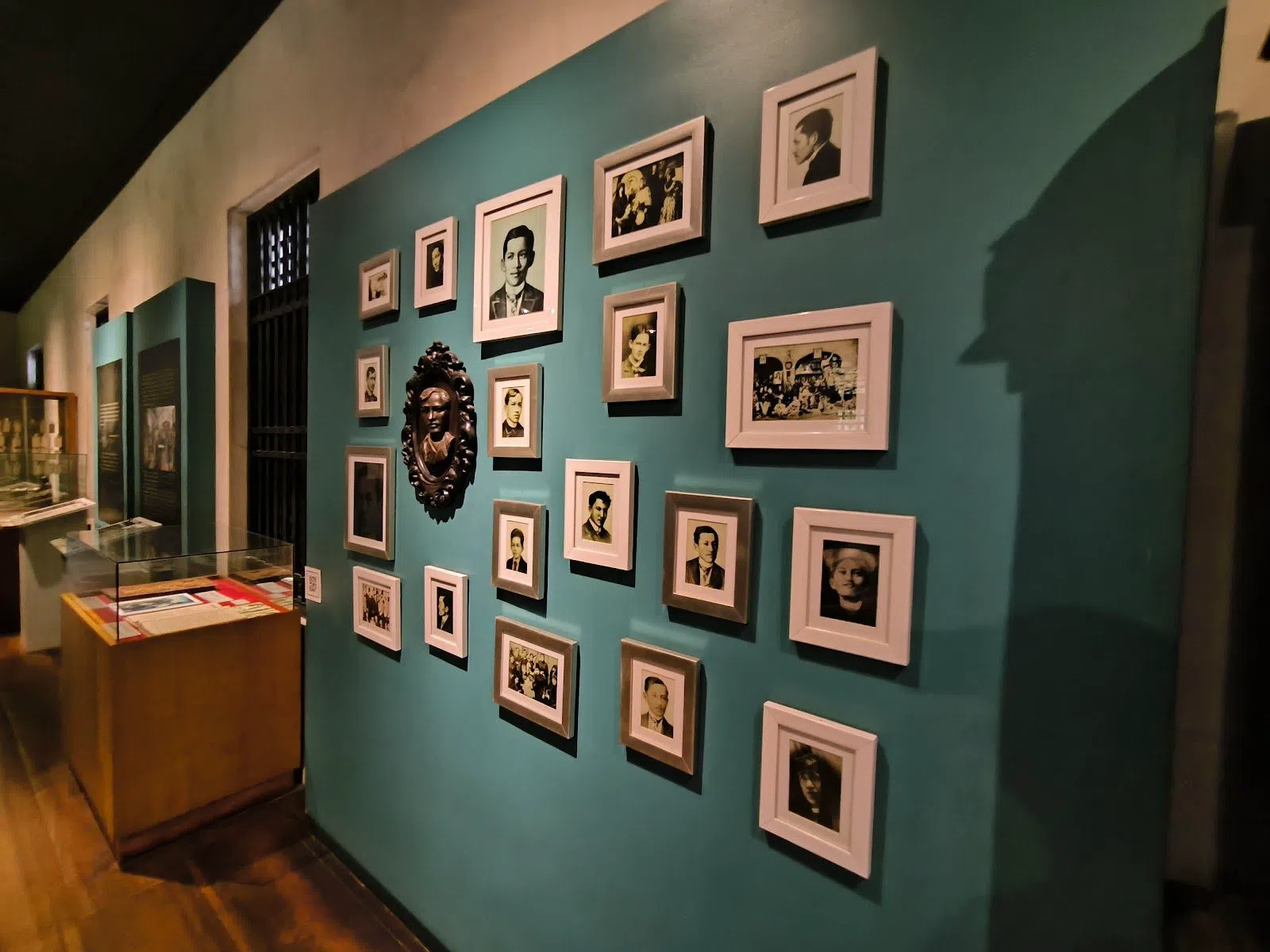
Admission is free with the fort ticket. The shrine keeps its own hours, Tuesday to Sunday, and it is what most visitors come for. Arrive on a Monday and you get the walls without the story.
Tickets at the gate and what a guide adds
A standard visit needs no advance booking. Walk-in works for any size of party, coach and school groups are routine at the gate, and the Intramuros Administration takes group reservations by phone or email for anyone who wants the arrival organised.
What the door ticket does not buy is context. The signage names what you are looking at; a guide explains why the gateway, the moat and the barracks sit where they do. That is the case for paying twice, and on a first visit it is usually worth it.
Riding and walking Intramuros with a guide

Bambike Ecotours (Plaza San Luis) runs rides on handmade bamboo bicycles, which line up outside the shopfront that doubles as the meeting point. Riders cover Intramuros including the fort, rolling along cobbled General Luna Street past the stone walls. Rides are ₱700 to ₱1,300 per rider depending on tour length, booked online or by messaging the shop directly. Departures run seven days a week. Some are already fully sold out on Nov. 1 and 2, 2026, on Dec. 24, 25 and 31, 2026, and on Jan. 1, 2027; other dates are still bookable. It is also the way to cover the whole walled city without walking it in the heat.
Old Manila Walks (Intramuros) goes deepest on the history. Founder Ivan Man Dy has led heritage walks since 2005 and is listed in the Intramuros Administration's own guide directory. The Intramuros walk is ₱1,750 and the Binondo food walk is ₱1,950. Public walks go out on published dates, and private bookings are taken as well. Nothing rolls or drives on these; you are on foot in narrow old-Manila streets with the guide talking in front of the facades.

Churches two to 10 minutes from the fort
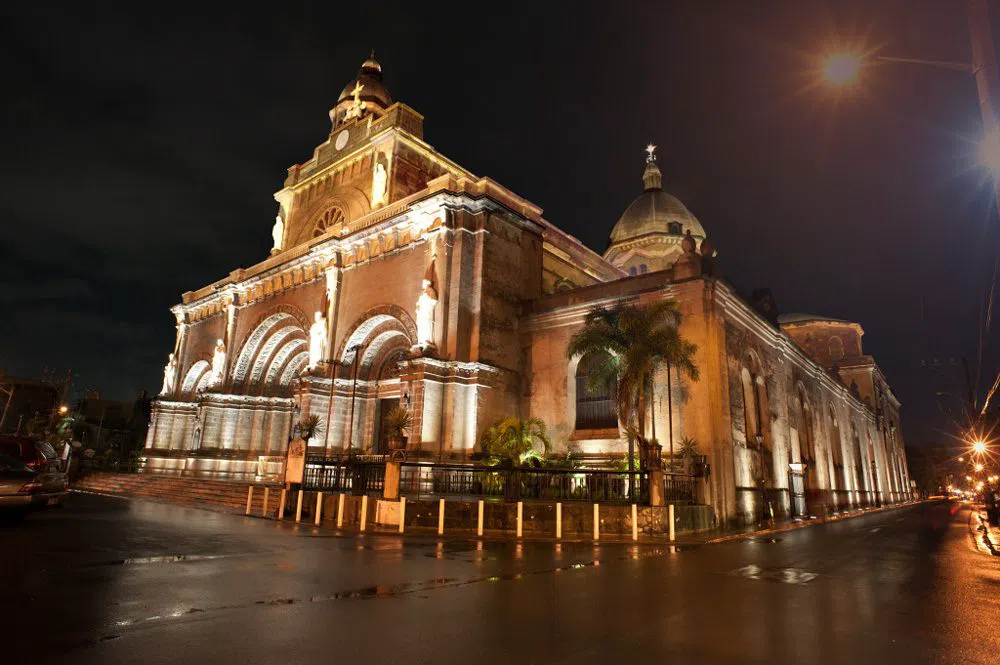
Manila Cathedral (Intramuros), the Minor Basilica of the Immaculate Conception, stands two minutes from the fort gate. Eight saint statues fill niches across the Romanesque-revival stone front, and inside a vast copper-green dome rises above a rose window and a tall pipe organ. Entry is free and donations are welcome. It is a working cathedral: cover shoulders and knees, stay out of the nave during Mass, and let the Mass schedule set your timing rather than your own.
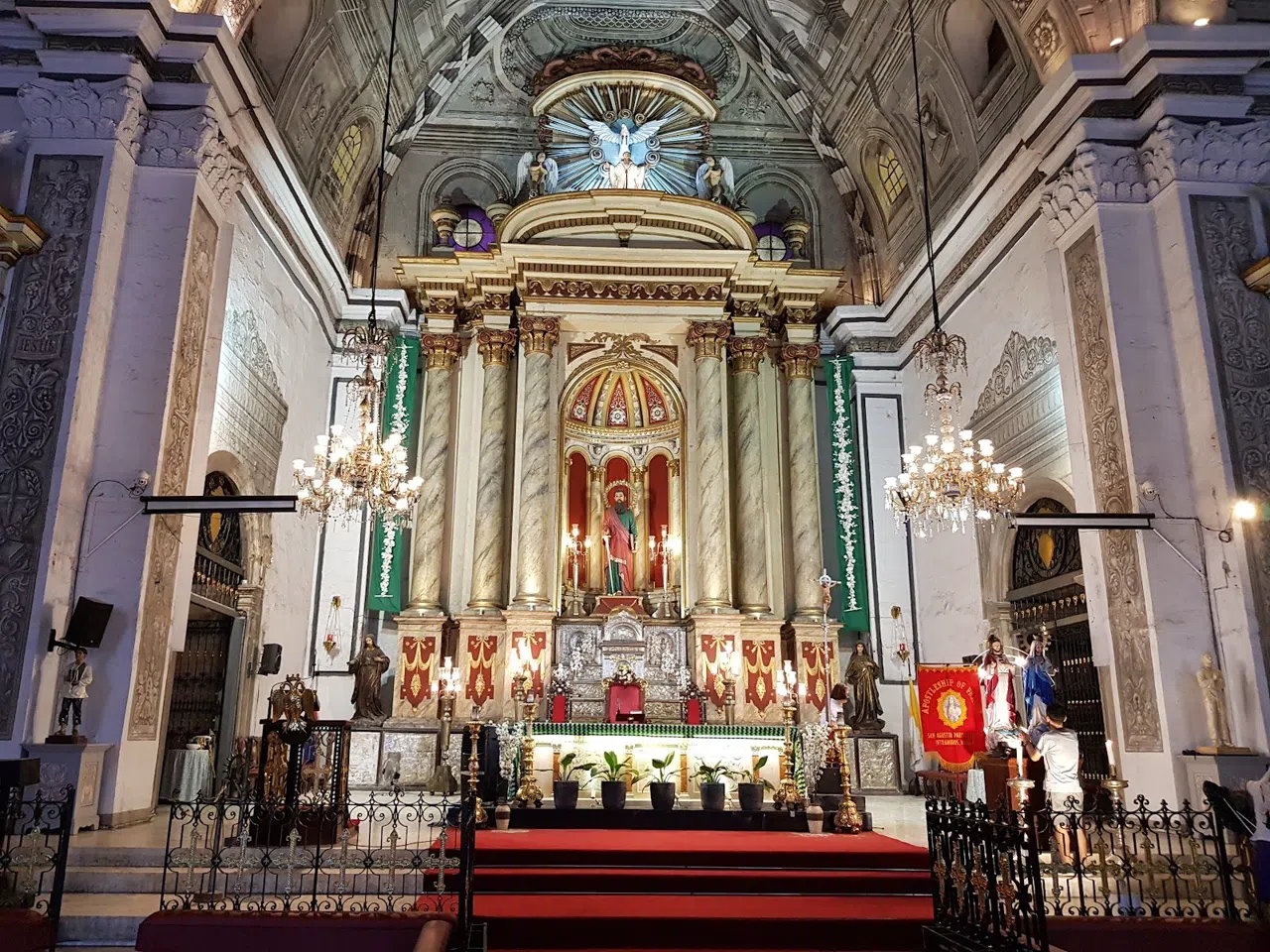
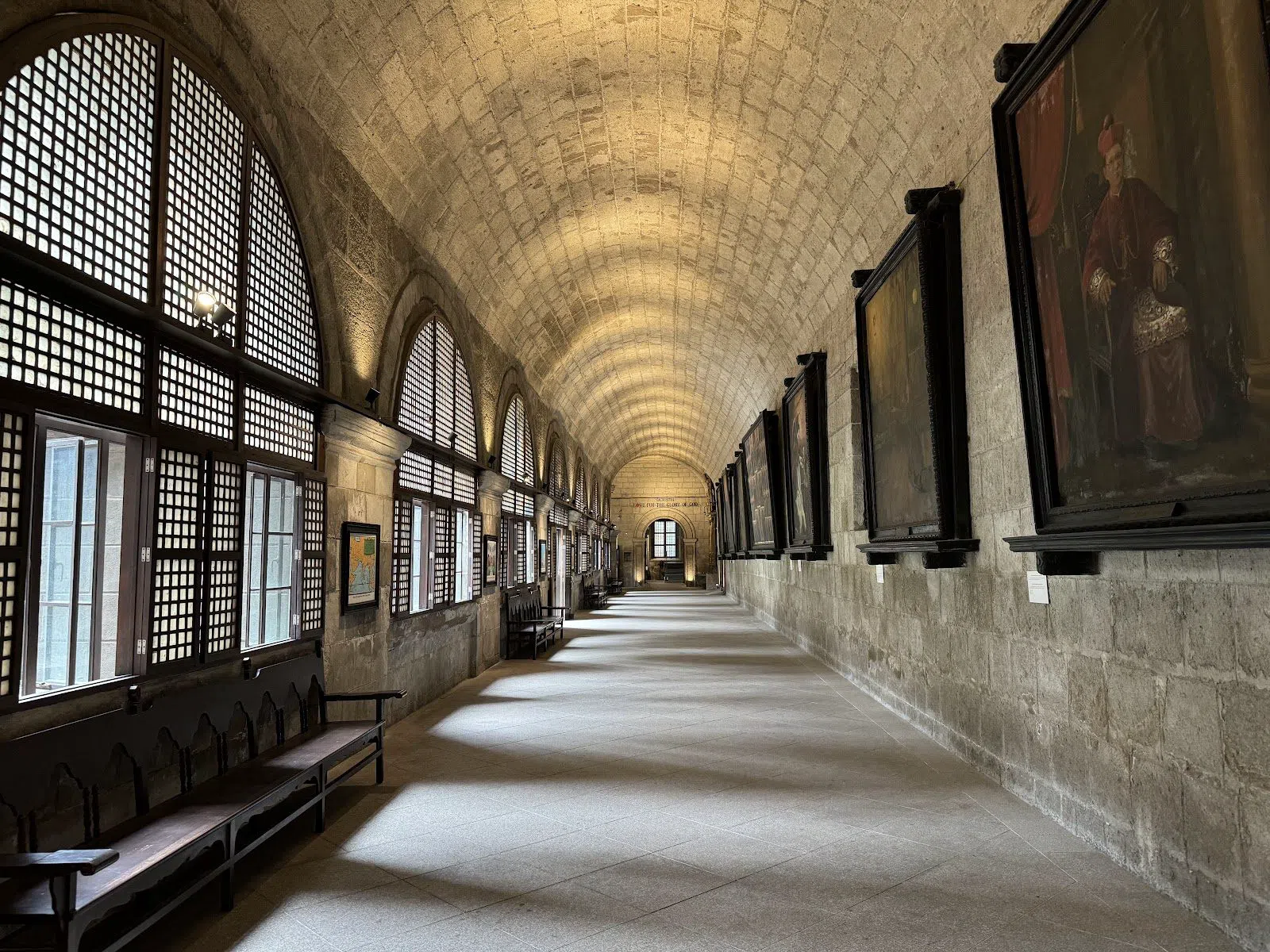
San Agustin Church and Museo de San Agustin (Intramuros) is 10 minutes' walk from the fort, the oldest stone church in the country and a UNESCO listing. The ivory-grey baroque facade carries one asymmetric bell tower and carved 17th-century hardwood doors. Inside, a painted trompe-l'oeil barrel vault runs overhead and a stone cloister is lined with santos. The museum is ₱200, or ₱160 with concession, and the church is free when open. Note the midday closure from 12 to 1 p.m., and that church access pauses for weddings and Mass.
Museums inside and beside the walls
Start the day at Centro de Turismo Intramuros (Intramuros). The restored Spanish-colonial building has an arcaded ground floor, a staffed visitor desk and bright exhibition rooms off a central hall. The desk is free and will confirm which sites are actually open that day before you pay into anything. Expanded gallery access is ₱150, or ₱120 discounted.
Museo de Intramuros (Intramuros) is five minutes from the fort and the best-presented museum inside the walls. It fills the reconstructed shell of San Ignacio church, where a timber grand staircase climbs past pale gallery walls hung with gilded colonial santos and ivory-faced ecclesiastical figures. Entry is ₱200, or ₱160 discounted. Weekends are walk-in. Tuesday to Friday is reservation-only, built around parties of 10 or more paid participants booked two working days ahead.
Casa Manila (Intramuros) shows how the people who ran Fort Santiago lived. The three-storey bahay na bato wraps sliding capiz-shell windows around a tiled interior courtyard with a stone fountain. Entry is ₱75, or ₱50 discounted. Weekends are open to visitors, and weekdays run on the same advance reservation system, so call before you build a Wednesday around it.
Baluarte de San Diego (Intramuros) is the quietest paid site in the walls. A circular stone keep ruin opens onto a sunken formal garden of tiered lawns, with bougainvillea spilling over the old curtain wall. Entry is ₱75, or ₱50 discounted, and for photographs it is the best value in Intramuros. It closes at 5 p.m., with last entry at 4 p.m.
Bahay Tsinoy (Anda Street), the Museum of Chinese in Philippine Life, covers the Chinese half of Manila's story that the fort's Spanish narrative leaves out. Life-size dioramas of Chinese junks and Parian market traders sit behind glass in a modern beige building. Fees run ₱100 to ₱250 depending on rate class, published figures vary by source, so confirm the number at the door. Call ahead as well, since the hours are not published in the official Intramuros directory.
National Museum of Fine Arts (Rizal Park) is 10 minutes' walk from the fort across the park and costs nothing. The neoclassical former legislative building keeps a colonnaded portico and marble halls, and Juan Luna's enormous Spoliarium fills the end wall of the old Senate hall. Admission is free with valid ID, with no advance booking for general entry. It pairs best with a Fort Santiago morning.

Eating and drinking near the fort
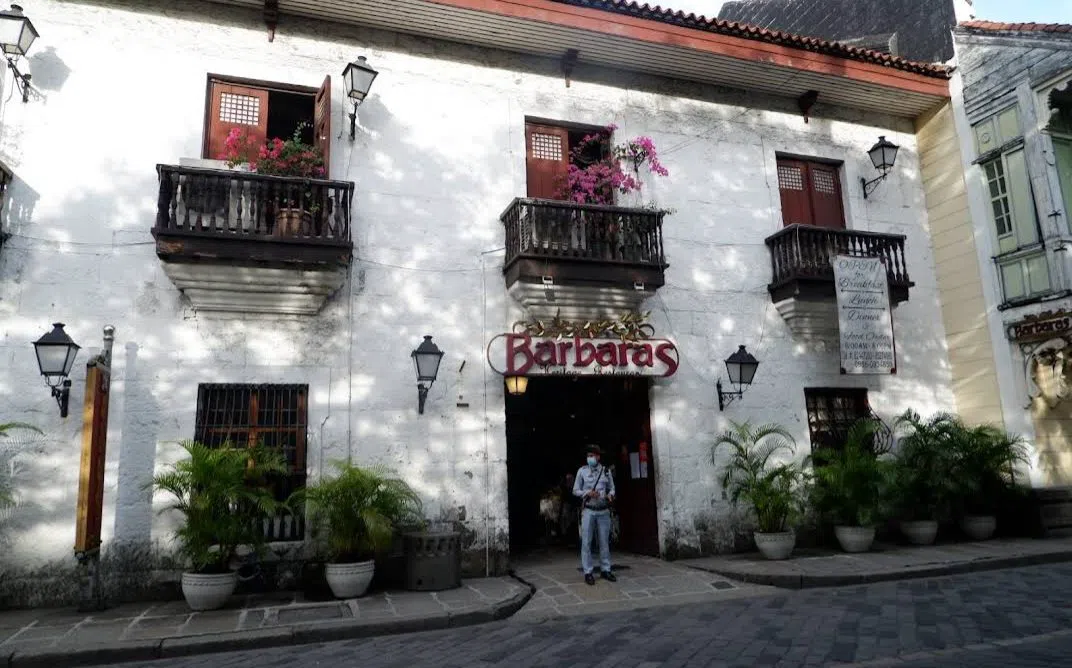
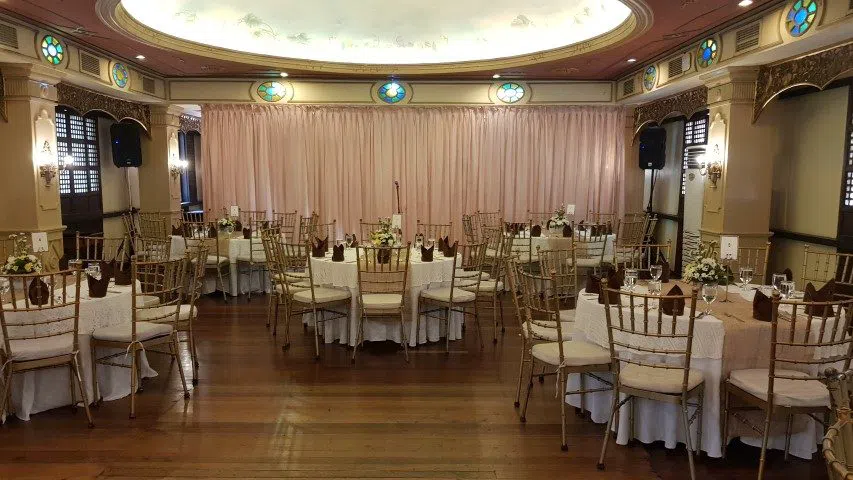
Barbara's Heritage Restaurant (Plaza San Luis) puts on folk-dance shows at 12:15 p.m. and 7:15 p.m. in a high-ceilinged Spanish-colonial dining room with chandeliers and a long buffet. Dancers in baro't saya and barong clatter bamboo poles for tinikling a few metres from the tables. The buffet is ₱1,650, ₱1,320 for seniors and PWD guests, and ₱825 for children aged four to seven. Book ahead if you want ringside seats.
Ilustrado Restaurant (Calle Real del Palacio) has served Filipino-Spanish cooking inside the walls since 1989. You come in through a courtyard to dark hardwood and capiz interiors with white linen tables. It is à la carte at ₱₱₱ and the calmer sit-down evening in Intramuros. Reserve a table.
La Cathedral Café (Cabildo Street) has the cheapest view in the walled city, at ₱₱ for coffee and plates. The café downstairs takes walk-ins all day. The roof deck opens only from 4 p.m. and is small, with seats angled so the green dome of Manila Cathedral fills the frame just across the street, under fairy lights and capiz lanterns. Sit out the hot middle of the afternoon here and go into the fort late.

Sky Deck View Bar (The Bayleaf Intramuros) runs daily from 4 p.m. to 11 p.m. in two seatings, 4 to 7 p.m. and 7 to 11 p.m. The open-air lounge gives a 360-degree sweep over the Intramuros golf course, the old walls and the bay horizon, and from up there the street grid you have been walking finally makes sense. Drinks and small plates are ₱₱₱, and reservations go through the hotel. Reserve for sunset; the two-seating system makes a walk-up a gamble.
Best time to go
Take the fort in the morning. The ramparts and Plaza Moriones are open ground with no cover, and the mid-afternoon heat is what drives people onto roof decks. The alternative is to flip the day, spend the hot hours over coffee and walk into the fort late.
Pick a day between Tuesday and Sunday. Casa Manila, Centro de Turismo Intramuros and the National Museum of Fine Arts all close on Mondays, and a Monday leaves you with stonework and no interiors. A weekend removes the weekday reservation problem at the two house museums. If Baluarte de San Diego is on your list, fit it in before late afternoon, because it shuts well before the rest of the walls empty out.
Is Fort Santiago worth it
It suits a visitor with half a day in Manila and any interest in José Rizal, whose overcoat and manuscript pages are the reason most people come through the arch. The fort asks for flat walking in the open, and for a guide or a book if you want more than the labels.
Planning notes
Mondays shut the Rizal Shrine and three of the sites beyond the fort, weekday visits to the two house museums need a reservation two working days ahead, and the fort entrance is on Santa Clara Street while the Riverwalk Gate stays closed. Book a guided ride or walk before you arrive, and reserve the rooftop if you want it at sunset.
See the Manila guide and the Manila hotel search.
Før du drar
How much does it cost to enter Fort Santiago?
Entry is ₱75 regular, or ₱50 for students, seniors and PWD visitors with ID. Museo ni Rizal, the Rizal Shrine, is free with the same ticket.
How long should I allow inside the fort?
Two to three hours covers the ramparts, Plaza Moriones and the Rizal Shrine at a walking pace. The shrine's rooms are narrow, so visitors file through one at a time and the middle of the visit slows down.
Which gate do I use to get in?
Enter from Santa Clara Street. The Riverwalk Gate was temporarily closed in early 2026, so check which entrance is open before you walk round the walls.
Do I need to book a guided tour in advance?
No. Walk-in works for any size of party and tickets are sold at the gate. Guided bamboo-bike rides run seven days a week at ₱700 to ₱1,300 per rider, and the Intramuros walking tour with Old Manila Walks is ₱1,750, so book both before you travel.
What is closed on a Monday in Intramuros?
Museo ni Rizal opens Tuesday to Sunday, and Casa Manila, Centro de Turismo Intramuros and the National Museum of Fine Arts all close on Mondays. Museo de Intramuros also takes reservations only from Tuesday to Friday, for parties of 10 or more booked two working days ahead.