The Manila issue
Manila's Barangay Fiestas and the Economy Behind Them
A month-by-month route through Manila's parish fiestas, with the 2026 dates, the crowds worth avoiding, and the flower market that supplies the city's processions.

By Mariana FonsecaIntramuros walls to the last ferry out
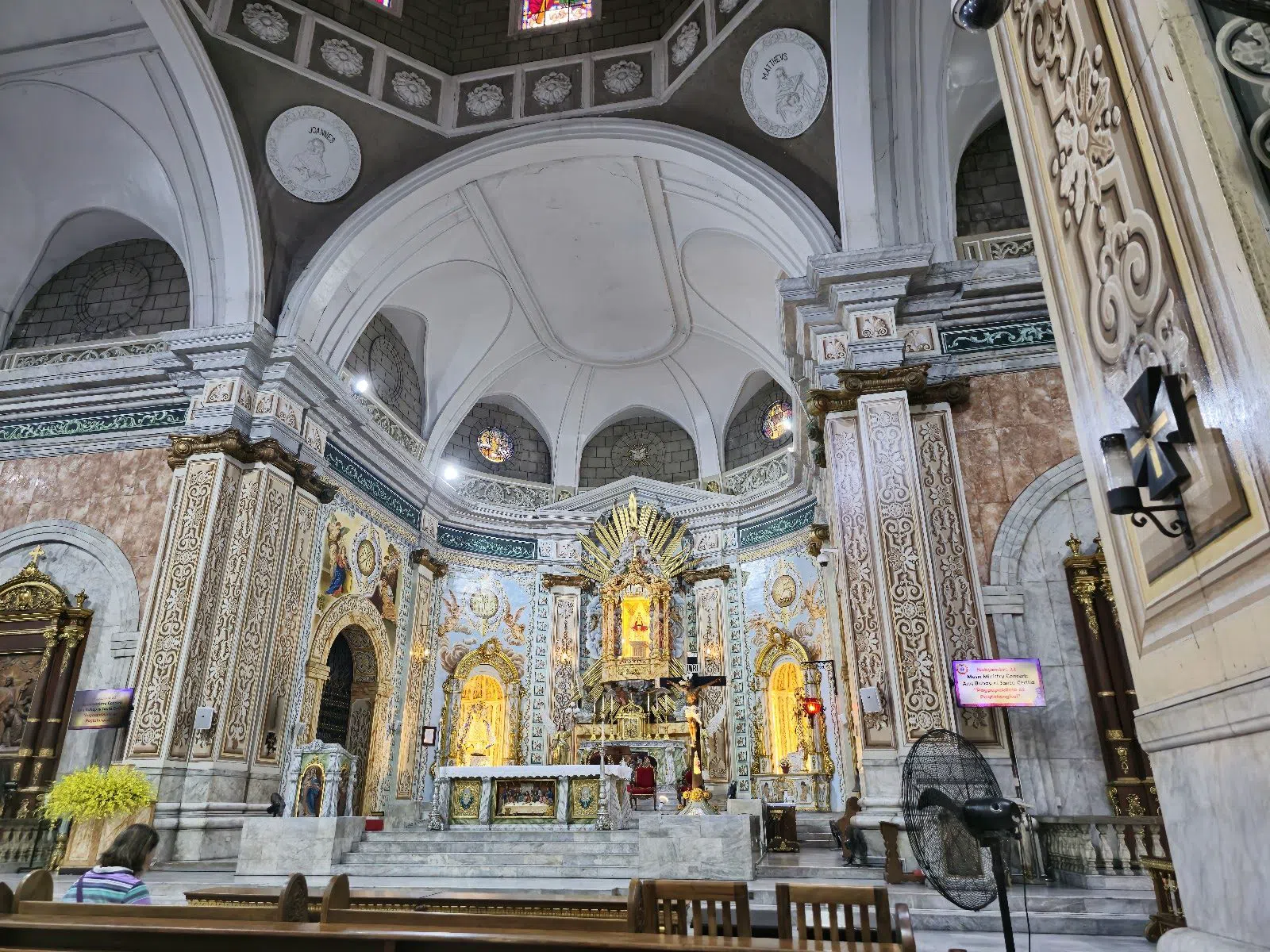
A Manila fiesta announces itself two streets before you see it: a brass band working through the same four bars, the smell of frying lumpia, and a barangay's worth of plastic chairs dragged into the road. The city keeps more than a dozen of these a year, and each one belongs to a parish and a run of streets rather than to a tourist board. Learn the calendar and you get the Manila that residents actually live in: flowers bought at three in the morning, a saint carried past a sari-sari store, an evening that rarely costs more than a few hundred pesos.
This guide follows that calendar rather than a list of sights, because a fiesta is a date before it is a place. Nearly all of it is free to stand in. The money is real, though. It moves through florists, candle sellers, food stalls, sound systems and the families who sponsor a Mass, mostly in the weeks before the procession rather than on the day itself.
January is the crush, the child and the dance
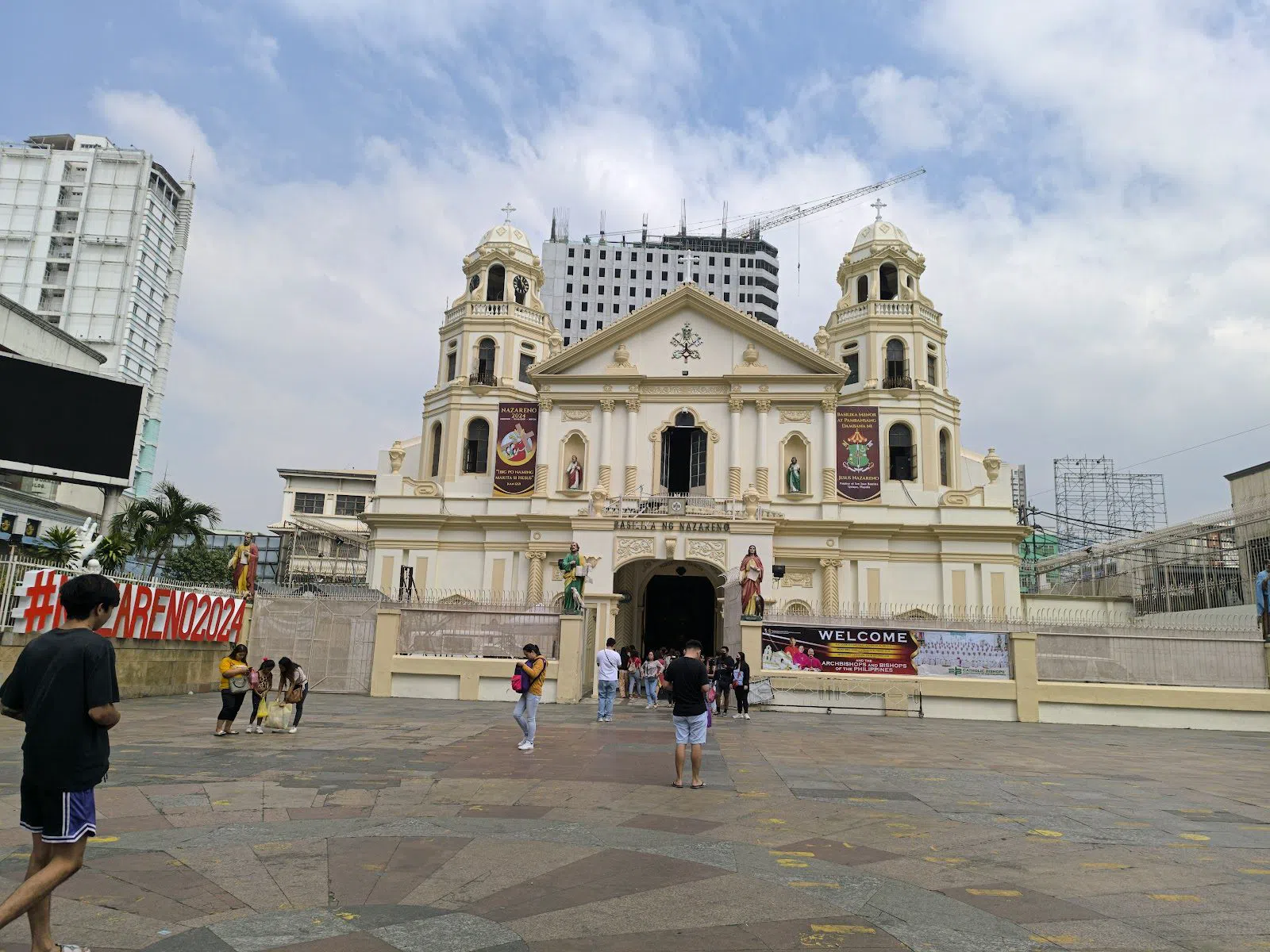
The year opens with the largest religious gathering in the country. Minor Basilica and National Shrine of Jesus Nazareno (Quiapo Church, Quiapo) anchors everything: the Traslación of 9 January 2026 ran 30 hours and 50 minutes, the longest on record, with 9.6 million people counted across the novena. There is no ticket and no door policy; the constraint is physics. If you are travelling with a group, watch from Plaza Miranda or from the Quezon Boulevard overpasses and do not attempt to reach the rope line, where devotees have been packed shoulder to shoulder for hours and leaving is not a decision you get to make. Candles and street food run ₱20–₱150.
The better visit for most people is 6–8 January, when the image goes out on barangay visitations. Those are the neighbourhood version: a few hundred people to a street, brass bands, families setting up tables. You can actually see what is happening.

A week later the city hands itself to the Santo Niño. Minor Basilica and Archdiocesan Shrine of Santo Niño de Tondo (Tondo) held its Lakbayaw procession on 17 January 2026, within the 16–18 January feast. Lakbayaw is Manila's own Santo Niño dance, older and rawer than the televised version from the south, and it suits a group: families and barangay contingents parade as blocks, so join the roadside rather than the carroza line, which belongs to the confraternities. The parish now runs the procession in the morning only and has dropped the evening contests, so plan an early start rather than a late one. Fiesta stalls sell at ₱30–₱200.
On the third Saturday of January, 18 January in 2026, Santo Niño de Pandacan Parish (Pandacan) keeps Buling-Buling, led by Vice Mayor Chi Atienza. It is the most photogenic fiesta in the city and the one built for participation. Barangay troupes, schools and families dance the courtly offering as contingents, and visitors are welcome to walk the route rather than watch it from behind a barrier. Be prepared for the state of the church: it burned in 2020 and remains under reconstruction, so Masses happen in the patio.
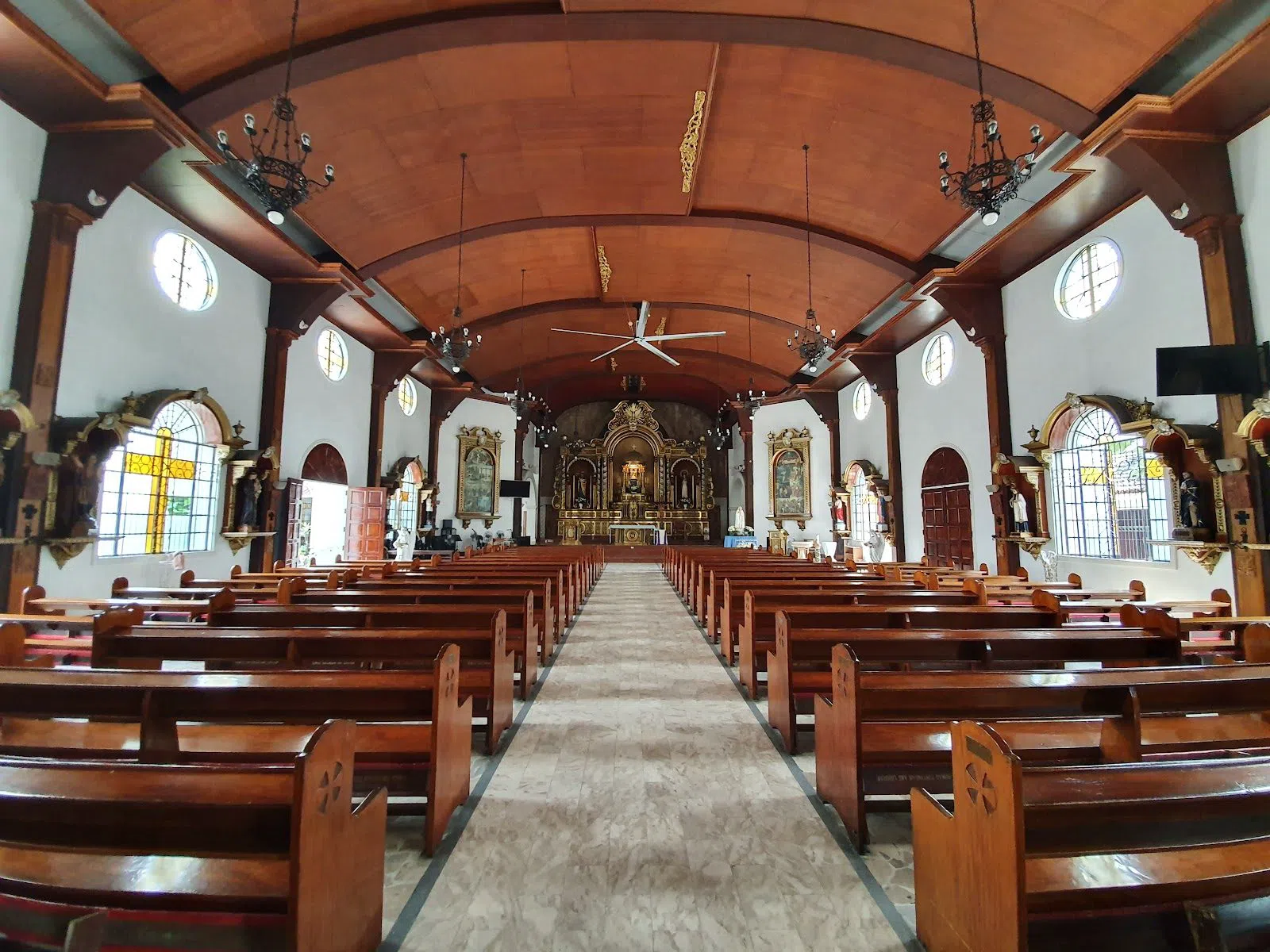
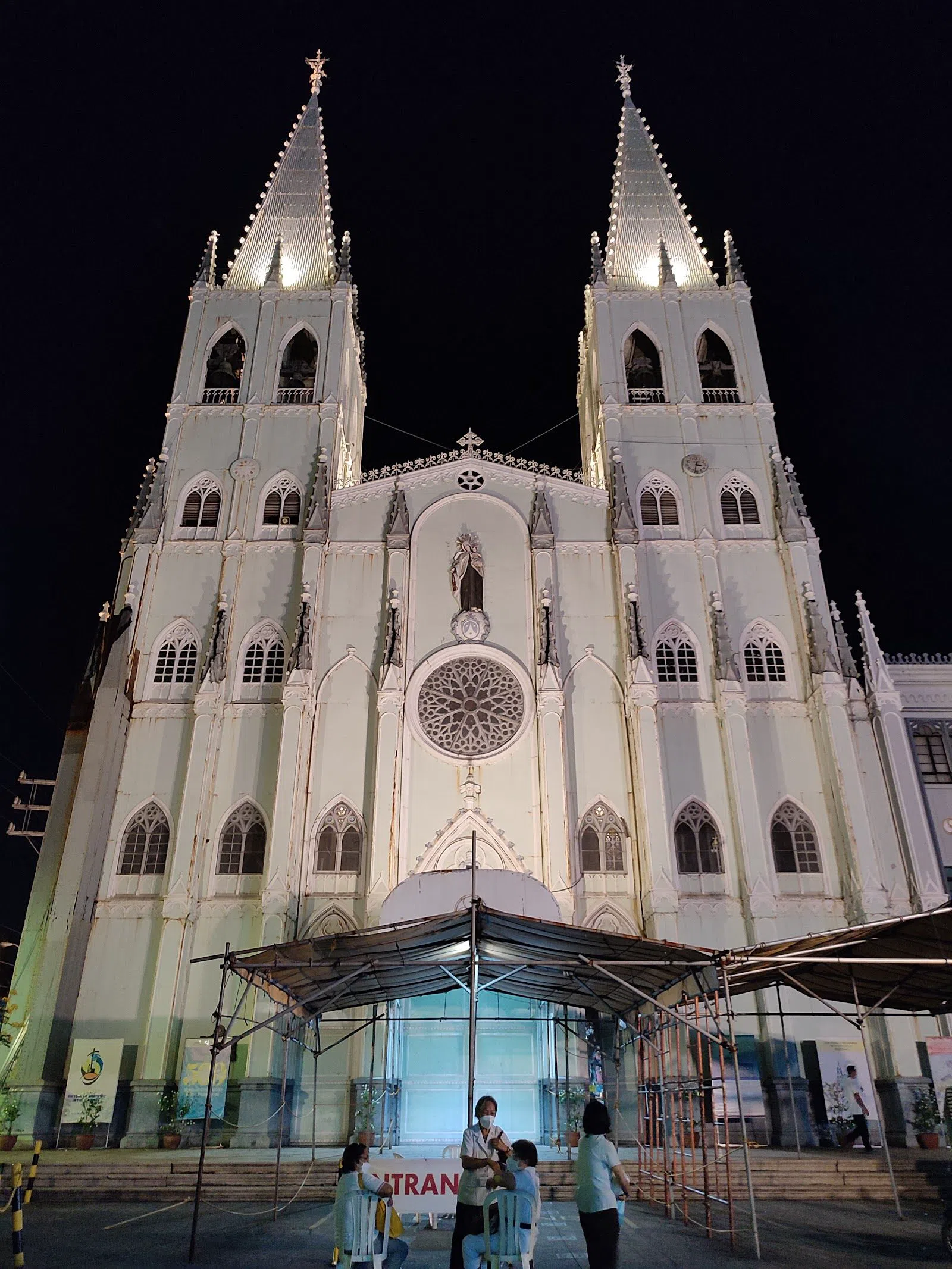
Two days later, Minor Basilica of San Sebastian (Quiapo, on Plaza del Carmen) marks the feast of St Sebastian on 20 January, with a second fiesta for Our Lady of Mount Carmel in July; both fill the plaza with stalls. The basilica is in Phase 3 of its restoration through 2026, covering belfries and façades, so there will be scaffolding in every photograph you take. Entry is free and donations fund the work. Heritage-tour operators bring groups regularly, but the sacristy asks for advance notice for large parties, particularly on feast days.
Plan your Manila trip
Live prices from our booking partners.
Free cancellation on many rooms. We may earn a commission when you book.
The flower market and the candle stalls that fund it all
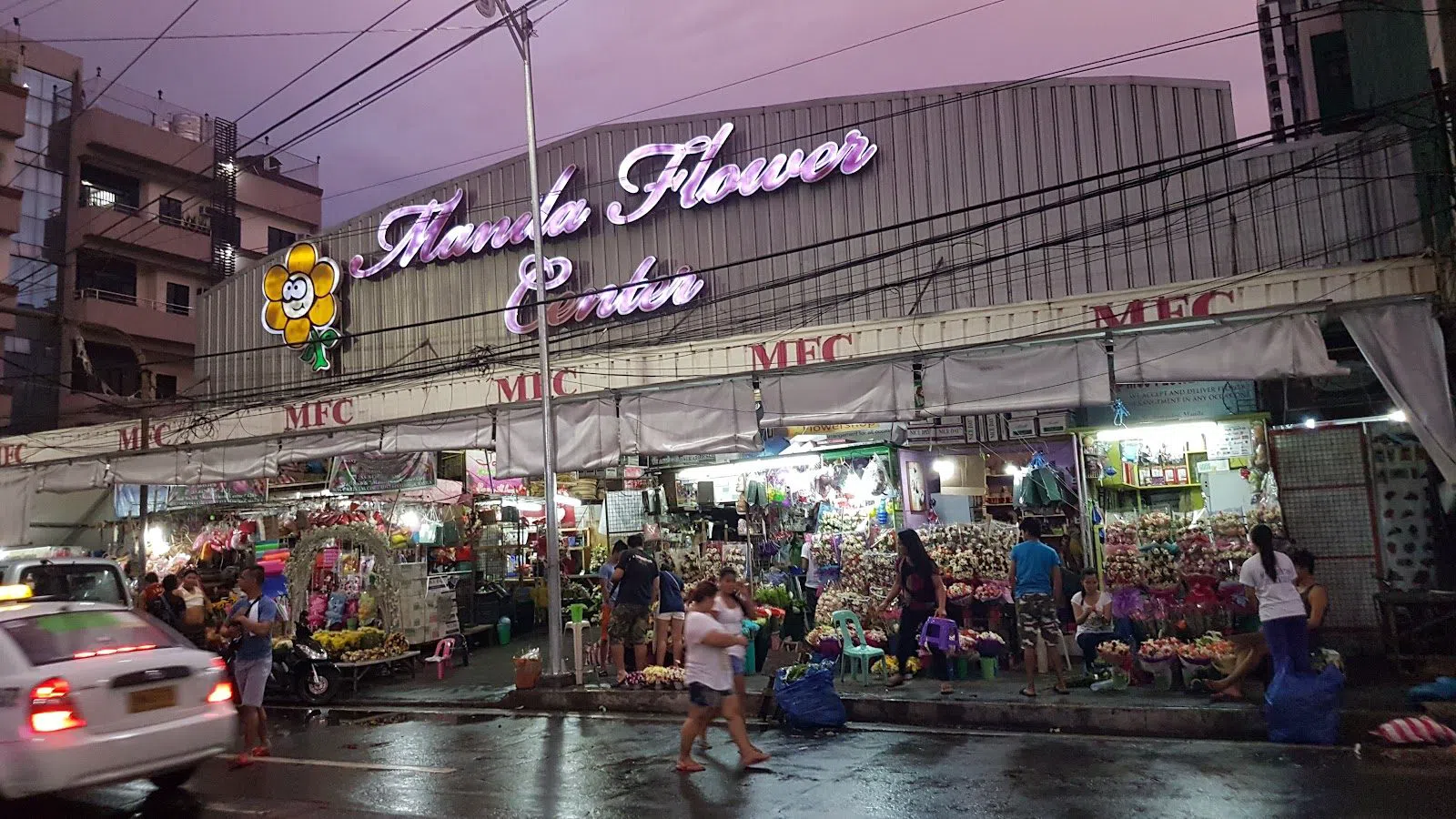
Every carroza in every procession on this list is banked with flowers bought at Dangwa Flower Market (Sampaloc). It trades 24 hours, at wholesale rates 50–90% below city florists, with bundles from ₱100, and it is at its best before dawn when the provincial trucks unload: the alleys go from empty to knee-deep in chrysanthemums in about twenty minutes. Groups are fine here; the traders are working, so buy something or keep out of the loading lanes. The pre-dawn peaks are Undas at the start of November and the days before Valentine's.
The demand side is visible at Quiapo Market and Plaza Miranda (Quiapo), directly outside the basilica: candles at ₱20–₱100, street food at ₱20–₱150, plus amulets, herbal cures, sampaguita garlands and fresh lumpia sold to the same devotees the procession draws. This is the fiesta economy at work, and it is worth an hour of slow walking. Go in daylight, keep bags in front of you, and do not bring a large party into the Friday devotion peak, when the plaza is already at capacity. A few streets over, the pastil and Maranao stalls of Muslim Town make the point that this quarter feeds more than one calendar.

February hands the streets to Binondo
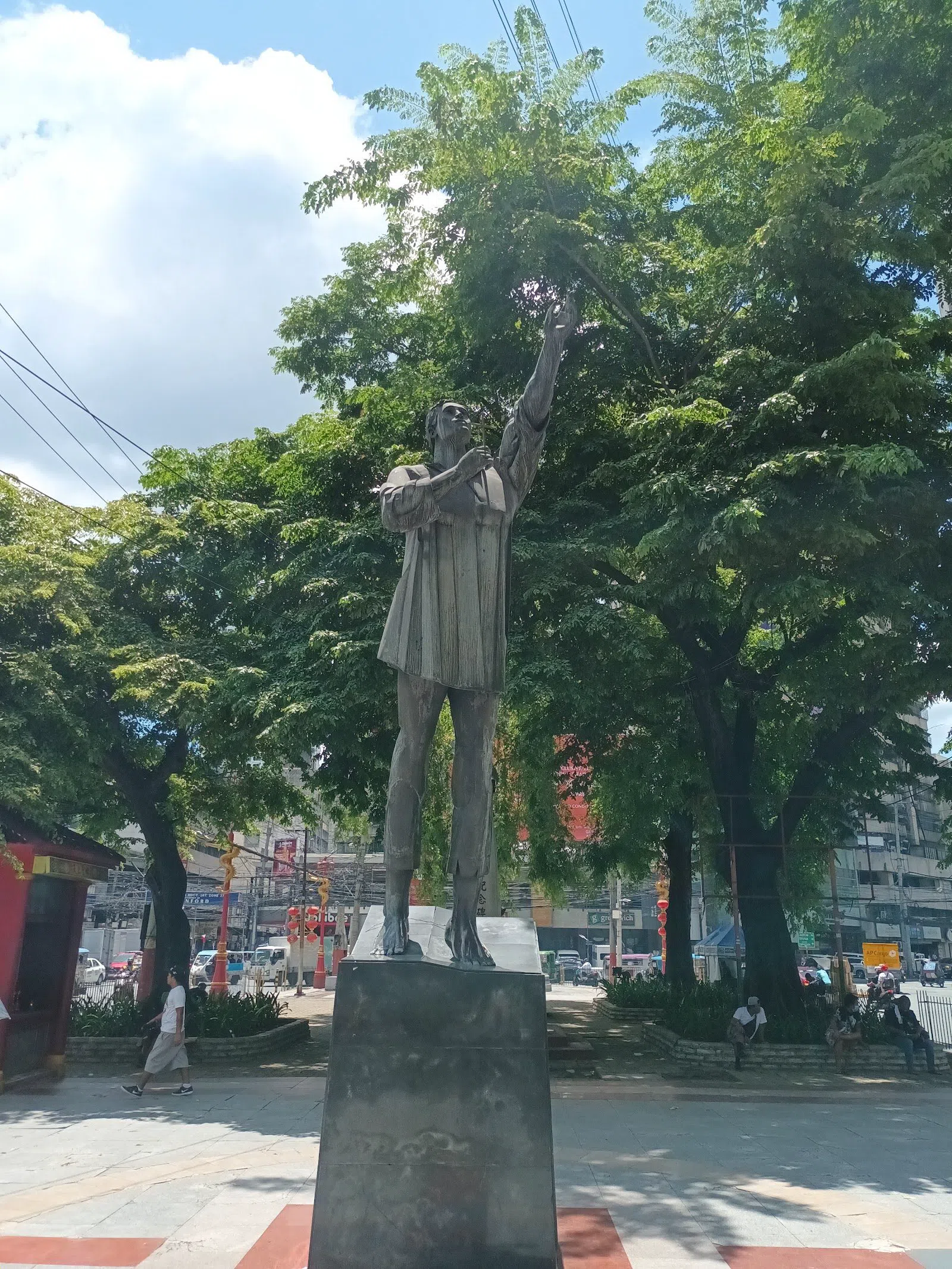
Manila's fiesta economy is not only Catholic. Binondo Chinatown (Ongpin Street and Plaza San Lorenzo Ruiz) opened the Year of the Fire Horse with a Grand Parade on 17 February 2026, running from the Central Post Office through Reina Regente and Ongpin, with an Asian Street Food Festival at Plaza San Lorenzo Ruiz through 21 February. The quarter is built for crowds and the restaurants along Ongpin seat groups, though not during peak parade hours, when the good ones are either full or serving standing customers only. Book ahead if you want a table, or accept that you will eat from a counter. Street eats run ₱50–₱250; a sit-down meal is ₱300–₱800 a head. Walking the district is free.
May carries two Virgins and a field of champions

National Sanctuary of Nuestra Señora de los Desamparados (Santa Ana Church, Santa Ana) keeps its feast on 12 May, the same date a Spanish shrine keeps for its own Virgin of the Forsaken, a link the two formalised in February 2026. The year also marks the 35th anniversary of the image's canonical coronation, so expect a fuller programme than usual. The procession is a district-wide affair with family and confraternity contingents; groups are welcome and the route is public.
Six days later the loudest Marian night in the city belongs to Archdiocesan Shrine of Nuestra Señora de Guia (Ermita Church, Ermita), home to the oldest Marian image in the Philippines. The district keeps a ten-day fete with novena Masses at 6pm, ending in a floral procession on 18 May. The novena evenings are the calm way to visit: a hundred or so people, no barriers, the image at close range. The 18 May procession is the loud one. It is also the fiesta most international visitors are already standing next to and never notice, because Ermita is where a great many of them sleep.
Early May now brings a competition rather than a procession. Aliwan Fiesta (Star City complex, on the CCP grounds) returned on 7–9 May 2026 after a hiatus, and it is the one date when champion festivals from across the country compete in the metro, with contingents numbering in the hundreds. Street viewing along the parade route is free; grandstand seating varies year to year. The caveat is the address: the CCP complex sits just over the boundary line and is not, strictly, Manila proper, a ten-minute ride from Malate but not a barangay fiesta in any sense. Come for the choreography, not the community.
The quiet fiestas between August and November
This is where a visitor stops being one of a million. San Fernando de Dilao Parish (Paco Church, Paco) keeps its fiesta on the Sunday after 19 August for St Ferdinand of Castile. The parish was founded in 1580 and the fiesta is compact and walkable, small enough that a foreigner on the street is treated as a guest rather than as traffic. Street food runs ₱20–₱120, and the sunken circular Paco Park is ten minutes away if you want somewhere quiet to sit afterwards.
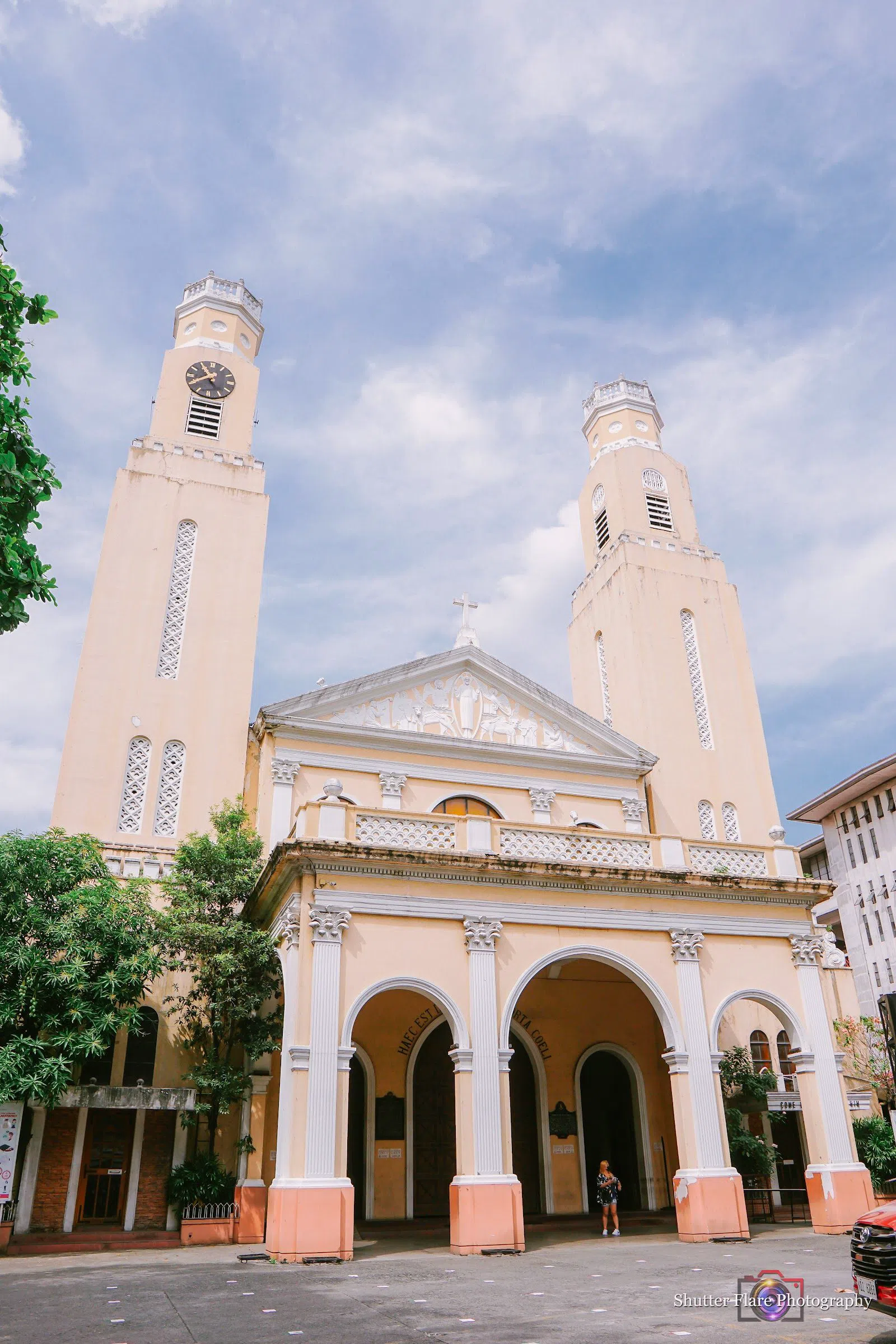
On 29 September, National Shrine and Parish of Saint Michael and the Archangels (San Miguel) holds Masses through the day and a karakol and procession from 7pm. The karakol, a swaying dance-walk that moves the image forward at roughly the speed of a conversation, is the reason to come, and this is the least touristed fiesta on this list because it sits in the presidential district. Those palace-adjacent streets carry police checkpoints on fiesta day, so bring identification and expect bags to be looked at.
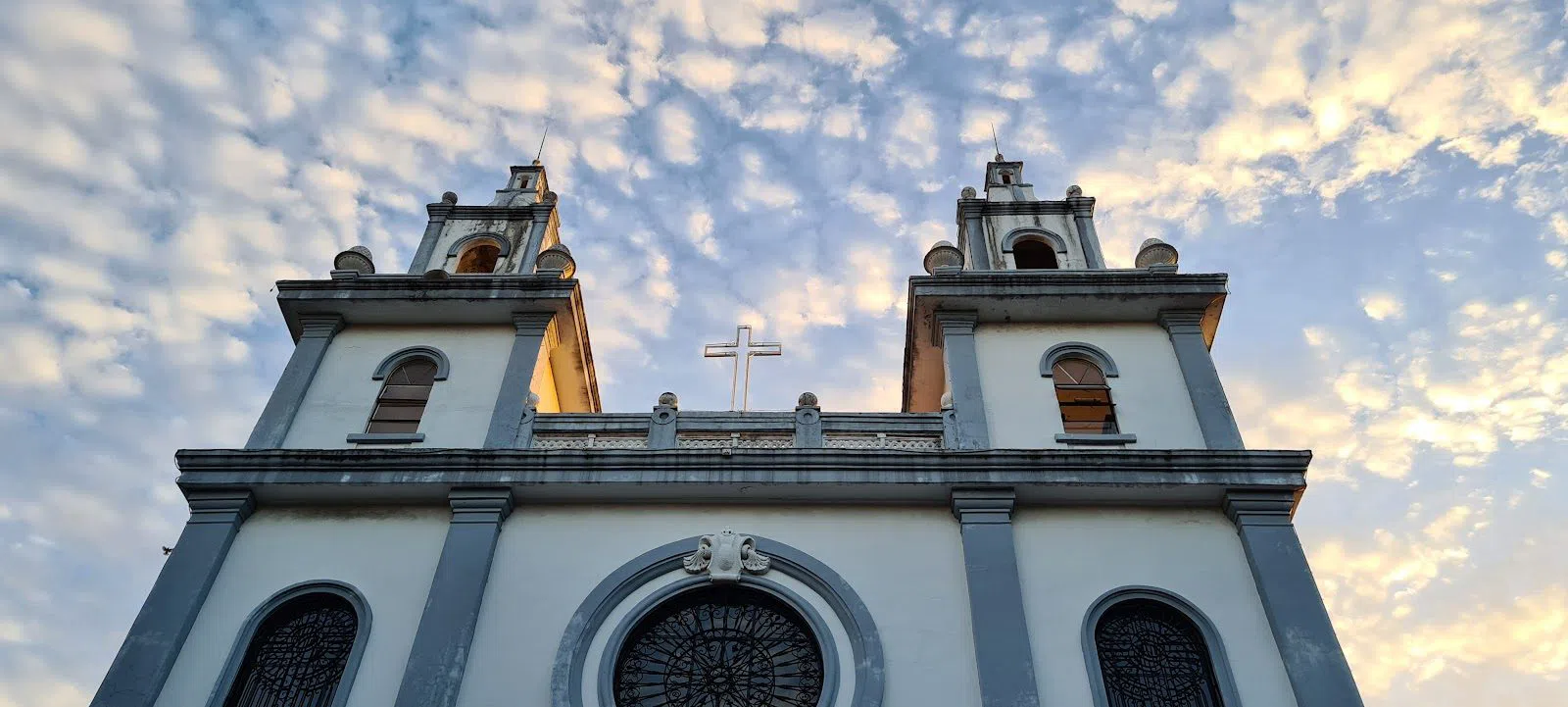
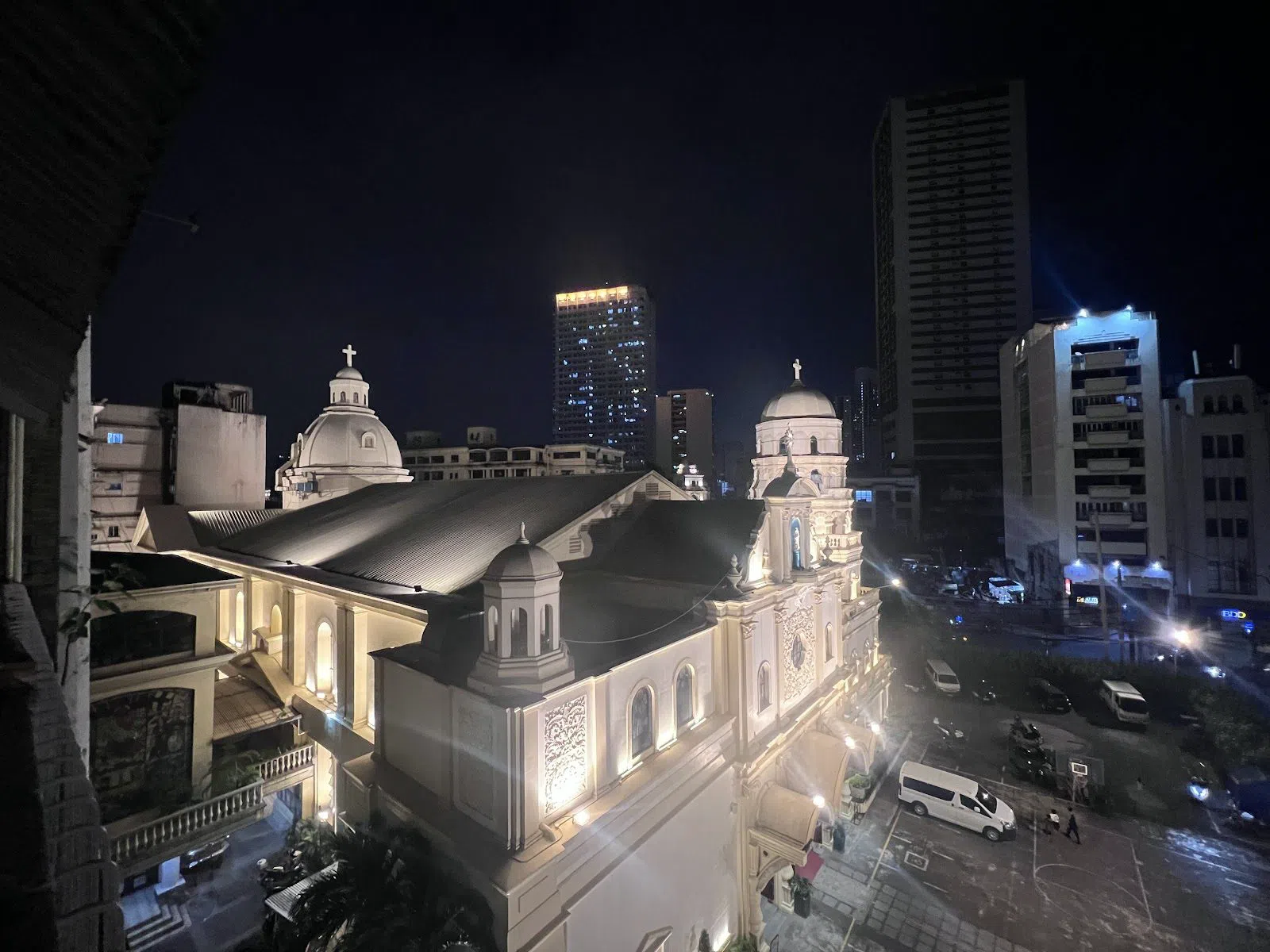
The third Sunday of October belongs to Minor Basilica of Nuestra Señora del Pilar (Santa Cruz Church, Santa Cruz), run by the Blessed Sacrament fathers, a parish that passed its 400th year in 2019. The plaza is the natural staging point and the route is public, so groups slot in easily. Pair it with the heritage buildings of Escolta a few minutes' walk away for a proper half-day, with Chinatown-fringe eats at ₱80–₱300.
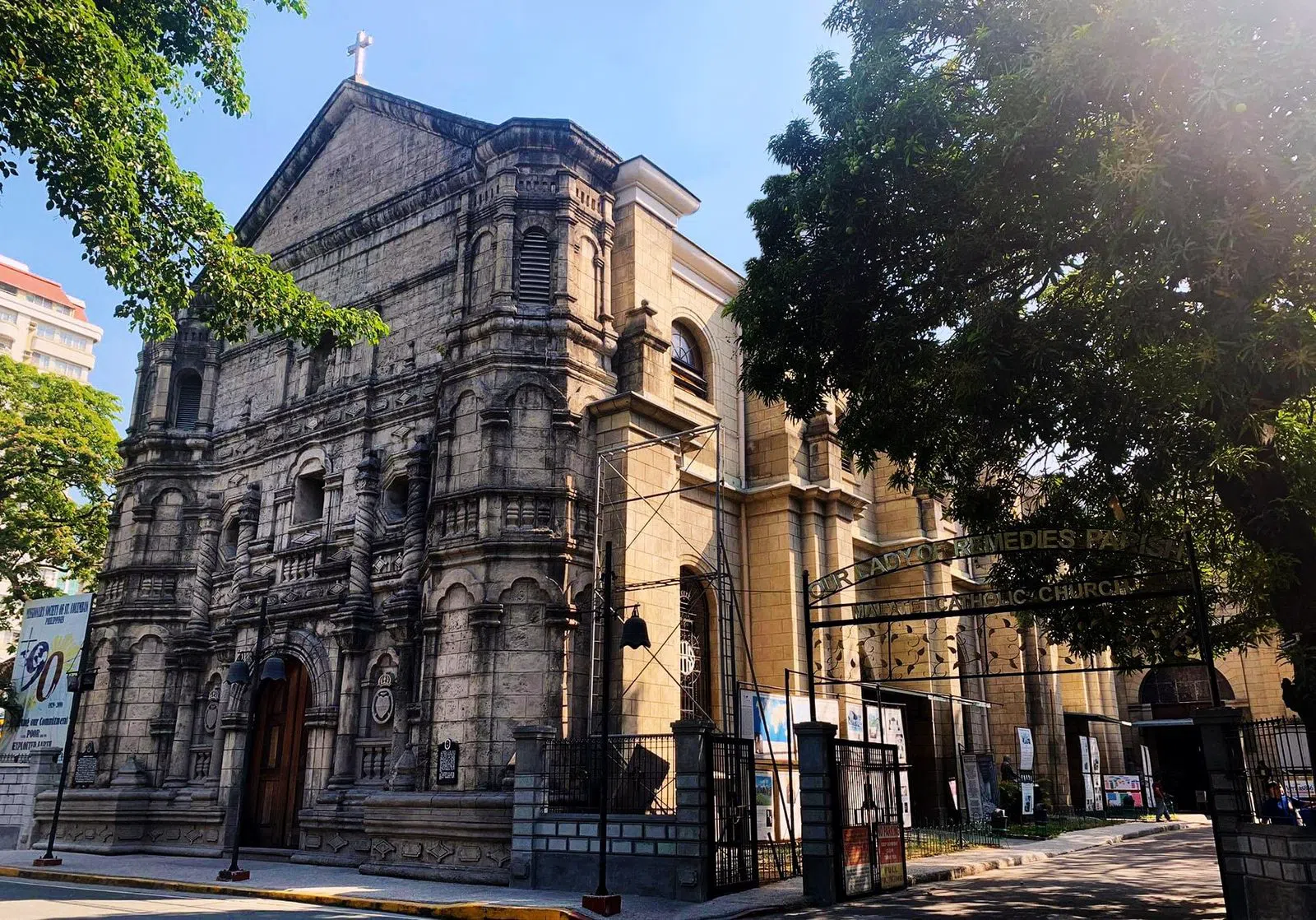
November closes with Our Lady of Remedies Parish (Malate Church, Malate) on the third Sunday, a bayside procession with an unusually specific history: this was the day mothers recovering from childbirth came to petition the Virgin. The church was declared an Important Cultural Property in 2023 and is the oldest of 17 Remedios shrines in the country. The parish sells novena and fiesta Mass sponsorships to families and organisations, which is worth knowing if you want to understand how these things are actually paid for.
December fills Intramuros with borrowed saints
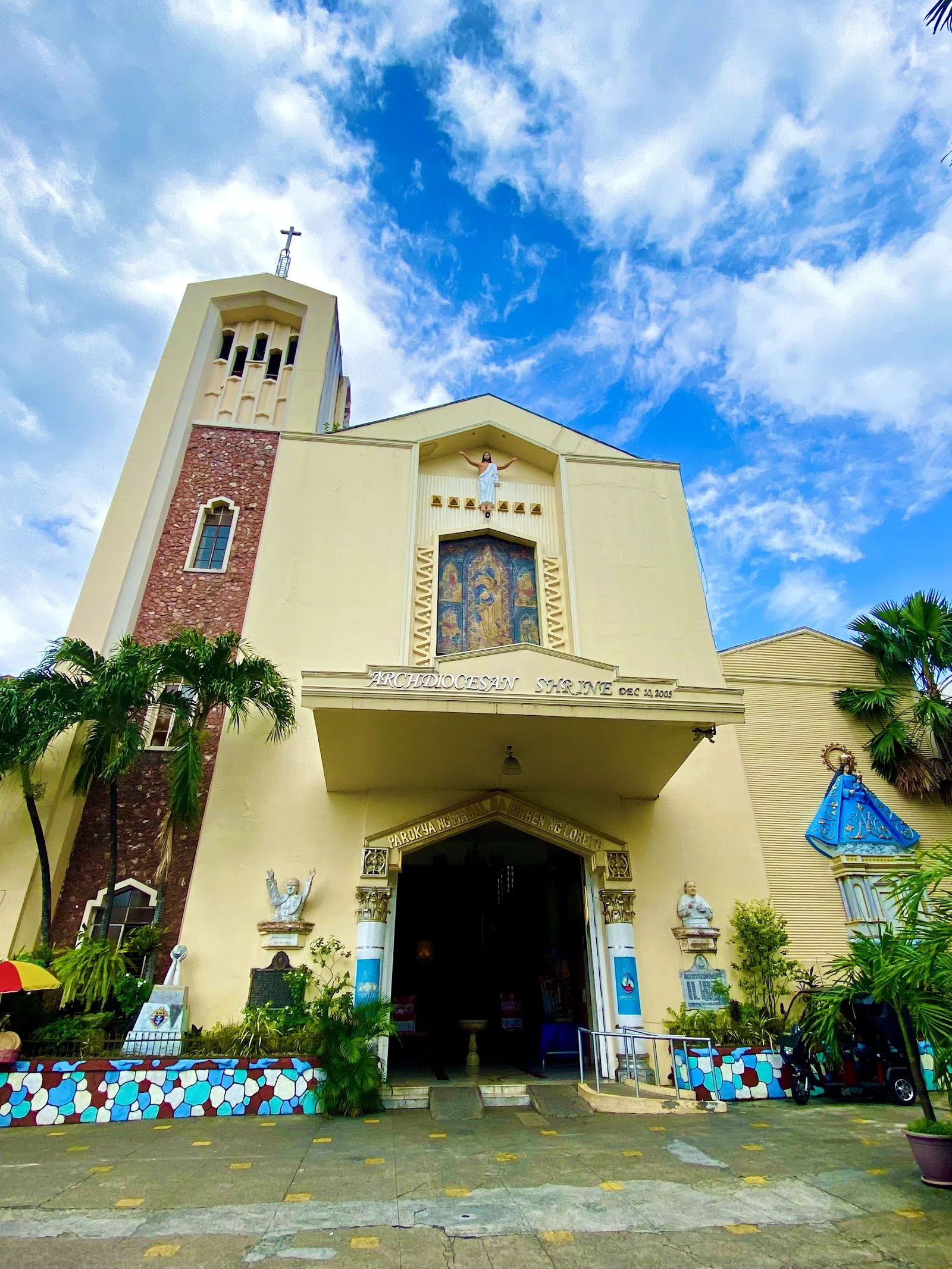
National Shrine and Parish of Our Lady of Loreto (Sampaloc) holds its town fiesta on the Sunday after 10 December, past its 404th year and now with a 'Tanglaw' lantern tradition added to the programme. Sampaloc is the university belt, so this one is carried by student barkadas turning out en masse: young, loud, and stalls at ₱20–₱150. The Virgin is set to receive a pontifical crown, which will make this fiesta considerably bigger, so 2026 may be the last easy year to see it.
The season's set piece is the Intramuros Grand Marian Procession (Intramuros), held by the Cofradia de la Inmaculada Concepcion with the Intramuros Administration on the first Sunday of December, 6 December in 2026. It is the country's largest gathering of Marian images and the single best place to see what parish families actually own: heirloom ivory faces, embroidered mantles, silver carrozas, most of them normally kept in private homes. Spectators line the walled-city streets and the Plaza de Roma staging area is open all afternoon, which makes it the most group-friendly evening of the whole calendar. You can arrive early, walk among the images being dressed, then find a kerb.

What to bring, how to move, what it costs
Getting around. The LRT-1 line down Rizal Avenue and Taft is the spine for Quiapo (Carriedo), Santa Cruz, Ermita and Malate; LRT-2 via Legarda serves San Sebastian and the Sampaloc shrines. On procession days the streets around a fiesta close and ride-hailing quotes triple or simply go unanswered, so get off the train and walk the last kilometre. Jeepneys are cash-only and reroute without notice during fiestas. For Pandacan, Santa Ana and Tondo, ride-hail to the edge of the district and walk in.
Cash. Bring small notes. Stalls, candle sellers, Dangwa traders and jeepney fares are cash, and ₱1,000 notes are a nuisance to break. A generous fiesta day covering transport, street food, candles and a sit-down meal in Binondo lands around ₱1,000–₱1,500 a person; a lean one is under ₱400.
Timing. Processions start late and run long; morning Masses are the reliable fixed points. Wear closed shoes, carry water, and assume heavy humidity in any month. If you are choosing one date blind, take the Intramuros procession on 6 December for spectacle, or Buling-Buling in Pandacan on the third Saturday of January for participation.
Where to stay. Ermita and Malate put you inside two of these fiestas and within a short ride of most of the others; Binondo suits anyone building the trip around February. See Manila hotel search for what is open near each. For districts, museums and the rest of the city beyond the fiesta calendar, start with the wider Manila guide.
Before you go
When is the Traslación in 2026 and can visitors watch it safely?
The Traslación at Quiapo Church runs on 9 January; in 2026 it lasted 30 hours and 50 minutes, the longest ever, with 9.6 million counted across the novena. It is free and open to anyone, but the rope line is a genuine crush, so watch from Plaza Miranda or the Quezon Boulevard overpasses. If you want the neighbourhood version, go to the barangay visitations on 6 to 8 January instead.
Do Manila's barangay fiestas cost anything to attend?
No. Every fiesta on this list is free to watch, including the Intramuros Grand Marian Procession, Lakbayaw in Tondo and Buling-Buling in Pandacan. You pay only for food and candles, roughly ₱20 to ₱200 at street stalls and ₱300 to ₱800 for a sit-down meal in Binondo. Aliwan Fiesta has free street viewing with paid grandstand seats that vary by year.
Which fiesta is best for a small group or a family?
Buling-Buling at Santo Niño de Pandacan on the third Saturday of January is built for participation: troupes, schools and families dance as contingents, and visitors can walk the route. The Intramuros Grand Marian Procession on 6 December 2026 is the easiest to watch in comfort, since the Plaza de Roma staging area is open all afternoon. Avoid the Traslación with children.
Is Quiapo Market safe to visit around fiesta time?
Yes, with the usual city discipline: go in daylight, keep bags in front of you, and don't bring a large party into the Friday devotion peak when the plaza is already full. It is the clearest place to see the fiesta economy (candles, amulets, herbal cures, sampaguita and lumpia), and the Maranao stalls of Muslim Town are a few streets over.
Do I need to book restaurants in Binondo during the Chinese New Year parade?
Yes, if you want a table. Ongpin restaurants seat groups but not during peak parade hours, when you either hold a reservation or eat standing. The 2026 Grand Parade ran on 17 February from the Central Post Office through Reina Regente and Ongpin, with the Asian Street Food Festival at Plaza San Lorenzo Ruiz running to 21 February.