The Manila issue
Manila's Dry Routes from Museums to Mall Walkways
A district-by-district plan for a wet week in Manila, with the opening hours, prices and covered walkways that decide where a rainy day is worth spending.

By Mariana FonsecaIntramuros walls to the last ferry out
Manila's rain does not drizzle. Between June and October the habagat comes down in vertical sheets that turn a side street into a brown current inside twenty minutes, then stops, and the asphalt steams dry under a hard sun as if nothing had happened. A wet week here is still a usable week. The city keeps three centuries of stone church, a free national museum complex and several kilometres of elevated, air-conditioned walkway. What you need to know is which doors are open on which day.
Reading a wet week before you fix the plan
The southwest monsoon runs roughly June through October, and September is usually the heaviest of them. Rain here rarely falls all day; it arrives in bands, an hour of white noise and standing water followed by two hours of humid calm. That rhythm matters more than the forecast, because rain in Metro Manila costs you traffic rather than comfort. A six-kilometre hop that takes twenty-five minutes on a dry Tuesday can take well over an hour when the drains back up, and ride-hailing prices climb with it.
Build the day around one anchor per half-day, inside one district, and let everything else be walking distance under a roof. Two museums in two different cities on the same afternoon only works on paper.
The second rule is the Monday trap. Almost every museum in this city closes on Mondays, and one of the best of them keeps a three-day week. Check the day before you check the weather.
Plan your Manila trip
Live prices from our booking partners.
Free cancellation on many rooms. We may earn a commission when you book.
The free national collections at Rizal Park
The National Museum Complex of the Philippines (Rizal Park, Ermita) is the single strongest wet-weather anchor in the city, and it costs nothing. Three neoclassical government buildings stand around the park (Fine Arts, Natural History and Anthropology), and all three have been free and open daily, 9am to 6pm, since January 2025. Fine Arts holds Juan Luna's Spoliarium, the canvas the national art story keeps circling back to. Natural History has the dome, and Anthropology has the Butuan boats, pre-Hispanic hulls that change how this archipelago's history reads.
Two practical things. Bags go into lockers, and the lockers want a ₱100 coin, so break a note before you arrive. The buildings are also separate, and the plazas between them are wide, handsome and completely exposed, which means a hundred-metre sprint or a genuinely good umbrella between each one. Time the crossings for the gaps between bands.
Walk-ins need no ticket and large groups are fine, but school blocks clog weekday mornings. Arrive at opening or come after 2pm and you will have the galleries close to yourself.
A few minutes down toward the bay, Museo Pambata (Roxas Boulevard, Ermita) is the city's children's museum, closed for renovation in 2023 and reopened in phases from December 2024 with upgraded halls. General admission is ₱450; ₱650 buys the guided tour with storytelling and crafts, which is the version worth having with a booked group. The warning is the calendar: it now runs a short week, Friday and Saturday 10am to 5pm and Sunday 1pm to 5pm only. Do not build a Tuesday around it.
Intramuros when the cobbles run with water
Intramuros is the obvious first stop for a first trip and the worst place to be caught in a downpour, because most of it is a walking district with very little cover. Two exceptions carry the day.
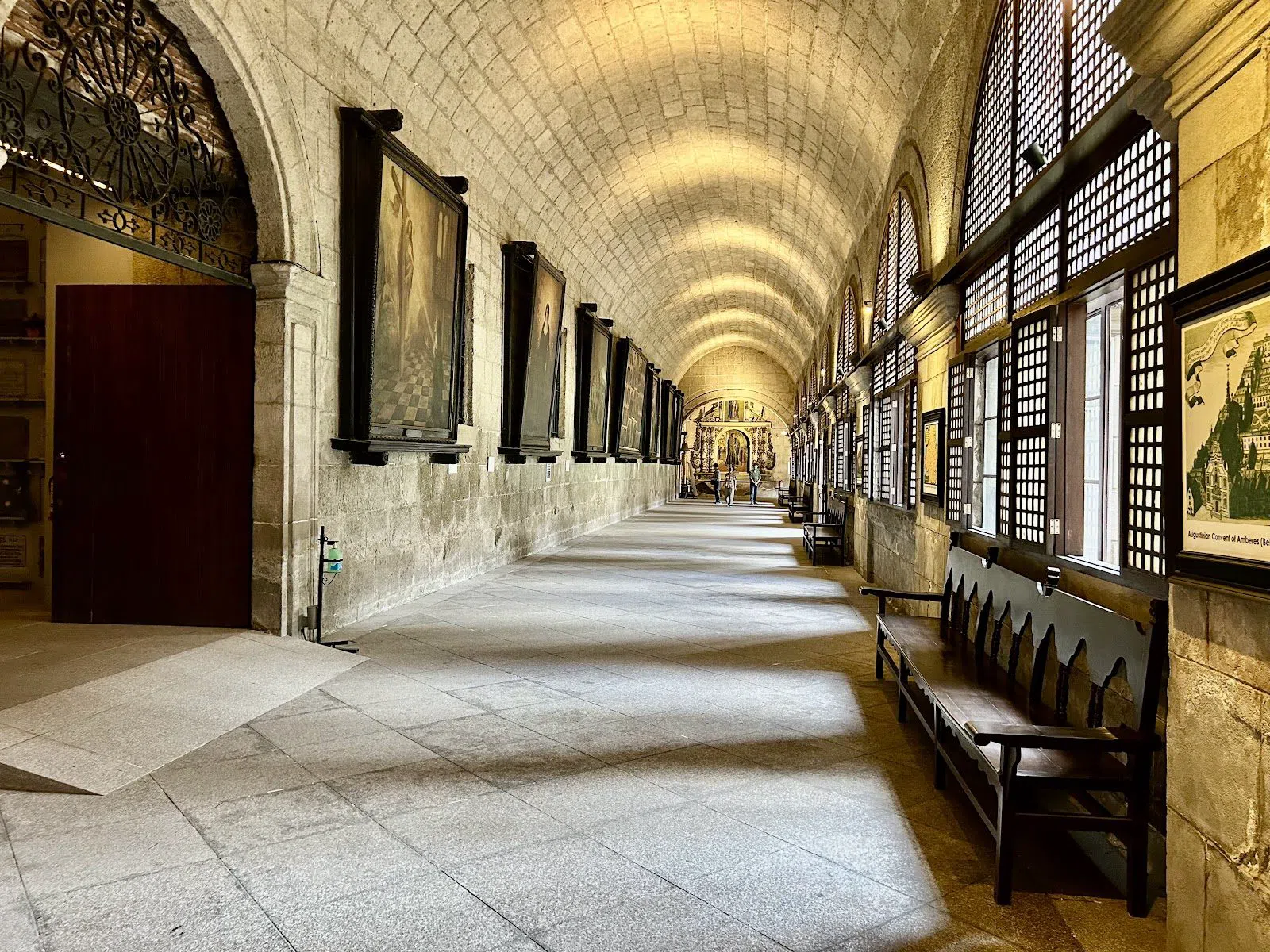
San Agustin Museum (Intramuros) is the oldest stone church in the Philippines and a UNESCO World Heritage site, and it is almost entirely under roof. The museum occupies the monastery beside the church; you can move from hall to hall for an hour and a half without crossing an open courtyard. Reckon on around ₱200 for the museum, while the church itself is free outside services. It opens daily, roughly 9am to 5pm, with a midday break. Turn up at half past noon and you will be standing outside in the rain waiting, so aim for mid-morning or after two. Groups are fine; Intramuros guides bring parties through all day, and the galleries absorb them.
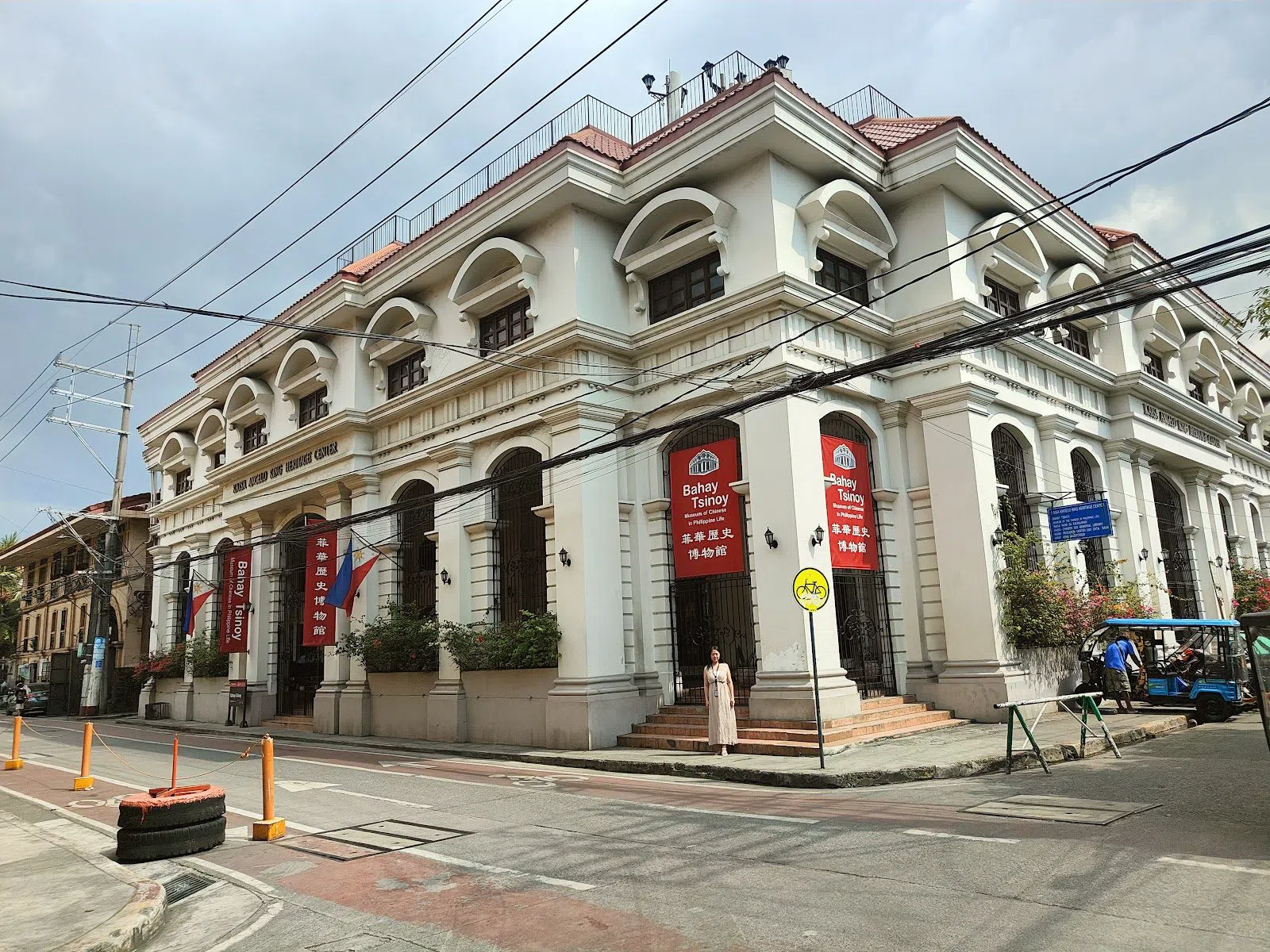
Bahay Tsinoy (Intramuros) is the quieter and, for a certain kind of traveller, the more useful hour: a properly curated museum of Chinese-Filipino history that explains Binondo before you go and eat there. It costs ₱100, opens Tuesday to Sunday from around 9am or 10am until 5pm, and closes Mondays. The building is compact, so a couple with time is the ideal visit, and a party much over fifteen should split and go in waves rather than fill the rooms at once.
Escolta and Binondo under an Art Deco roof
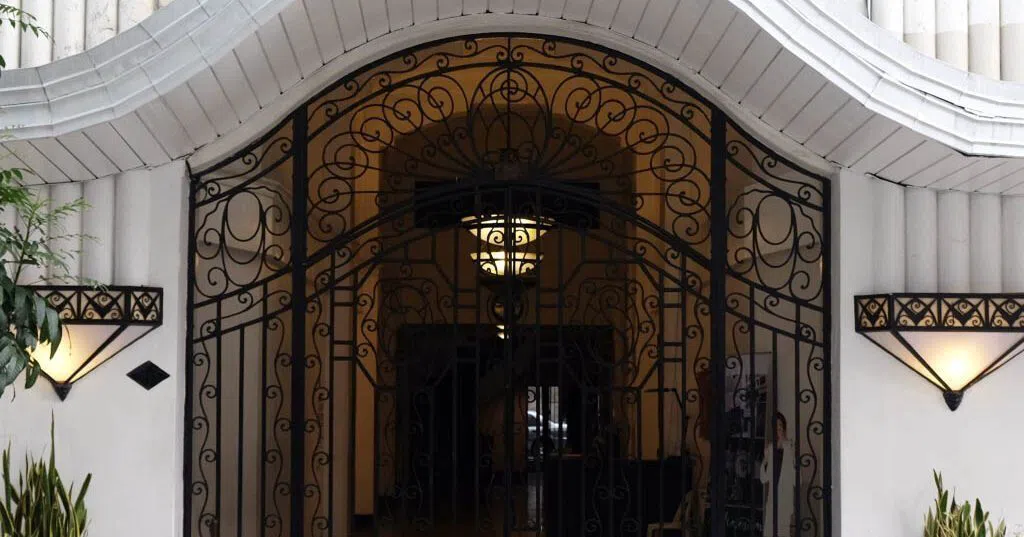
Escolta was Manila's grand commercial street and is now its most interesting act of reuse. The First United Building (Escolta, Binondo) puts the whole point of the district under one Art Deco roof: a small community museum for ₱50, HUB Make Lab's maker stalls, specialty coffee, a barbershop, The Den and the pub-and-arepa noise of Fred's Revolución. Café and bar spend runs ₱150 to ₱400. There is no door policy, so walk in, and a group spreads naturally across the floors rather than jamming any one of them. HUB Make Lab runs Monday to Thursday 10am to 6pm and Friday to Sunday 10am to 7pm, with a market added on Saturdays, which is the day to come if you want the building at full volume.
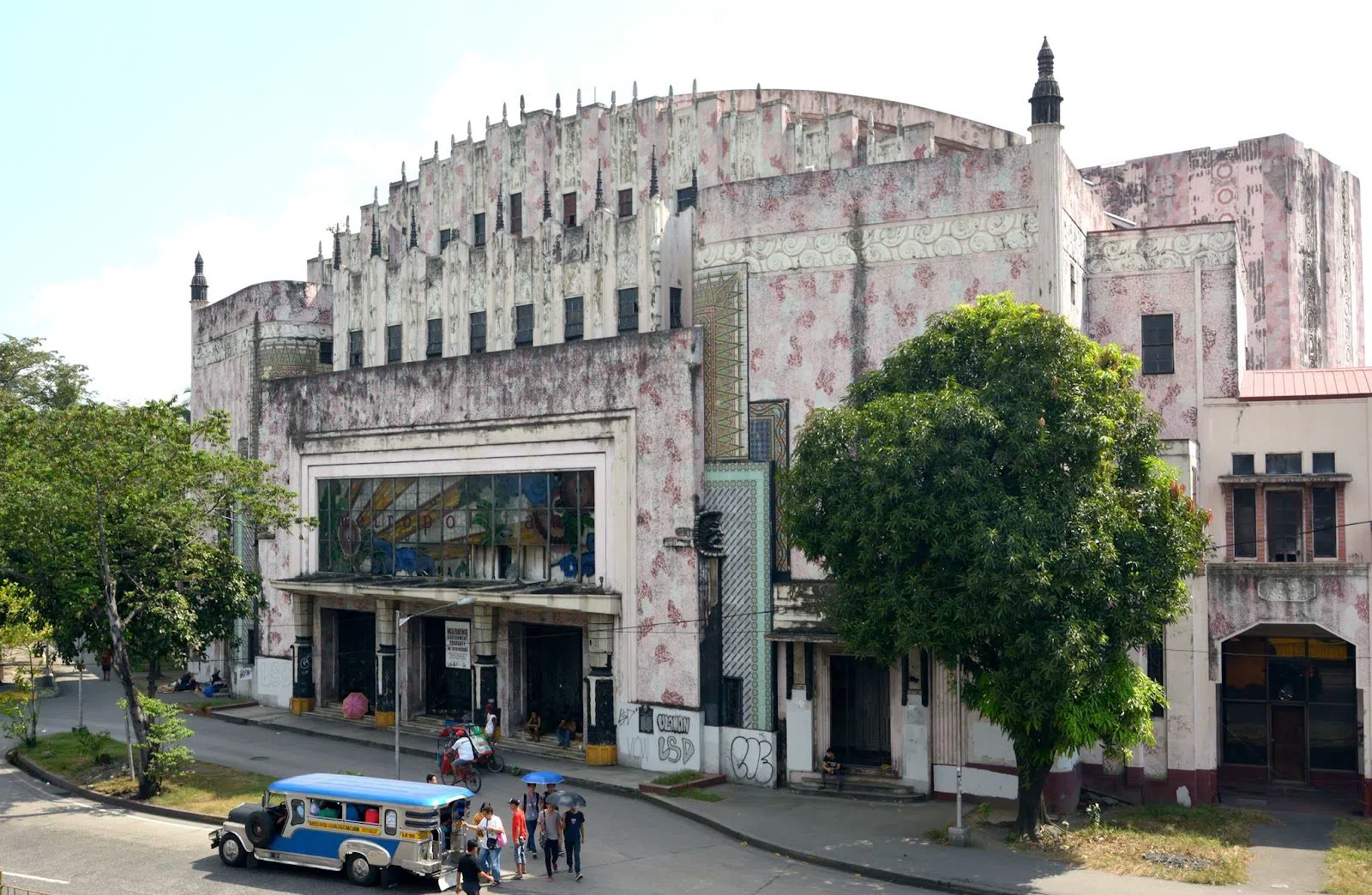
Ten minutes away, the Manila Metropolitan Theater (Lawton, Ermita) has been restored and returned to use under the NCCA. Free guided tours have run since January 2026, but they are limited to the third Sunday of the month and cap at 100 registrants per run, and they fill within hours of a date opening. If your dates do not line up, the honest alternative is to buy a ticket to a concert or screening and see the interior that way.
Binondo's food is the reason anyone comes to Chinatown, and nearly all of it is street-level and unroofed. Lucky Chinatown (Binondo) is the dry base camp two minutes from the alleys: food court, cinemas and a grocery, meals ₱200 to ₱600, free to enter, no restrictions on group size. Use it the way locals do, eating in the streets between bands and retreating here when the water rises over the kerbs.

Makati's covered core
If one district earns its keep in the rain, it is this one. Ayala Center (Makati CBD) is the most complete dry-route network in the city, a lattice of elevated covered walkways that lets you cross most of Makati's core without an umbrella, and the natural regroup point when a party has split. It is free to walk and food starts around ₱250. One caveat worth planning around: Greenbelt 1 and 2 are inside Ayala Malls' redevelopment programme, so expect hoardings and closed sections through to 2028. Greenbelt 3, 4 and 5 carry on as normal.
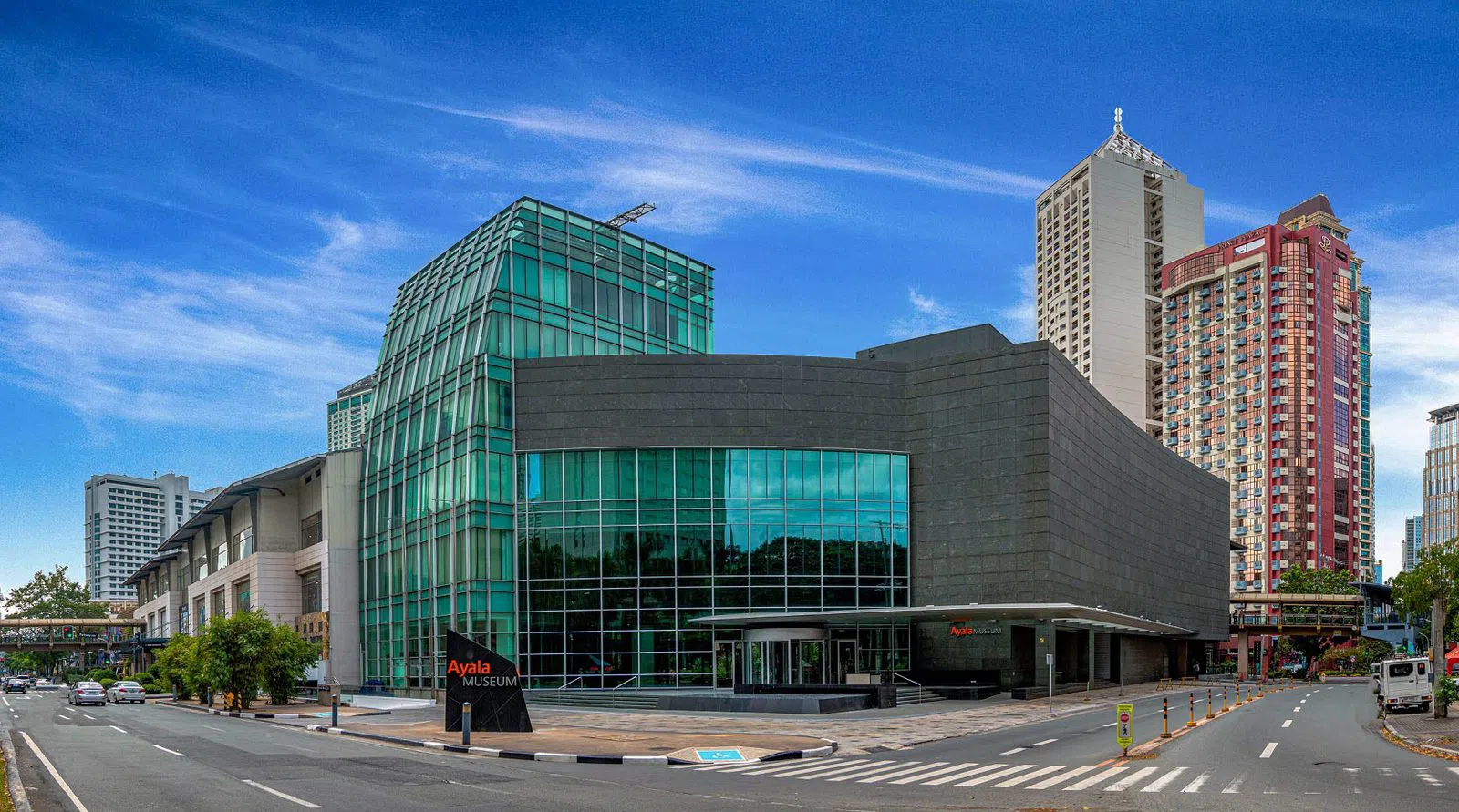
Those walkways deliver you to Ayala Museum (Greenbelt Park, Makati) without a step in the rain. Admission is ₱425 for adults and ₱300 for students, Tuesday to Sunday 9am to 6pm, closed Mondays. The pre-colonial gold collection is world class and worth the fare on a dry day, never mind a wet one. Walk-ins are accepted and groups are welcome, but guided group tours need to be arranged in advance rather than asked for at the desk.
When the museums close at six and the rain has not, Mystery Manila (Century City Mall, Makati) fills the evening. The escape-room operator has run since 2014 and keeps three mall branches (Century City in Makati, Eastwood Mall in Quezon City and SM Podium in Ortigas), so you never leave cover. Rooms are built for four to eight, and a larger party can run several in parallel. Prices start around ₱450 per person online and reach roughly ₱900 for premium rooms. Book the slot online a day or two ahead; rainy weekends sell out and walk-ins rarely get in.

The gallery block on Chino Roces
Silverlens (Karrivin Plaza, Chino Roces Avenue, Makati) is the serious end of the Manila art scene, founded in 2004 and now with a New York space and a Frieze presence, and it is free to walk into, Tuesday to Saturday 10am to 6pm, closed Sunday and Monday.

This is a working commercial gallery, not a visitor attraction. Come as a couple or a handful of people, not a coach party, and behave accordingly. The compensation is that the surrounding Karrivin Plaza block holds more galleries and somewhere to eat within a very short walk, so one taxi buys you a whole afternoon on foot. Arriving is the only wet part. There is no walkway here, so have the driver pull as close to the entrance as the courtyard allows.
Bonifacio Global City for the newer museums
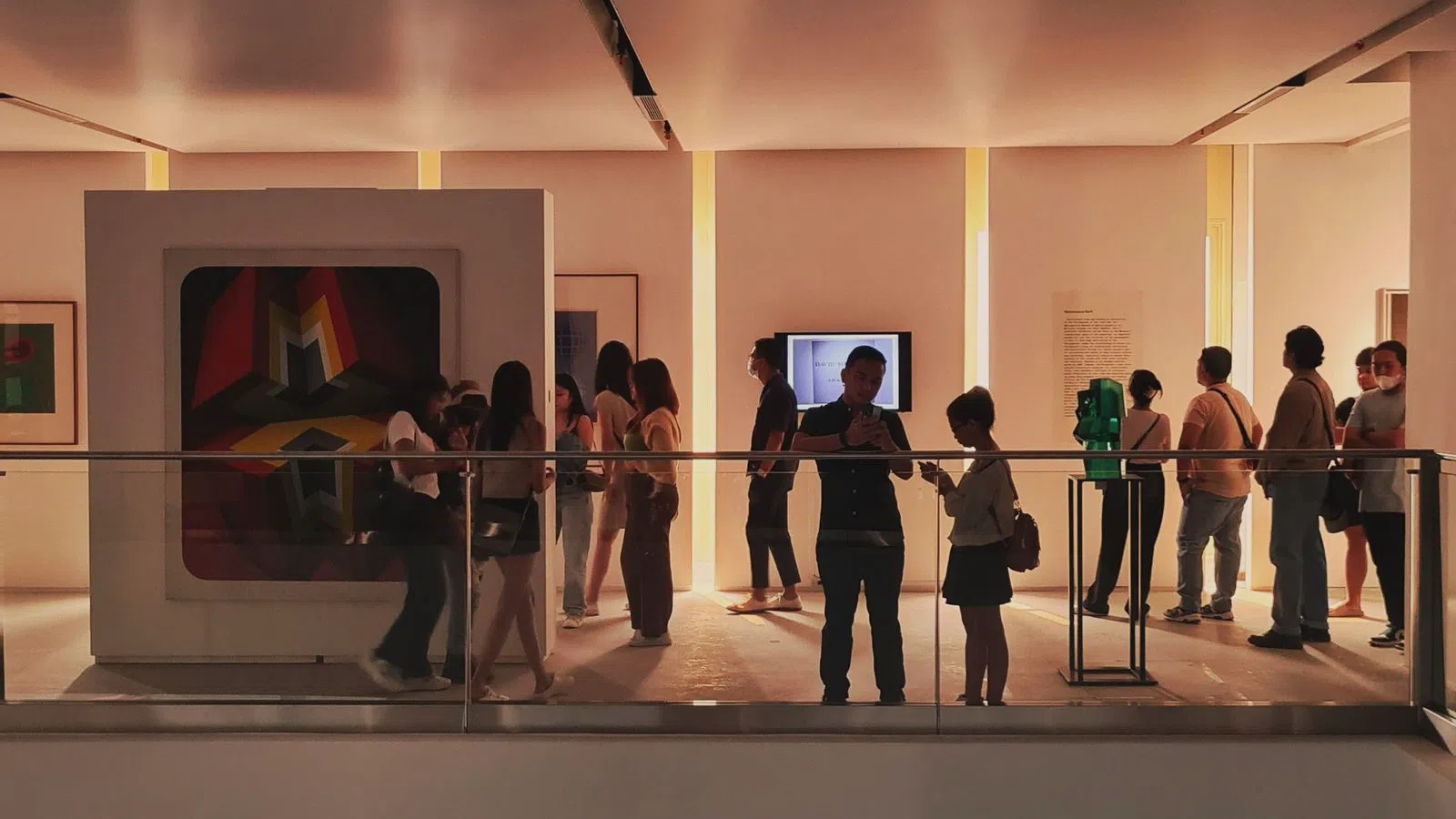
The Metropolitan Museum of Manila (The M) (Bonifacio Global City, Taguig) moved out of the old Bangko Sentral complex and now runs the strongest contemporary programme in the city; the 2026 calendar included Peter Zimmermann's Painting Rules and Material Instincts. Tickets are electronic and cost roughly ₱150 to ₱350, with student, senior and PWD rates, so book online and skip the desk. Open Tuesday to Friday 11am to 6pm and weekends 10am to 6pm, closed Mondays. Note the late weekday start; do not arrive at ten.
With children, The Mind Museum (Bonifacio Global City, Taguig) is the safest bet in the city when the streets flood: the one genuinely modern science museum in Metro Manila, Tuesday to Sunday 9am to 6pm, closed Mondays. The all-day pass is ₱750, about ₱650 if you pre-book online, and a shorter three-hour pass costs less. Tickets are timed and wet weekends sell out, so buy before you set off. School and family blocks are routine here, so a large group is fine as long as you book it.
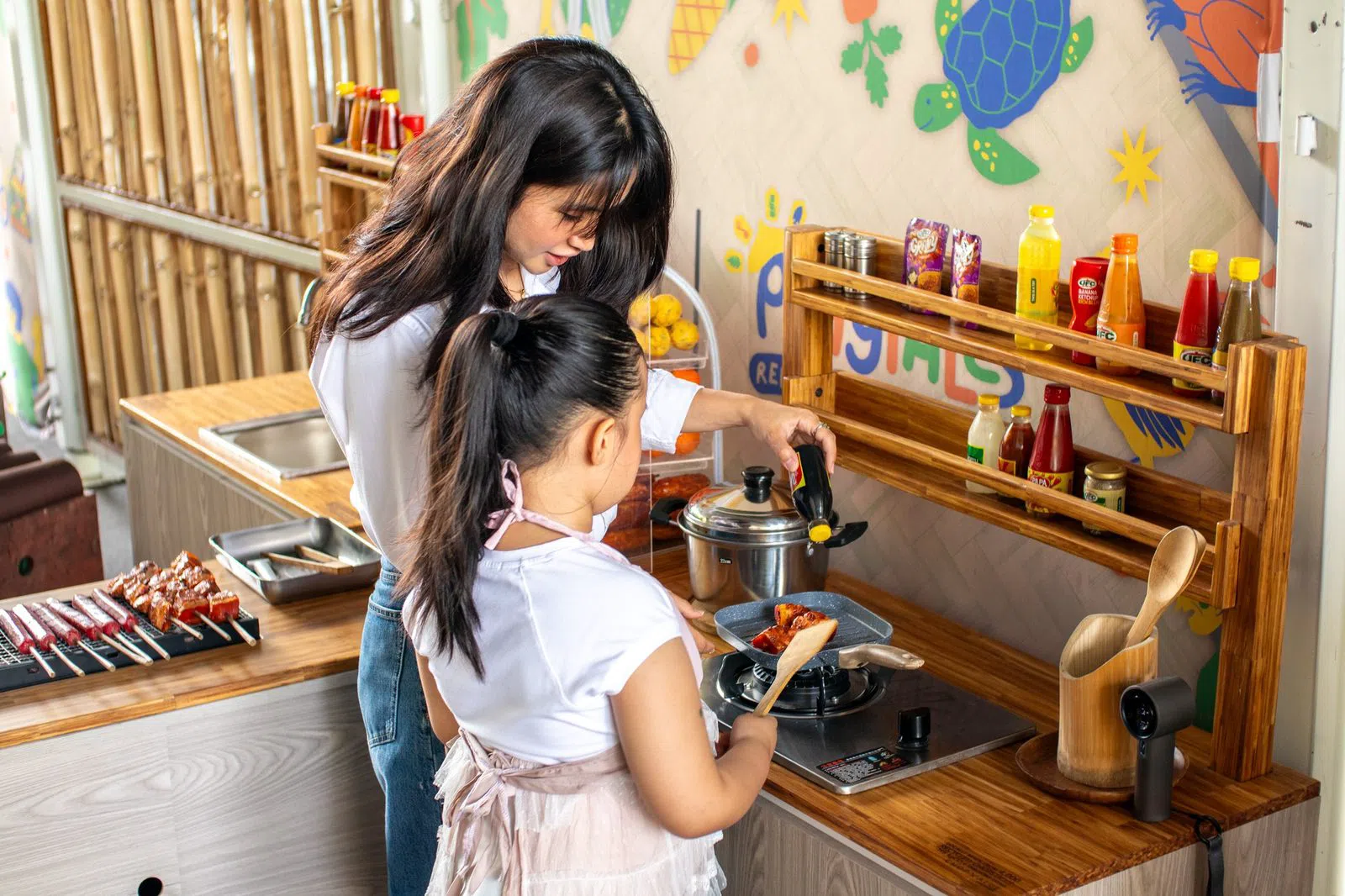
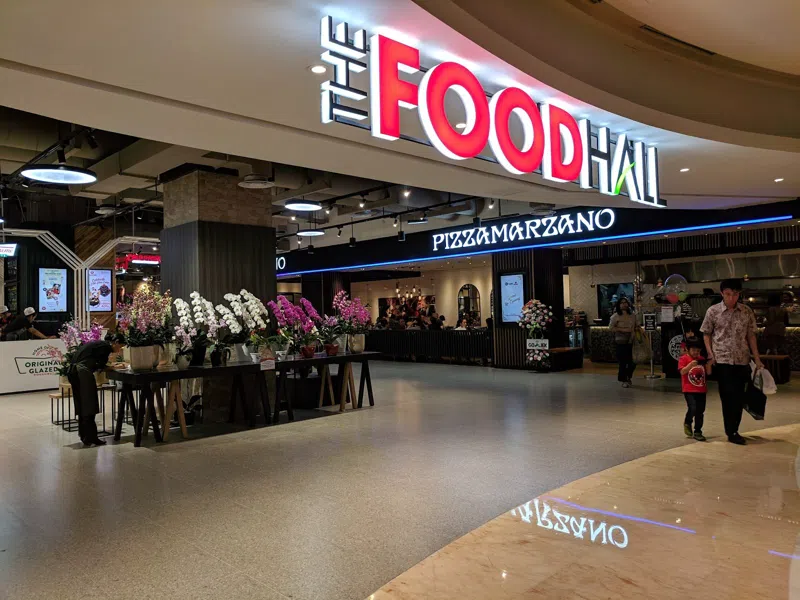
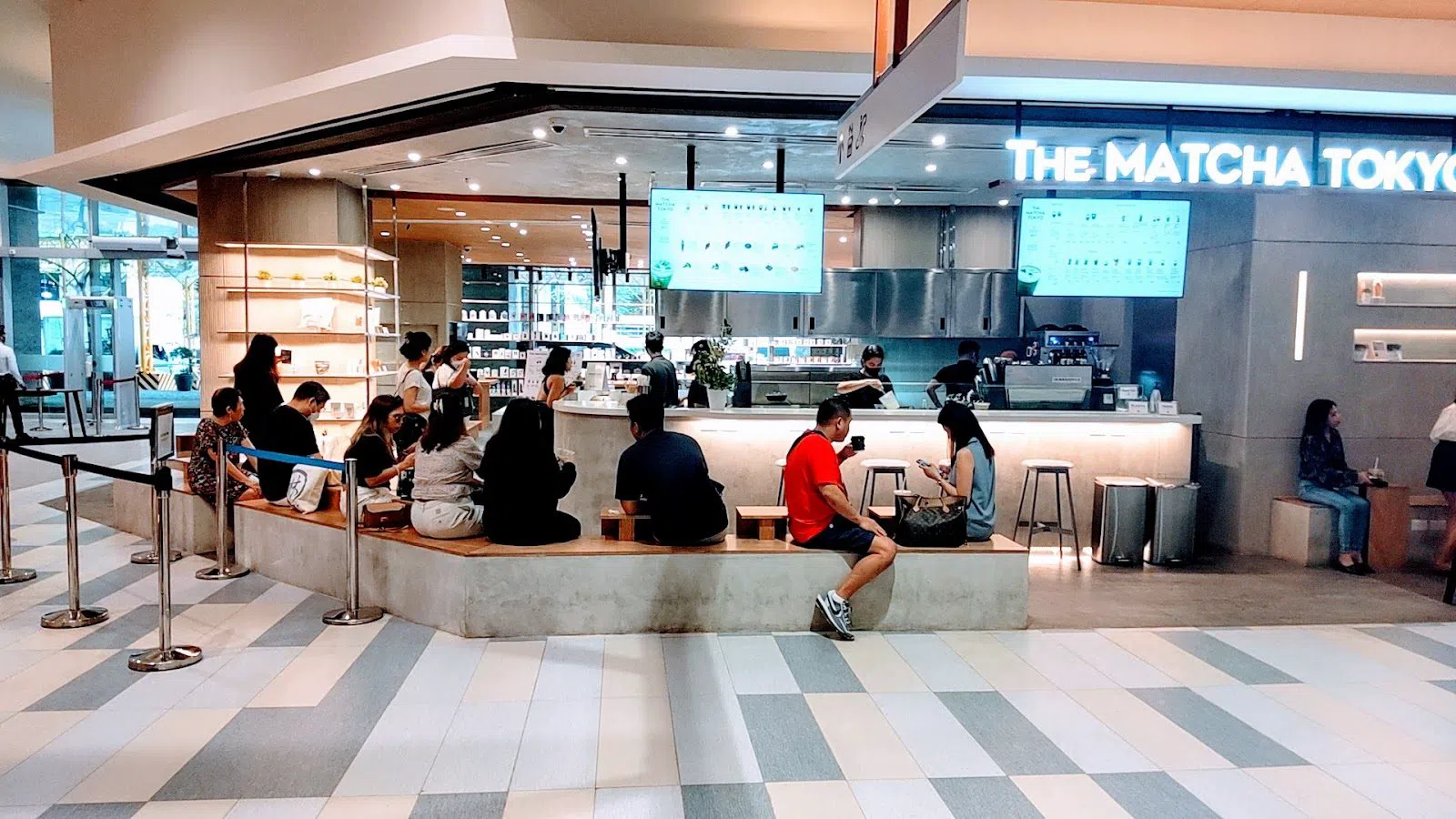
For lunch or a long grazing afternoon, Mitsukoshi BGC (Bonifacio Global City, Taguig) is the country's first Japanese mall, opened in July 2023 and plugged into BGC's covered walkway grid. The basement is the reason to cross town: the depachika food hall and the Itadaki food court do the job of a rainy afternoon in Tokyo for ₱250 to ₱500, while sit-down restaurants run ₱700 to ₱2,000. Itadaki seats big parties comfortably; the individual ramen counters do not, so split before you queue.
The bay side and the airport day
SM Mall of Asia (Bay City, Pasay) is the default fallback when the plan collapses: the country's first Olympic-size ice rink, sessions around ₱350 to ₱500 including skate hire, its largest IMAX screen at roughly ₱400 to ₱600, and enough covered floor to burn an entire afternoon. Entry is free and it absorbs any group size. The catch is outside, because Roxas Boulevard around it floods in a heavy September downpour. Book the taxi from inside the mall and walk out only when it has arrived, rather than standing at the kerb in ankle-deep water.

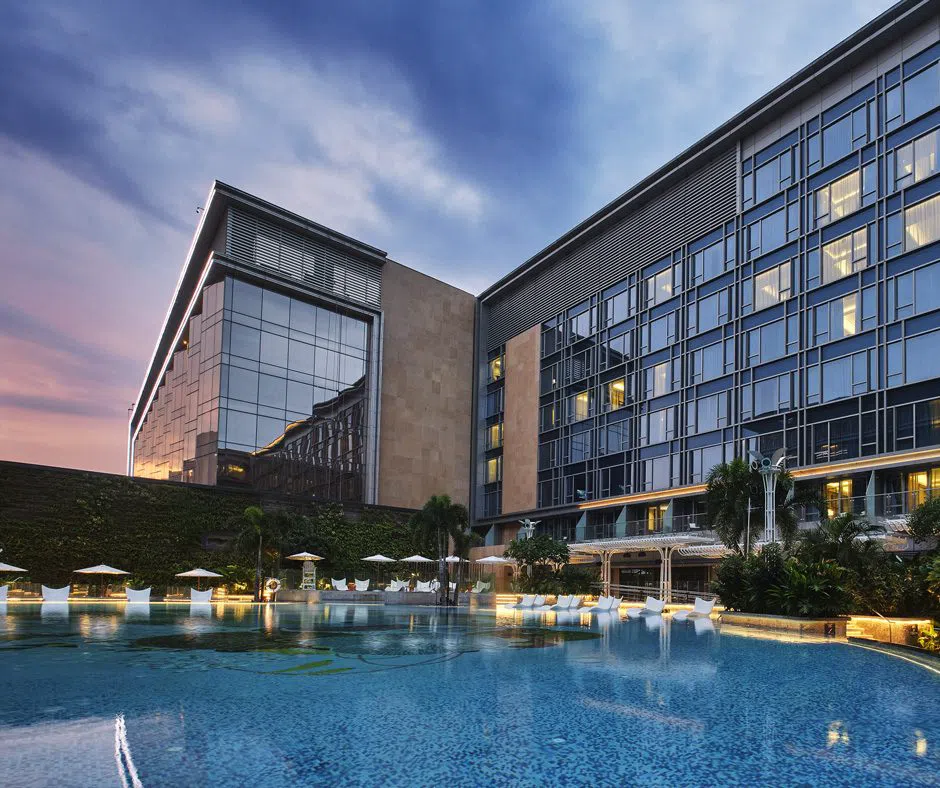
Newport World Resorts (Newport City, Pasay) is worth knowing for exactly one reason: it sits directly across from NAIA Terminal 3 and is entirely under roof, with a mall, dining and a working theatre whose 2026 season ran musicals and concerts through the year, tickets roughly ₱1,000 to ₱5,000. That combination rescues a washed-out arrival day or a last afternoon with a late flight, and the theatre sells blocks of seats, which makes it the simplest group evening in the city. The public areas have no door policy.
Who fits where when the party splits
Couples and solo travellers get the best of Bahay Tsinoy, Silverlens and the upper floors of the First United Building, small rooms where a crowd would be the wrong texture. Families should aim at The Mind Museum, the SM Mall of Asia rink and Museo Pambata on its Friday-to-Sunday window. Larger parties are genuinely welcome at the National Museum Complex, Lucky Chinatown, Ayala Center, Mitsukoshi and Newport, and can be handled at Mystery Manila if you book parallel rooms rather than turning up hopeful.
Where you sleep decides how much of this you can reach on foot. Makati and BGC put you inside the covered grid; Ermita and Malate put you within a short ride of Rizal Park and Intramuros but leave you exposed on the walk. Compare rates and locations with a Manila hotel search, and read the wider Manila guide for the dry-season version of the same city.
Practical notes
Transport. Ride-hailing is the default and it surges hard the moment rain starts; if a band is coming, book before you need the car, not after. The elevated LRT and MRT lines stay running when the roads flood and are often much faster, but queues lengthen in bad weather. Wherever possible, order the car from inside a building and step out only when it is at the door.
Cash. Malls and the larger museums take cards, but the small, good places do not reliably. Bahay Tsinoy at ₱100 and the First United Building museum at ₱50 are cash transactions, and the National Museum lockers want a physical ₱100 coin. Carry ₱1,000 to ₱2,000 in small notes and coins per person per day.
Timing. Museums shut at 6pm and most close Mondays; the National Museum Complex is the daily exception, and Museo Pambata runs Friday to Sunday only. Front-load culture into the morning and early afternoon, and keep malls, cinemas, escape rooms and the theatre for the evening.
Budget. A full indoor day costs less than people expect. Free national museums plus a ₱100 museum and a food-court lunch lands under ₱600 a head; a paid museum, a booked activity and a proper dinner takes you to roughly ₱2,000 to ₱2,500, before transport. Add ₱500 to ₱1,000 a day for cars in the wet.
Kit. A compact umbrella and sandals or shoes you do not mind soaking, plus a dry pair in the bag. Air conditioning indoors is fierce, so a light long sleeve earns its space.
Before you go
When does it rain most in Manila, and does it rain all day?
The southwest monsoon runs roughly June to October, with September usually the wettest month. It rarely rains continuously. The rain arrives in bands of an hour or so, followed by humid gaps. Plan one anchor per half-day inside a single district and use the gaps for any exposed walking, such as the plazas between the National Museum buildings at Rizal Park.
Which Manila museums are open on Mondays?
Very few. The National Museum Complex of the Philippines is the reliable exception: all three buildings are free and open daily, 9am to 6pm. Ayala Museum, the Metropolitan Museum of Manila (The M), The Mind Museum, Bahay Tsinoy and Silverlens all close on Mondays, and Museo Pambata opens only Friday and Saturday 10am to 5pm and Sunday 1pm to 5pm. On a wet Monday, aim at Rizal Park, San Agustin Museum in Intramuros, or the malls.
Can I get around Makati and BGC without getting wet?
Largely, yes. Ayala Center's elevated covered walkways cross most of Makati's core and connect to Ayala Museum in Greenbelt Park, and BGC has its own covered walkway grid linking Mitsukoshi BGC and the surrounding blocks. Expect hoardings and closed sections around Greenbelt 1 and 2 through to 2028 while the redevelopment runs; Greenbelt 3, 4 and 5 are unaffected.
What does a rainy indoor day in Manila cost?
Less than most people budget. The National Museum Complex is free, Bahay Tsinoy is ₱100 and the First United Building museum is ₱50, so a full day with a food-court lunch can stay under ₱600 per person. A paid museum such as Ayala Museum (₱425) or The Mind Museum (₱750, about ₱650 pre-booked), plus a booked activity and a sit-down dinner, runs roughly ₱2,000 to ₱2,500 before transport.
What should I do if a typhoon or serious flooding hits my arrival or departure day?
Stay inside one covered complex and do not gamble on cross-city traffic. Newport World Resorts sits directly across from NAIA Terminal 3 and is entirely under roof, which makes it the practical base for a washed-out first or last day. SM Mall of Asia works the same way on the bay side, but Roxas Boulevard around it floods in a heavy downpour, so book the car from inside and step out only once it has arrived.