The Manila issue
Walking Manila's Three National Museums in One Day
Fine Arts, Anthropology and Natural History are ten minutes apart on the edges of Rizal Park, all three are free, and one day covers them properly with Intramuros left over.

By Mariana FonsecaIntramuros walls to the last ferry out
Manila keeps its national collections in a tight triangle. Three grey neoclassical buildings stand on the edges of Rizal Park, each one built for a government department and each now given over to art, ancestors or animals. From the bench in front of the Spoliarium to the case holding the Manunggul Jar is a nine-minute walk across one road, and from there to the whale skeleton is shorter still. All three are free to enter, and a visitor in reasonable shoes can do the set properly in a day and still reach the walls of Intramuros while the light is good.
Three government buildings, three collections
The geography comes out of the plan. When the American colonial administration redrew central Manila in 1905, the ministries were pulled around the open ground of the Luneta, and the buildings that went up over the following three decades were designed to look permanent. The Old Legislative Building, finished in 1926, now holds the fine art. The former Department of Finance, across Agrifina Circle, holds anthropology. The former Department of Agriculture and Commerce, on the same circle, holds natural history. All three were gutted in the Battle of Manila in 1945, rebuilt over decades, and handed to the National Museum of the Philippines one after another, the last of them opening as a museum in 2018.
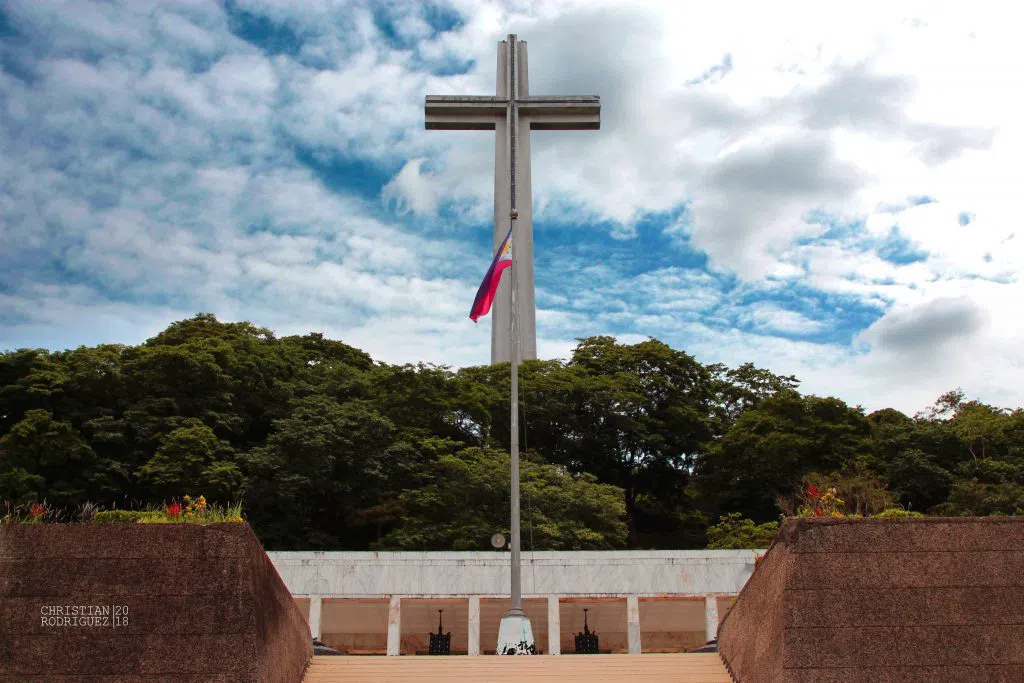
The park between them is Rizal Park (Luneta, Ermita), free and unticketed, and you cross it several times in a day like this rather than visiting it separately. This is Bagumbayan, the field where José Rizal was shot on 30 December 1896, and the monument at the seaward end has a changing of the guard that runs as a daily ritual, so it is worth timing your crossing to catch it. The park is also brutally exposed. Between roughly eleven and three, the open lawns are a heat trap with almost no shade, which is one more argument for doing the walking early and saving the afternoon for the shaded lanes of the walled city.

Full practical background on the wider city sits in the Manila guide; this piece is about the day itself.
Plan your Manila trip
Live prices from our booking partners.
Free cancellation on many rooms. We may earn a commission when you book.
Start at opening with the Spoliarium
Begin at the National Museum of Fine Arts (Padre Burgos Avenue, Ermita), on the park's northern edge, and go straight through the lobby to the Old Senate Session Hall. Juan Luna's Spoliarium fills the end wall: dead gladiators dragged out of a Roman arena, painted in Rome and awarded a gold medal in Madrid in 1884, a win that Filipino reformists in Europe read immediately as a political argument. The canvas is enormous and the room is built around it. The difference between seeing it at nine in the morning and seeing it at eleven is the difference between a bench to yourself and three school groups.

Give the building ninety minutes. Beyond the Session Hall, the galleries run chronologically through the Philippine nineteenth century and out the other side: Félix Resurrección Hidalgo, the Amorsolo rooms with their sunlit rice fields, then the harder twentieth-century material. The upper floors reward whatever time you have left, but the ground and first floors are the spine.
Entry is free. Parties of twenty or fewer simply walk in. Twenty or more must book at least three working days ahead through reservation.nationalmuseum.gov.ph, and those group slots run Tuesday to Saturday only. On Sundays, Mondays and holidays the museum takes walk-ins only, at 150 people per slot, or 200 for accredited tour operators. If you are travelling as a family or a pair, none of this touches you. If you are moving a coach party, it decides your day.
Cross the circle for the Manunggul Jar
The National Museum of Anthropology (Agrifina Circle, Ermita) sits between the other two, nine minutes on foot from the Fine Arts steps, and the crossing takes you past the park's fountains.
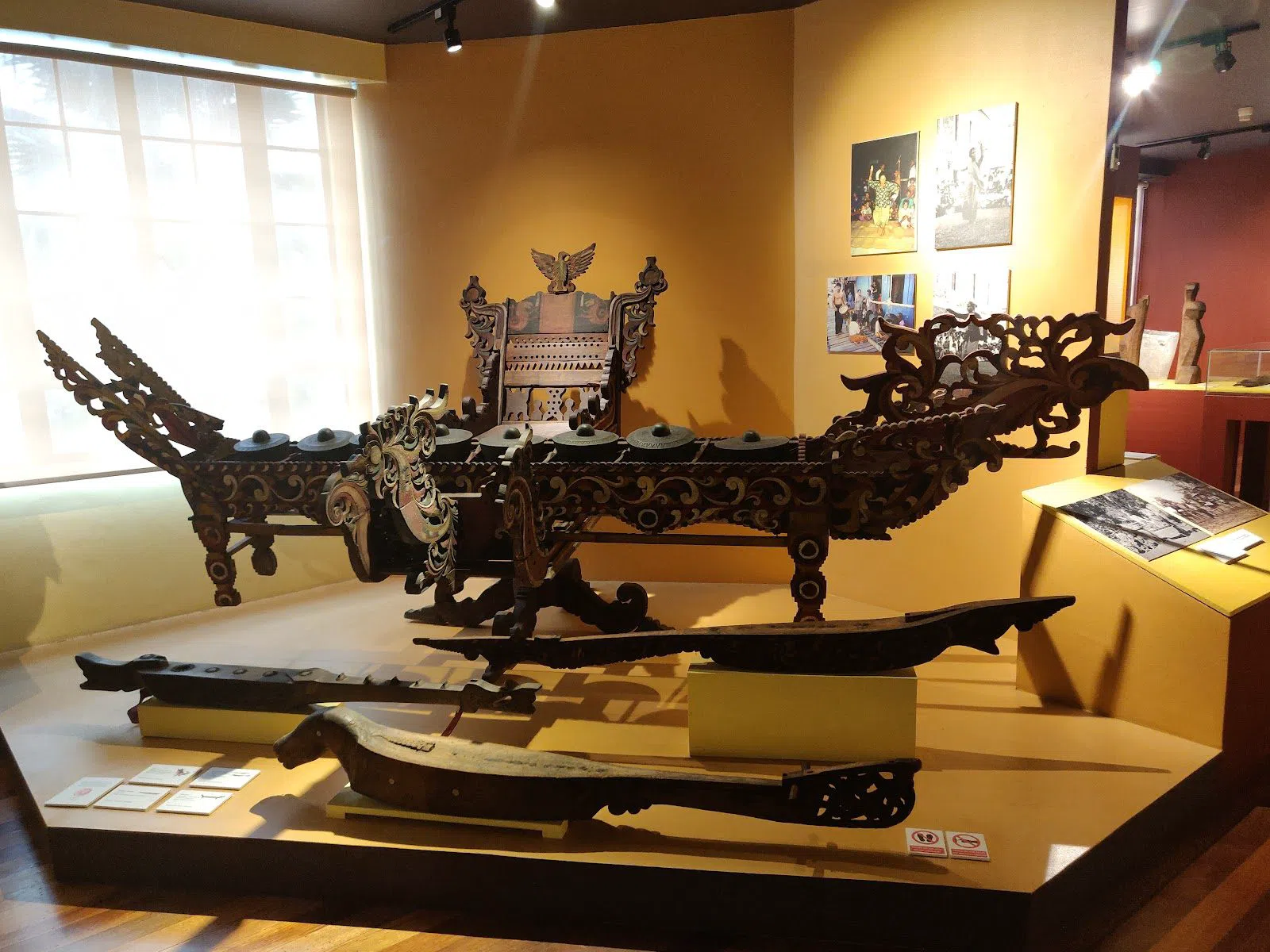
The object to find first is the Manunggul Jar, a secondary burial jar recovered from a cave on Palawan and dated to the late Neolithic. Two figures sit in a boat on its lid, one rowing, one with arms crossed over the chest, and the whole thing is a compressed statement about a sea-facing people's idea of the journey after death. It is the single most important pre-colonial object in the country, and it is displayed quietly, without drama.
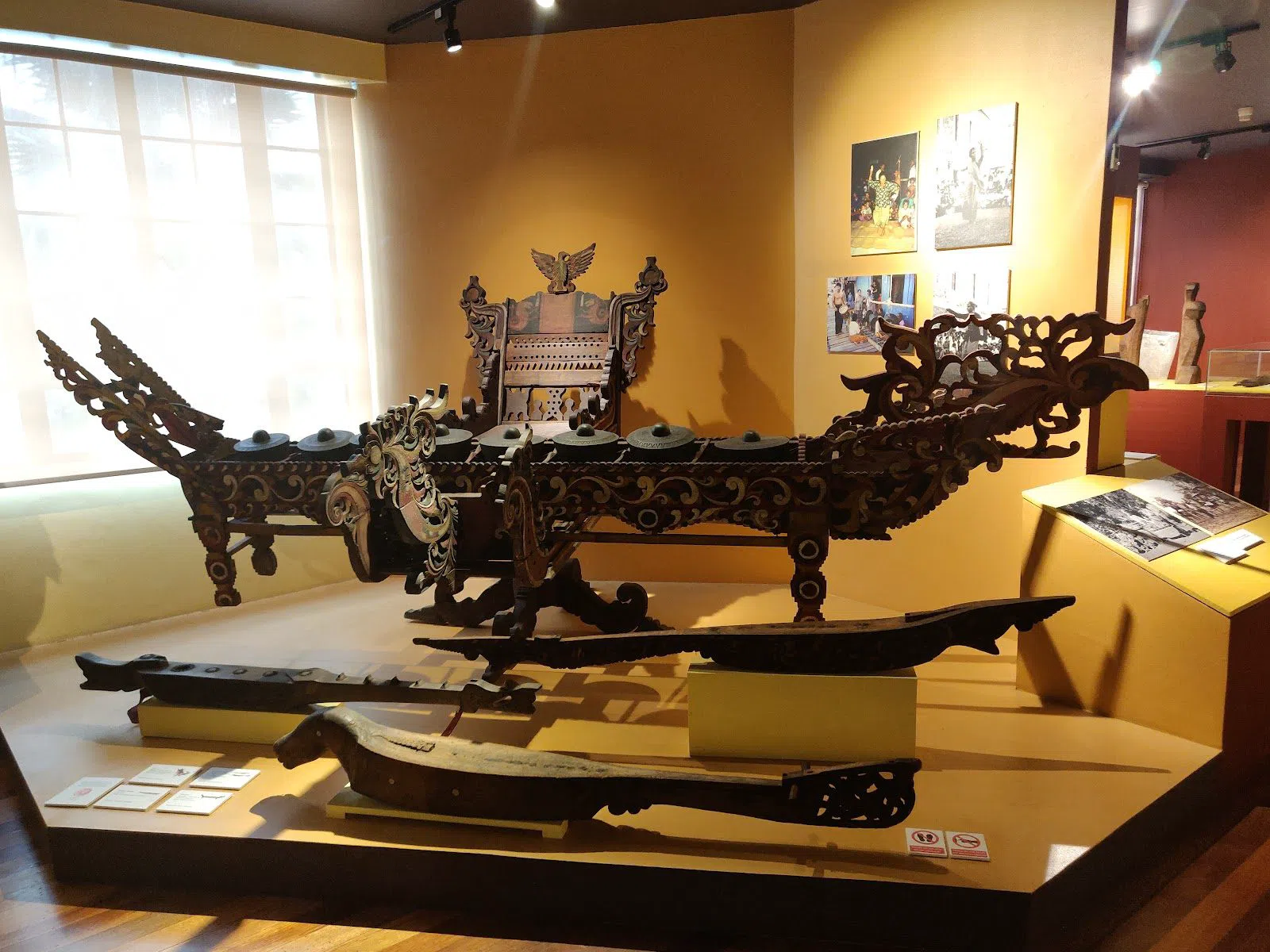
The rest of the building sets out the case around it: the Tabon Cave material, gold and textiles, the boat-building and weaving halls, and the salvaged cargo of the San Diego, a Spanish galleon sunk off Fortune Island in 1600 and recovered in the early 1990s. That means porcelain, cannon, and a lot of evidence about what was actually crossing the Pacific and the South China Sea. Seventy-five minutes is honest, two hours if you read the panels, and the panels here are good. Booking policy is identical to Fine Arts: twenty or fewer walk in, larger groups book three working days ahead, group tours Tuesday to Saturday.
The easiest one to finish on
By early afternoon your legs will have an opinion, which is why the National Museum of Natural History (Agrifina Circle, Ermita) goes third. It is the most striking of the three architecturally. The 2018 renovation dropped a glass and steel canopy, the Tree of Life, into the old courtyard, with a spiral of ramps winding down around it. Take the lift to the top floor and walk down. You will see everything without climbing anything.
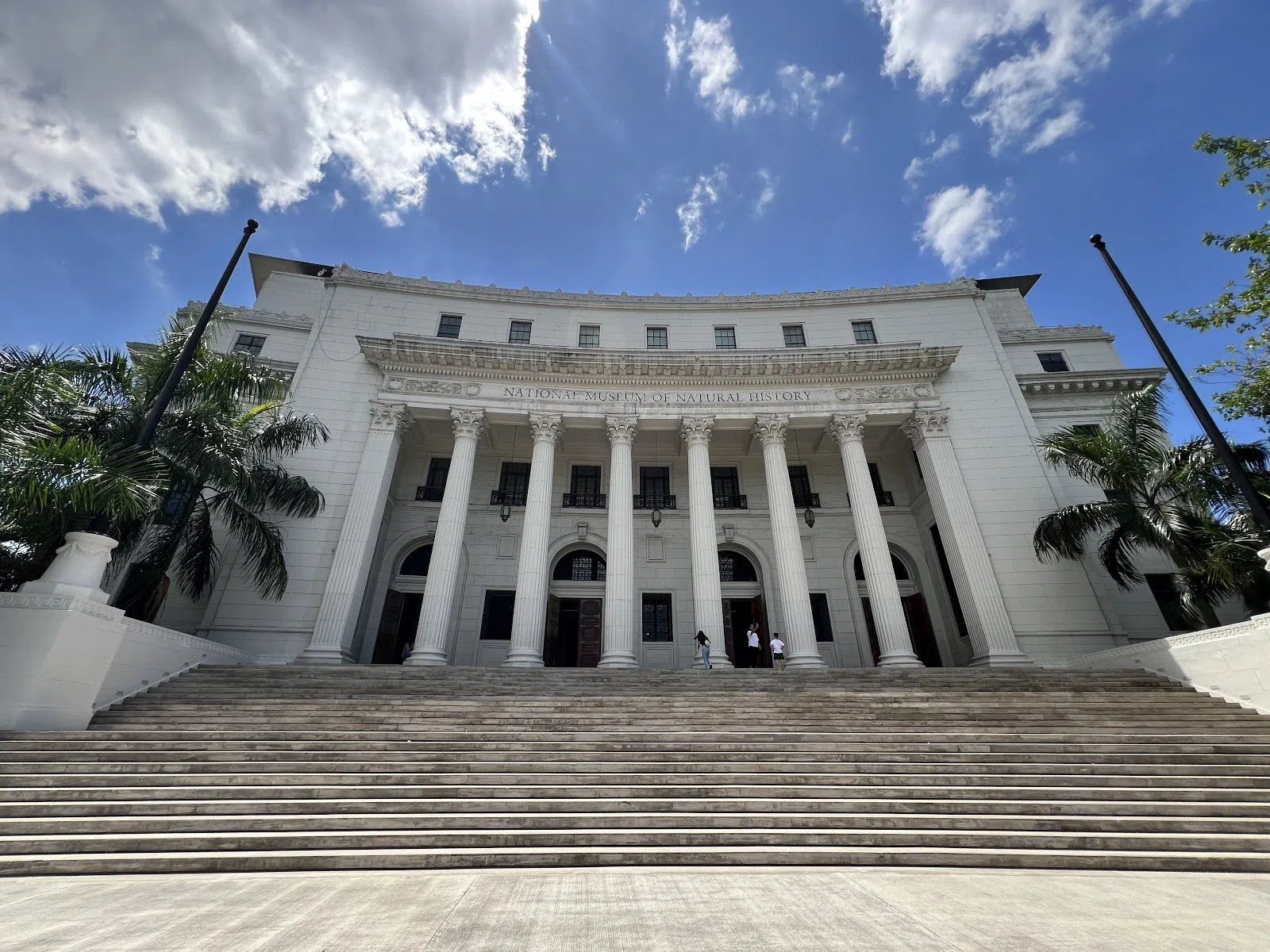
The collection covers Philippine geology, flora and fauna across an archipelago of more than seven thousand islands, with a strong endemism story running through it: species that exist here and nowhere else, and the reasons why. The skeleton of Lolong, the saltwater crocodile caught in Agusan del Sur in 2011 and measured at over six metres, is the exhibit most visitors come out talking about. An hour is enough. If you are travelling with children, this is the museum that buys you goodwill for the other two, so consider flipping it earlier in the day and accepting the crowds at the Spoliarium.
Lunch between the park and the walls
Intramuros starts a fifteen-minute walk north of the museums, and lunch is the natural hinge. Barbara's Heritage Restaurant (Plaza San Luis, Intramuros) is the obvious midday break and is genuinely built for groups: the buffet opens at 11:30am and the cultural show starts at 12:15pm, in a dining room of dark wood and tile that is two minutes from Casa Manila. Around ₱1,000 to ₱1,500 a head with the show. Reserve if there are more than a few of you, because the show seating fills.

If you would rather not lose ninety minutes to a buffet, La Cathedral Café (Cabildo Street, Intramuros) does coffee and pastries for roughly ₱150 to ₱400, open from about 8am to 9pm. Go up to the roof. The point of the place is the cathedral framed from the terrace, and the downstairs room gives you none of it. Rooftop tables are limited, so a party of six or more should ring ahead rather than turn up hopeful.

Intramuros in the afternoon
The walled city is where the day stops being about vitrines. Fort Santiago (Santa Clara Street, Intramuros) is the one fixed point: ₱75 regular, ₱50 concession, open to all comers with no booking, guides hireable at the gate, and large groups admitted freely. Inside sits the Rizal Shrine, free within the paid fort, built over the cell where Rizal spent his last night before the walk to Bagumbayan. Brass footprints in the paving trace the route. Go late in the afternoon, when the walls throw shade across the courtyards and the stone goes gold.

Manila Cathedral (Plaza Roma, Intramuros) is two minutes off the museum walk, free with donations welcome, and worth the detour for the dome and the organ. Modest dress is expected: no sleeveless tops, no short shorts. It closes to visitors during Mass and weddings, and weddings are frequent. The same caution applies more strongly at Museo de San Agustin (General Luna Street, Intramuros), the monastery museum attached to the oldest stone church in the Philippines and the only Intramuros building to survive 1945. The museum is around ₱200 and the church itself is free. It opens daily and takes walk-ins, but touring is restricted during Mass and during the weddings that run through the church most weekends. Time it early or late in the afternoon.
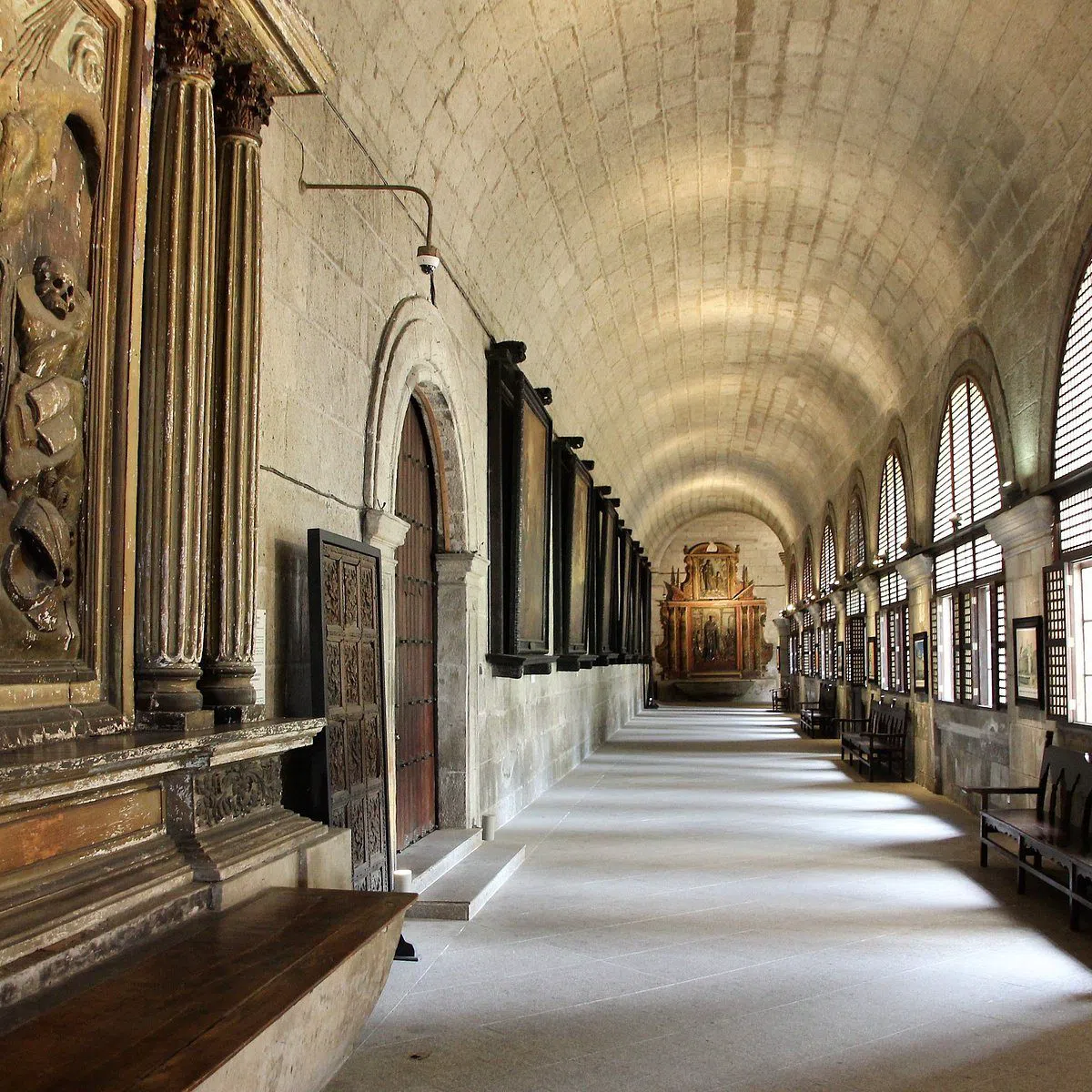
Two more sit within the same few blocks and both carry a catch worth knowing before you plan. Museo de Intramuros (Anda corner Arzobispo Street, Intramuros) holds the best-curated colonial religious collection in the walled city (₱200 regular, ₱160 concession) and is open walk-in from 9am to 5pm at weekends. From Tuesday to Friday it takes booked groups only, minimum ten paying people, arranged at least two working days ahead. Casa Manila (Plaza San Luis, Intramuros) runs on exactly the same rule: weekend walk-ins 9am to 5pm, weekdays by advance booking for ten or more, ₱75 regular and ₱50 concession. Twenty minutes in its reconstructed 1890s rooms tells you more about how a wealthy Manila household actually lived than any wall panel manages. Neither operates on a Monday.


Bahay Tsinoy (Kaisa Heritage Center, Anda Street, Intramuros) fills the gap the national museums leave: the Chinese-Filipino story that built much of Manila's commerce, from the Parián settlement onwards. ₱100 for adults, ₱60 for students, walk-in, small groups fine, ring ahead for anything sizeable. Its hours are the trap, roughly 1pm to 5pm and closed Mondays, so confirm before you build it into a schedule.
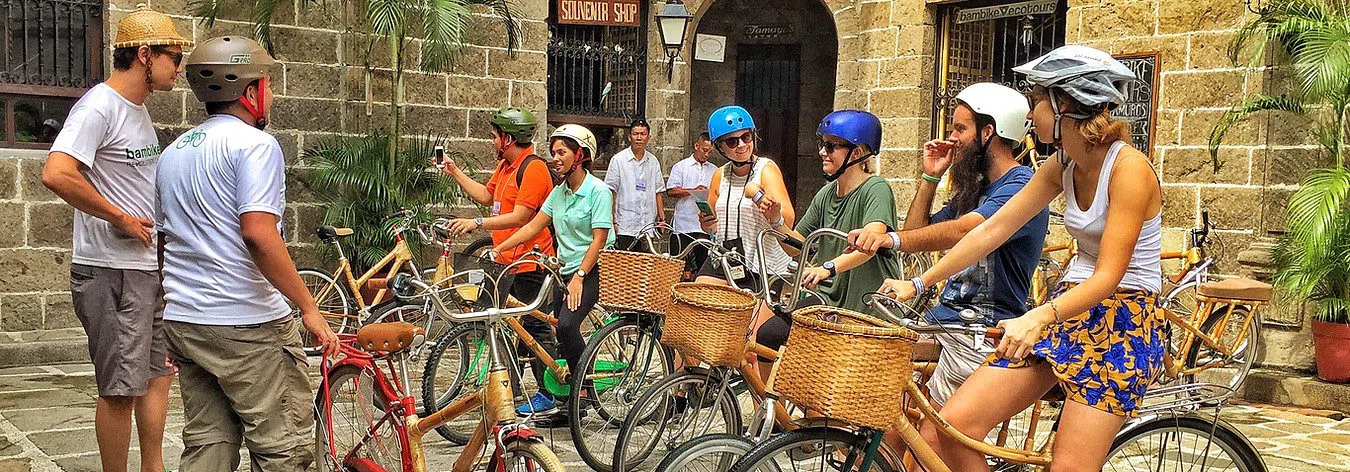
If your legs are done but your day is not, Bambike Ecotours Intramuros (Plaza San Luis, Intramuros) covers the walled city on locally made bamboo bicycles, in tours of five to fifteen people, roughly ₱1,200 to ₱1,800 per person depending on whether you take the 1.5-hour express, the 2.5-hour full run or the night edition, which caps at fifteen. Book online or through [email protected]. It is the efficient way to see the perimeter after four hours on museum floors.
Two paid museums that need their own day
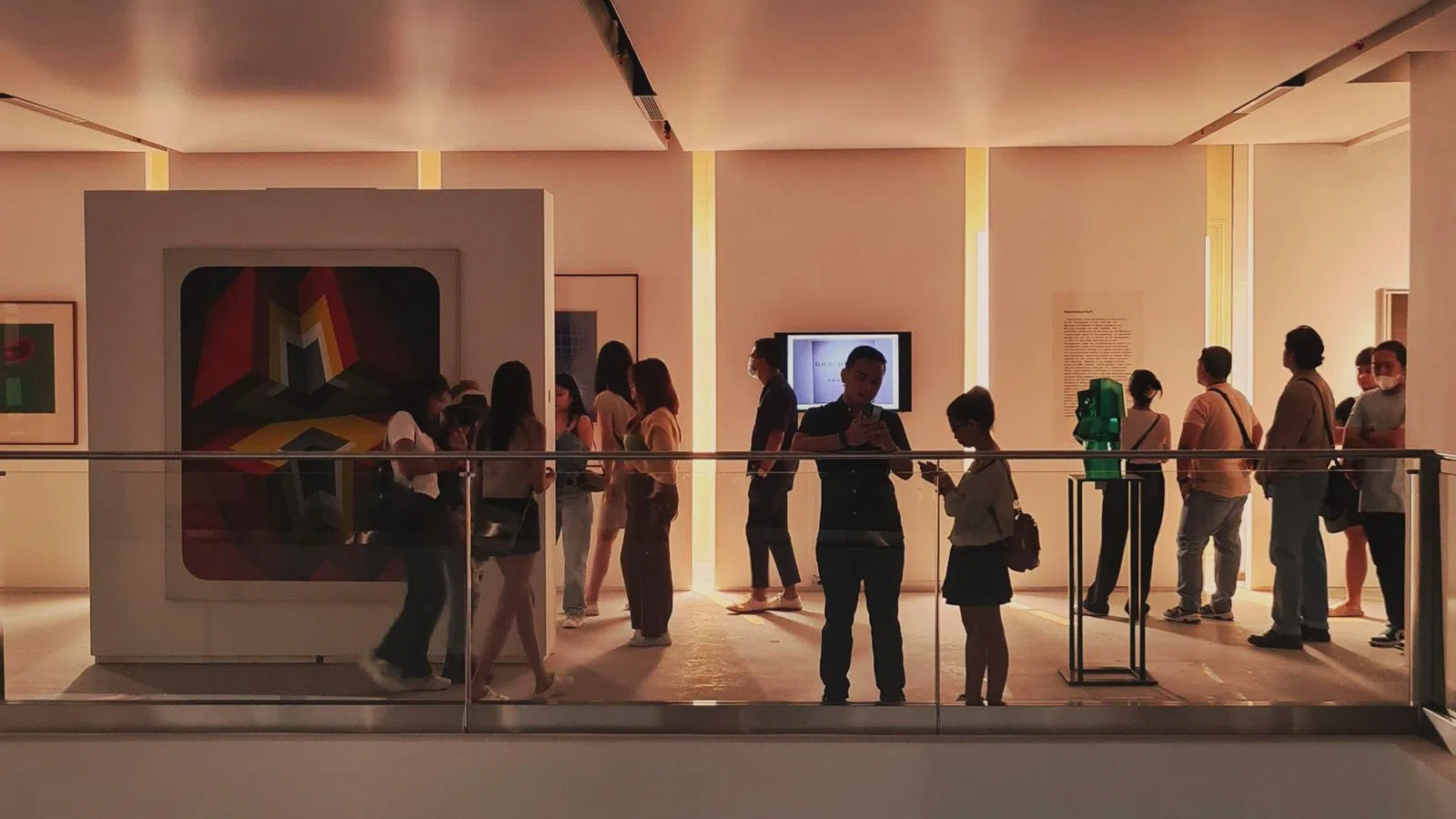
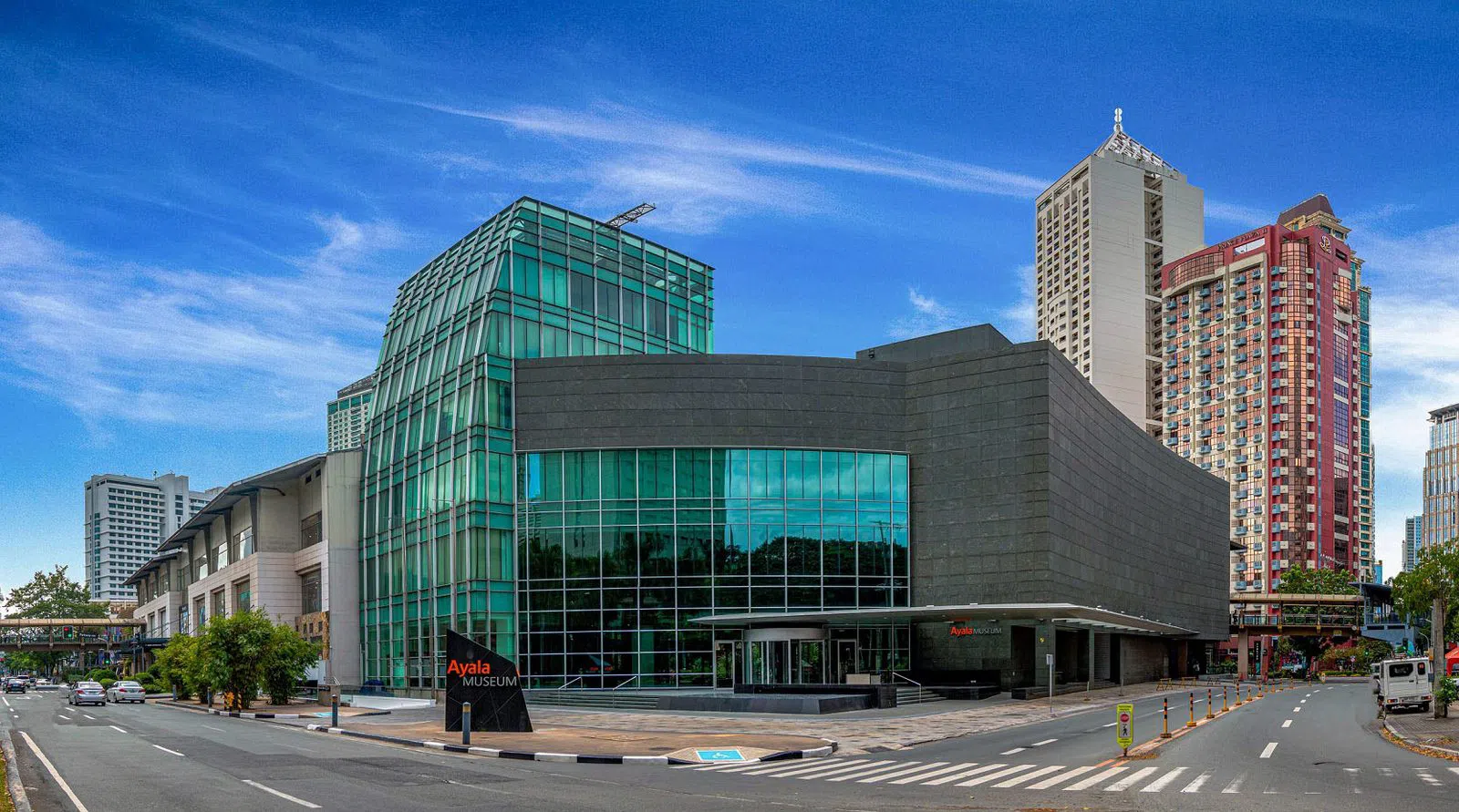
Two good collections do not belong in this itinerary, whatever an ambitious schedule tells you. The Ayala Museum (Makati business district) is the paid counterpart to the free national trio (around ₱425 for adults, ₱300 for students, Tuesday to Sunday 9am to 6pm, closed Mondays) and its Gold of Ancestors hoard shows what the pottery culture in the Anthropology museum actually wore. The Metropolitan Museum of Manila (M) (Bonifacio Global City, Taguig) is the living-artists counterweight, e-ticketed and inexpensive, open Tuesday to Friday 11am to 6pm and weekends 10am to 6pm, closed Mondays. Both sit east of the historic core, across traffic that can double any estimate. Give either a separate half-day.
Sunset from the walls
The galleries close in the early evening, and Sky Deck View Bar at The Bayleaf (Muralla Street, Intramuros) opens at 4pm. It runs two seatings, 4pm to 7pm and 7pm to 11pm, takes groups, expects smart-casual dress and wants a reservation for sunset. Cocktails run around ₱400 to ₱600 and mains ₱500 to ₱900. It is the only vantage point that shows you the shape of the walled city from above: the bastions, the golf course in the old moat, the cathedral dome. That is a useful last look after a day spent inside the history.
Practical notes
LRT-1 to United Nations Avenue station puts you a few minutes from the Fine Arts building and is immune to the traffic that makes road estimates meaningless between 7am and 10am and again from 4pm. Grab works well across the city and is the sane choice with luggage or in rain. Between the three museums, walk; a taxi would take longer than your feet.
Carry pesos in small notes. The three national museums are free, but the Intramuros sites, the fort and the smaller museums prefer cash, and a full day including Fort Santiago, San Agustin, Casa Manila and Bahay Tsinoy comes to roughly ₱450 in entry fees per person. Add lunch and a rooftop drink and a comfortable day budget is ₱1,500 to ₱2,500, or ₱3,000 with the buffet-and-show and a bike tour.
On timing, arrive at Fine Arts for opening and be under cover by eleven. Keep Rizal Park crossings to early morning or late afternoon, especially between June and November, when the afternoon rain is heavy and brief. Sunday and Monday are the walk-in days at the national museums but the wrong days for the booked-group Intramuros houses, and Monday closes several of them outright. A Saturday runs the whole itinerary with the fewest closed doors.
Ermita and Intramuros put you inside walking range of everything above, which matters more here than in most cities; compare rates and locations through Manila hotel search. Bring a bag small enough for the cloakroom rules, a refillable bottle, and shoes you would happily wear for eight kilometres.
Before you go
Do Manila's three national museums charge admission?
No. The National Museum of Fine Arts, the National Museum of Anthropology and the National Museum of Natural History are all free to enter, for every visitor regardless of nationality. The costs in this itinerary come from the Intramuros sites afterwards: Fort Santiago at ₱75, Museo de San Agustin at around ₱200, Casa Manila at ₱75 and Bahay Tsinoy at ₱100, plus food and transport.
How much time does each museum need, and in what order?
Ninety minutes for Fine Arts, seventy-five for Anthropology and an hour for Natural History, which is around four hours of gallery time plus two short walks. Take them in that order: the Spoliarium is quietest at opening, Anthropology reads best with a clear head, and Natural History is the easiest on tired legs because you can take the lift to the top floor and walk down the ramps. Travelling with children is the one good reason to flip Natural History earlier.
Do I need to book ahead?
Not for parties of twenty or fewer: all three national museums take walk-ins. Groups of twenty or more must book at least three working days ahead at reservation.nationalmuseum.gov.ph, and those group slots run Tuesday to Saturday only. On Sundays, Mondays and holidays the museums are walk-in only, at 150 people per slot or 200 for accredited operators. Museo de Intramuros and Casa Manila work the other way round: weekends are open walk-in, but Tuesday to Friday they require a booking for a minimum of ten paying people, made two working days ahead.
Which day of the week works best?
Saturday. The national museums are open with the fewest restrictions, and Museo de Intramuros and Casa Manila take weekend walk-ins rather than requiring a ten-person booking. Monday is the weakest choice: several Intramuros sites do not open, and Bahay Tsinoy is closed. If you must go midweek, plan the Intramuros half around Fort Santiago and Museo de San Agustin, which need no booking.
How do I reach the museums, and can I walk to Intramuros afterwards?
LRT-1 to United Nations Avenue station leaves you a few minutes from the Fine Arts building and avoids the traffic that makes road journeys unpredictable at rush hour; Grab is the alternative. The three museums are within a ten-minute walk of each other around Rizal Park, and Intramuros begins about fifteen minutes north on foot. Keep the open park crossings to early morning or late afternoon, because there is almost no shade at midday.